


You've got your cleanser sorted. You're using a targeted serum. You never skip SPF. Your routine looks complete on paper, so why does your skin still feel like something's missing?
Here's what most people don't realise: the standard three-step routine (cleanse, treat, protect) is missing a crucial phase. It's not another serum or a heavier moisturiser. It's a specific step that sits between your treatment and your protection, and without it, your serums are evaporating before they can do their job properly.
Let's talk about the SEAL step, why it matters, and how to know if your routine is truly complete.
The Standard Routine: Why Three Steps Aren't Enough
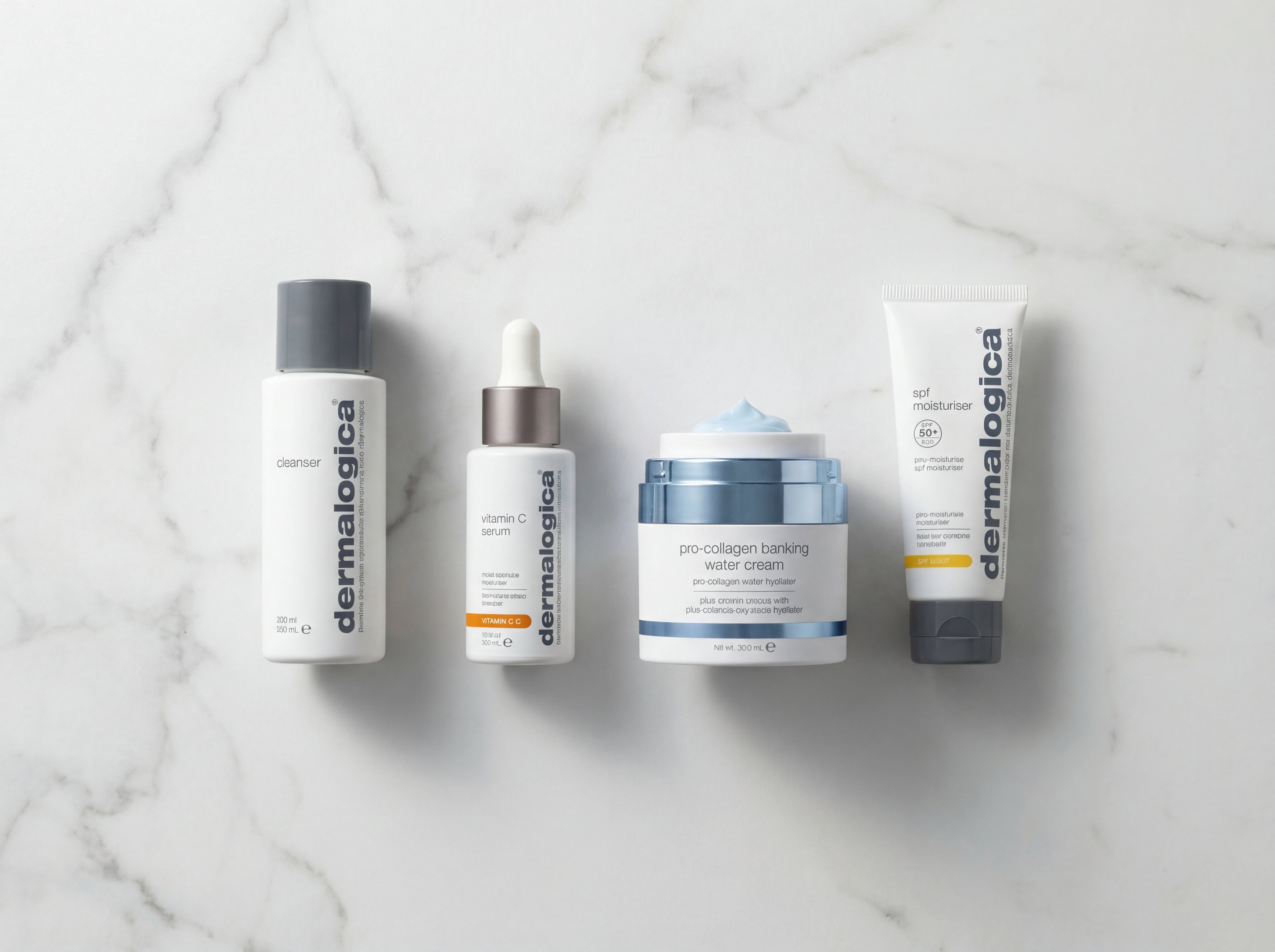
Walk into any beauty store or scroll through skincare advice online, and you'll see the same structure repeated: cleanse, treat, protect. It's become the gold standard. Cleanse away the day, apply your actives, seal with SPF in the morning or a moisturiser at night.
This framework isn't wrong, it's just incomplete. Here's why: when you apply a serum to freshly cleansed skin, you're delivering concentrated active ingredients directly to your epidermis. That's exactly what you want. But serums are formulated to be lightweight and fast-absorbing, which means they're also designed to reach quickly.
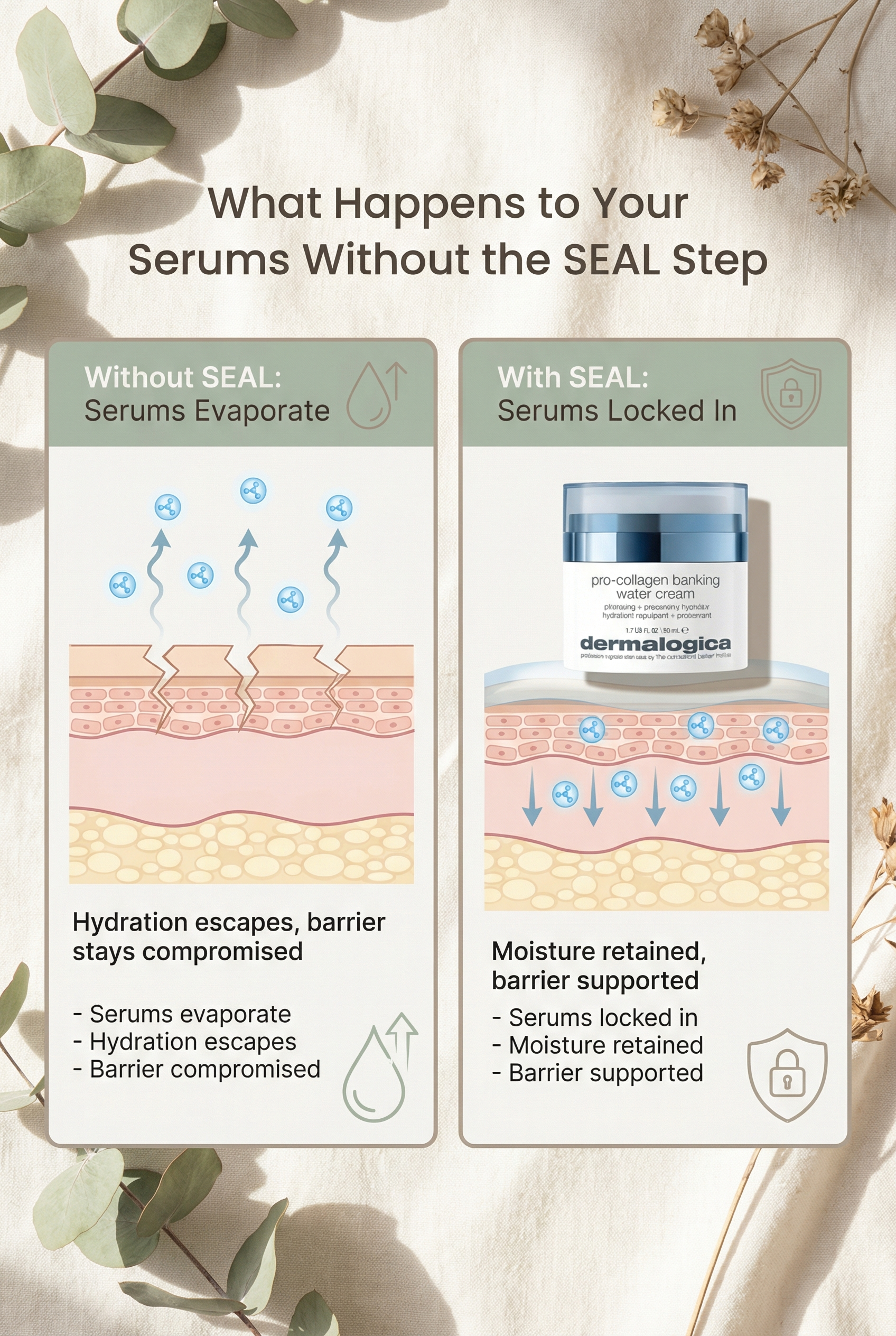
The problem? Without something to trap them against your skin, they don't just absorb, they also evaporate. Water-based serums especially can lose efficacy to trans-epidermal water loss (TEWL) before they've had time to work fully. Your skin gets some benefit, but not the full potential of what you've applied.
Then there's the barrier issue. If your skin barrier isn't functioning ideally (and let's be honest, most people's isn't), you're losing hydration constantly throughout the day. Your serum might address specific concerns like pigmentation or fine lines, but it's not designed to prevent moisture loss or support barrier repair. That's not its job.
So what happens? Your routine delivers results, but they plateau. You're doing everything right according to conventional wisdom, yet your skin never quite reaches the level of comfort and visible improvement you're working towards. This is the gap that the SEAL step fills.

What's Missing: The SEAL Step
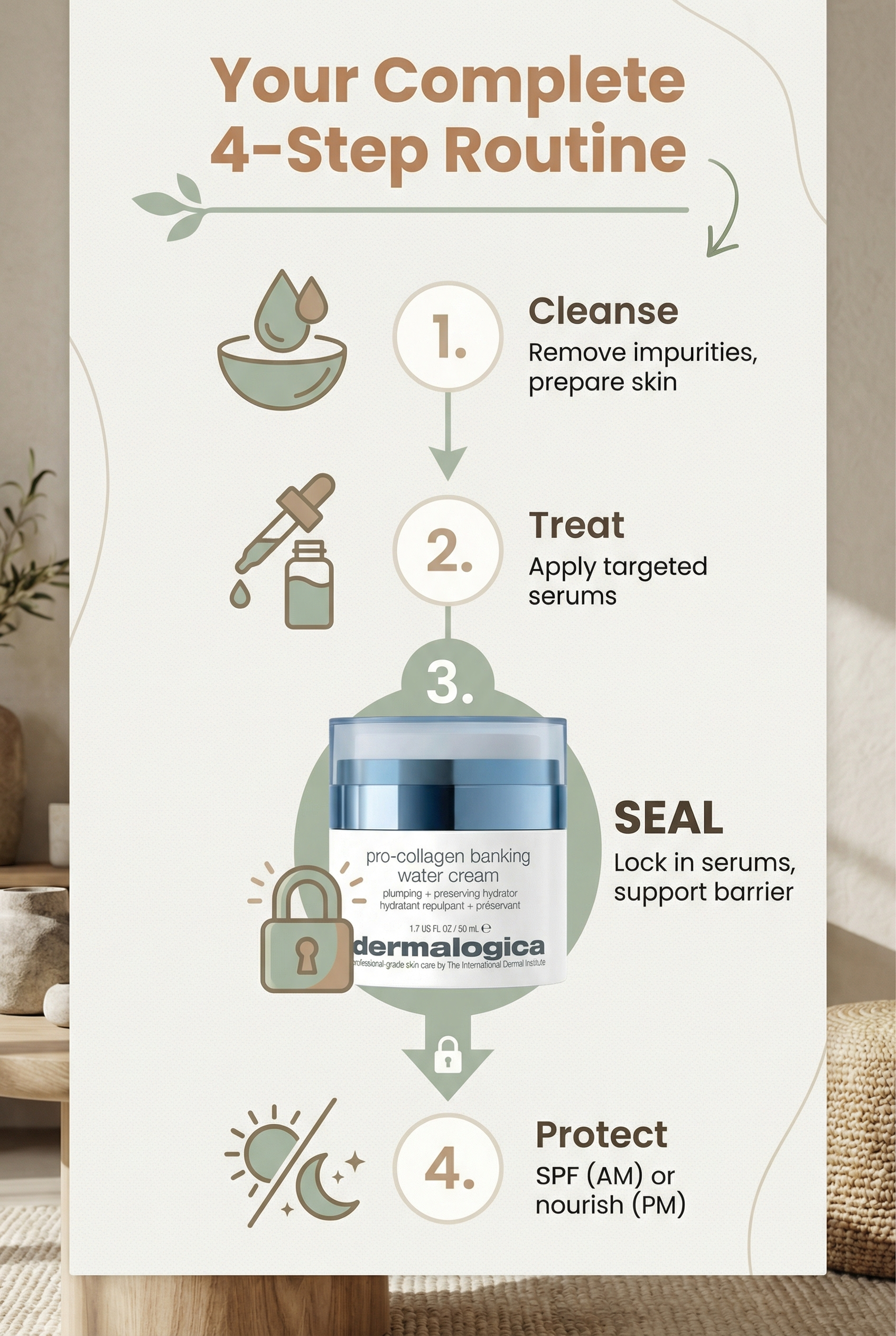
The SEAL step sits between your treatment serums and your final protection layer. Its job is simple but critical: lock in your serums while creating best conditions for barrier function.
Think of it this way: your serum is the treatment. It delivers active ingredients that target specific concerns, vitamin C for brightness, niacinamide for pore refinement, peptides for firmness. These ingredients need time and the right environment to work. The SEAL step creates that environment.
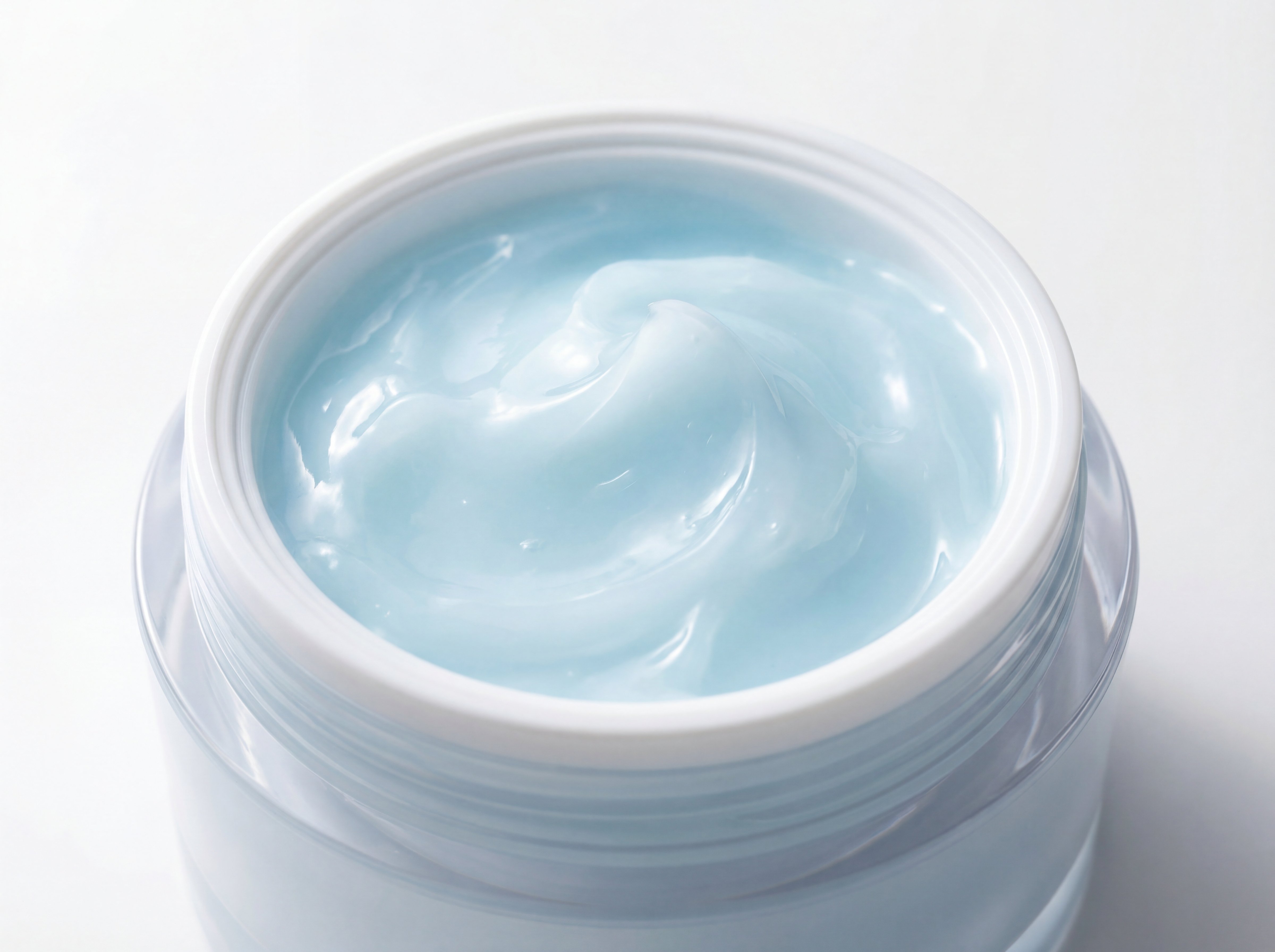
This is where a product like the Pro-Collagen Banking Water Cream comes in. It's not just another moisturiser, it's just formulated to trap treatment products against your skin while supporting your barrier's natural repair processes. The lightweight, water-based texture means it layers beautifully without feeling heavy, but it's substantial enough to prevent your serums from evaporating.
Here's why order matters: if you skip straight from serum to SPF (in the morning) or from serum to a heavier night cream (at night), you're missing this crucial locking-in phase. SPF is designed to sit on top of your skin and protect from UV damage, it's not formulated to enhance serum absorption or support barrier repair. A heavy night cream might feel nourishing, but if it's too occlusive too soon, it can actually prevent your serums from reaching properly.
The SEAL step occupies the sweet spot: light enough to allow serum reach, substantial enough to prevent evaporation, and barrier-supportive enough to create lasting improvement.
Most people skip this step because they don't know it exists. They think their moisturiser is doing this job, but traditional moisturisers are formulated either for hydration or for occlusion, rarely both, and rarely with the specific texture needed to work synergistically with serums. The result? You're using great products, but they're not working together as efficiently as they could.
What Happens Without It
Let's get specific about what you're losing when you skip the SEAL step.
Your serums evaporate. Water-based serums can lose up to 30% of their efficacy to evaporation within the first 15 minutes after use if they're not properly sealed. You're literally watching your investment disappear into the air. This is especially problematic with expensive active ingredients like growth factors, peptides, or vitamin C derivatives.
Hydration escapes. Even if you're using a hydrating serum (hyaluronic acid, glycerin, etc.), without something to trap that moisture against your skin, you're having ongoing trans-epidermal water loss. Your skin might feel for now plump after use, but within an hour or two, that hydration has evaporated. This is why your skin can feel tight by midday even though you moisturised that morning.
Your barrier stays compromised. A healthy skin barrier needs three things: adequate hydration, lipid support, and time to repair. Serums provide targeted treatment but don't typically offer complete barrier support. If you're jumping straight to SPF or using a moisturiser that's either too light or too heavy, your barrier never gets the sustained support it needs to strengthen over time.
Results plateau. This is the big one. Clients come to me frustrated because they're using quality products consistently, but their skin has stopped improving. They've hit a ceiling. Usually, when we add the SEAL step to their routine, that plateau breaks. Why? Because now their serums are working at full capacity, their hydration is being maintained throughout the day, and their barrier is getting the support it needs to function ideally.
I've seen this pattern repeatedly: someone's using a vitamin C serum for brightness, but their pigmentation isn't fading as quickly as it should. Or they're using a retinol for texture, but they're still having sensitivity and flaking. The active ingredients aren't the problem, the delivery system is incomplete. Add the SEAL step, and suddenly those same products start delivering the results they're designed for.
Key Takeaways
- A complete skincare routine requires four steps, not three.
- Most routines include cleanse, treat (serums), and protect (SPF), but they're missing the SEAL step, a crucial phase between treatment and protection that locks in active ingredients and prevents moisture loss.
- Without this step, serums evaporate before they can work fully, hydration escapes, and your barrier remains compromised.
- The SEAL step uses a water-based cream to trap serums against your skin while supporting your barrier, cr...
How the SEAL Step Completes Your Routine
Here's how to integrate the SEAL step into your existing routine without overcomplicating things.
Morning routine:
1. Cleanse
2. Apply treatment serum (vitamin C, niacinamide, peptides, etc.)
3. SEAL with Pro-Collagen Banking Water Cream
4. Protect with SPF
Evening routine:
1. Double cleanse
2. Apply treatment serum (retinol, peptides, targeted actives)
3. SEAL with Pro-Collagen Banking Water Cream
4. Optional: Add a heavier cream or facial oil if your skin needs extra nourishment
The Pro-Collagen Banking Water Cream works just in this SEAL position because of its formula. It contains collagen-supporting peptides that work synergistically with whatever treatment serums you're using underneath. If you're using vitamin C, the peptides enhance collagen synthesis. If you're using retinol, they support the skin's repair process. It's designed to amplify, not interfere.
The lightweight gel-cream texture means it absorbs quickly without pilling under SPF or makeup, but it creates a breathable seal that keeps your serums working against your skin rather than evaporating into the air. And because it's formulated with barrier-supporting ingredients like ceramides and hyaluronic acid, it's actively improving your skin's ability to retain moisture and protect itself over time.
Timeline-wise, most people notice a difference within two weeks. Your skin feels more comfortable throughout the day. That tight, dry feeling that used to creep in by afternoon? Gone. Your serums start working more well because they're being given the time and environment they need to reach fully. And within 4-6 weeks, you'll see visible improvements: better texture, more even tone, improved firmness, whatever concerns your serums are targeting, they're now working at their full potential.
If you want to understand more about what's happening at a deeper level, why your current routine might be missing this crucial step, I've written about what's actually happening inside your skin and why conventional moisturising approaches often fall short. Understanding the science helps you make better decisions about your routine.
The SEAL step isn't about adding complexity. It's about completing a system that was always meant to work this way. Your cleanser, your serums, your SPF, they're all doing their jobs. They just need this one connecting step to work together as efficiently as possible.
Ready to complete your routine? Discover the Pro-Collagen Banking System and see what happens when your products finally work at their full potential.
A complete skincare routine isn't just about having the right products, it's about using them in the right order with the right supporting steps. The SEAL step is the missing piece that transforms a good routine into one that delivers consistent, visible results.
If your skin has plateaued despite using quality products, if you're having dryness by midday, or if your serums don't seem to be working as well as they should, you're likely missing this crucial step. The good news? It's simple to add, and the difference is noticeable quickly.
Your cleanser, serums, and SPF are doing their jobs. Give them the support they need to work at their full potential.


