


Here's what I notice every year around late February: clients start coming in with skin that feels tight, looks a bit dull, and suddenly shows fine lines that weren't quite so visible a month ago. They're confused because they haven't changed their routine, but their environment has changed around them.
The shift from summer to autumn is one of the most challenging transitions for Australian skin. You've spent months dealing with UV exposure, chlorine, salt water, and intense heat. Now the air is getting drier, temperatures are dropping, and your skin is expected to just… adapt. Without support, this is when dehydration lines deepen, barrier function falters, and the foundation is laid for accelerated ageing through the cooler months.
But here's the good news: if you prepare your skin properly for this seasonal shift, you're not just preventing problems, you're actually setting yourself up for your best skin through autumn and winter. Let me show you exactly how to do this, based on what actually works for Australian skin in this transition period.
Why Does the Summer-to-Autumn Transition Affect Wrinkles?
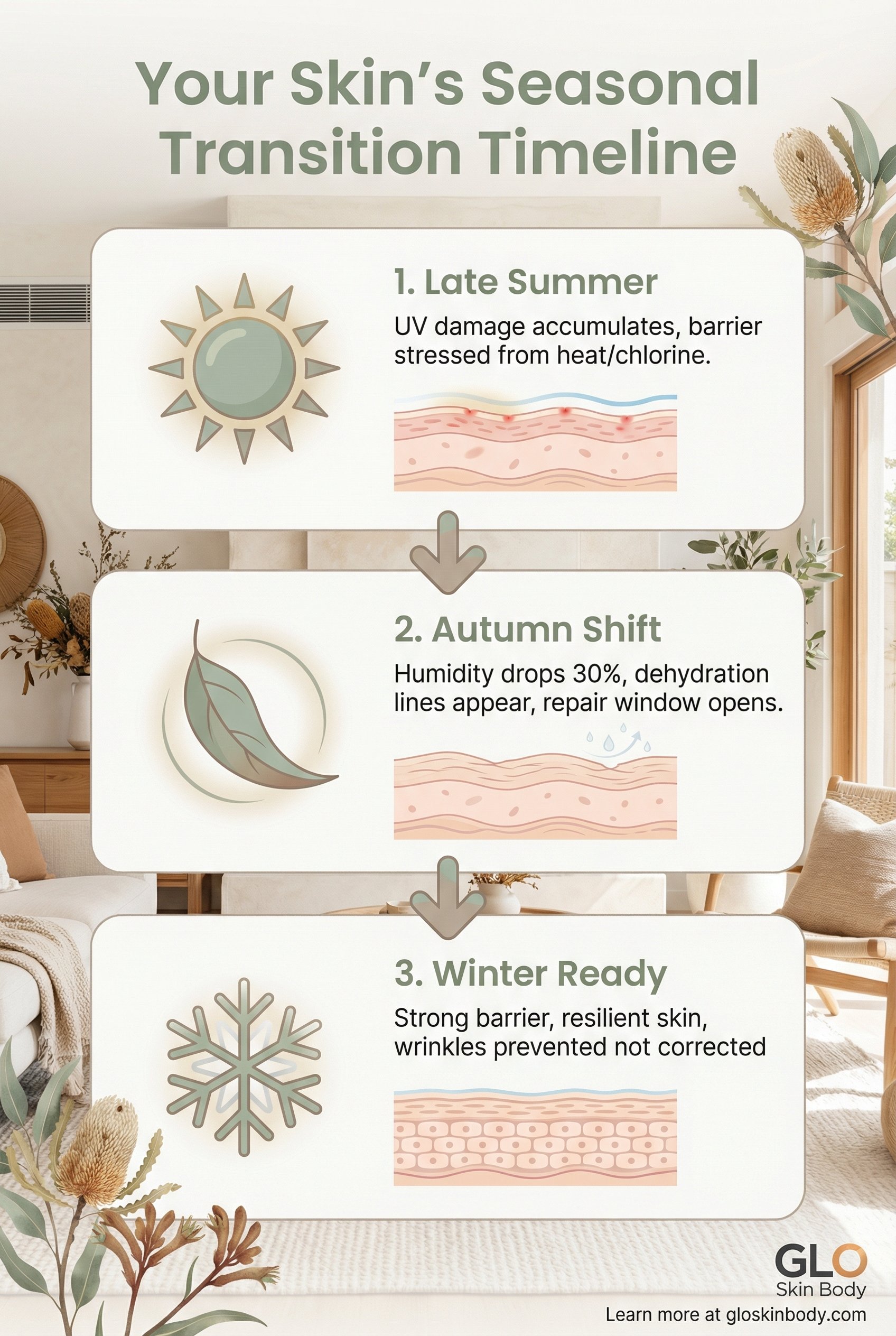
Your skin doesn't read calendars, but it absolutely responds to environmental changes, and the shift from summer to autumn brings several factors that directly impact wrinkle formation and visibility.
Humidity drops greatly as we move into autumn, even in coastal areas. Lower humidity means increased trans-epidermal water loss (TEWL), your skin loses moisture faster than it can replace it. When skin cells are dehydrated, they shrink slightly, making the spaces between them (your fine lines) more visible. This is why wrinkles often look deeper in autumn even though nothing has structurally changed.
Research published in the British Journal of Dermatology found that seasonal humidity changes can alter stratum corneum hydration by up to 30%, with visible effects on skin texture and fine line appearance within just two weeks of environmental shift. This isn't permanent damage, it's functional dehydration that responds beautifully to the right support.
Your summer damage is catching up with you. UV exposure from summer doesn't show its full impact right away. Collagen degradation, elastin damage, and pigmentation changes often become visible weeks after the exposure occurred. By autumn, you're seeing the accumulated effect of summer sun, and if your skin is also dehydrated from the humidity drop, that damage looks more pronounced.
The combination of compromised barrier function from summer stress plus the new challenge of drier air creates what I call the autumn weakness window, a period where your skin is working harder than usual and needs strategic support to prevent long-term consequences.
What Your Skin Actually Needs Right Now
The mistake I see most often is people either doing nothing (keeping their summer routine unchanged) or overcorrecting (switching to heavy creams their skin isn't ready for). Neither approach works. Your skin needs a strategic transition that addresses three specific priorities.
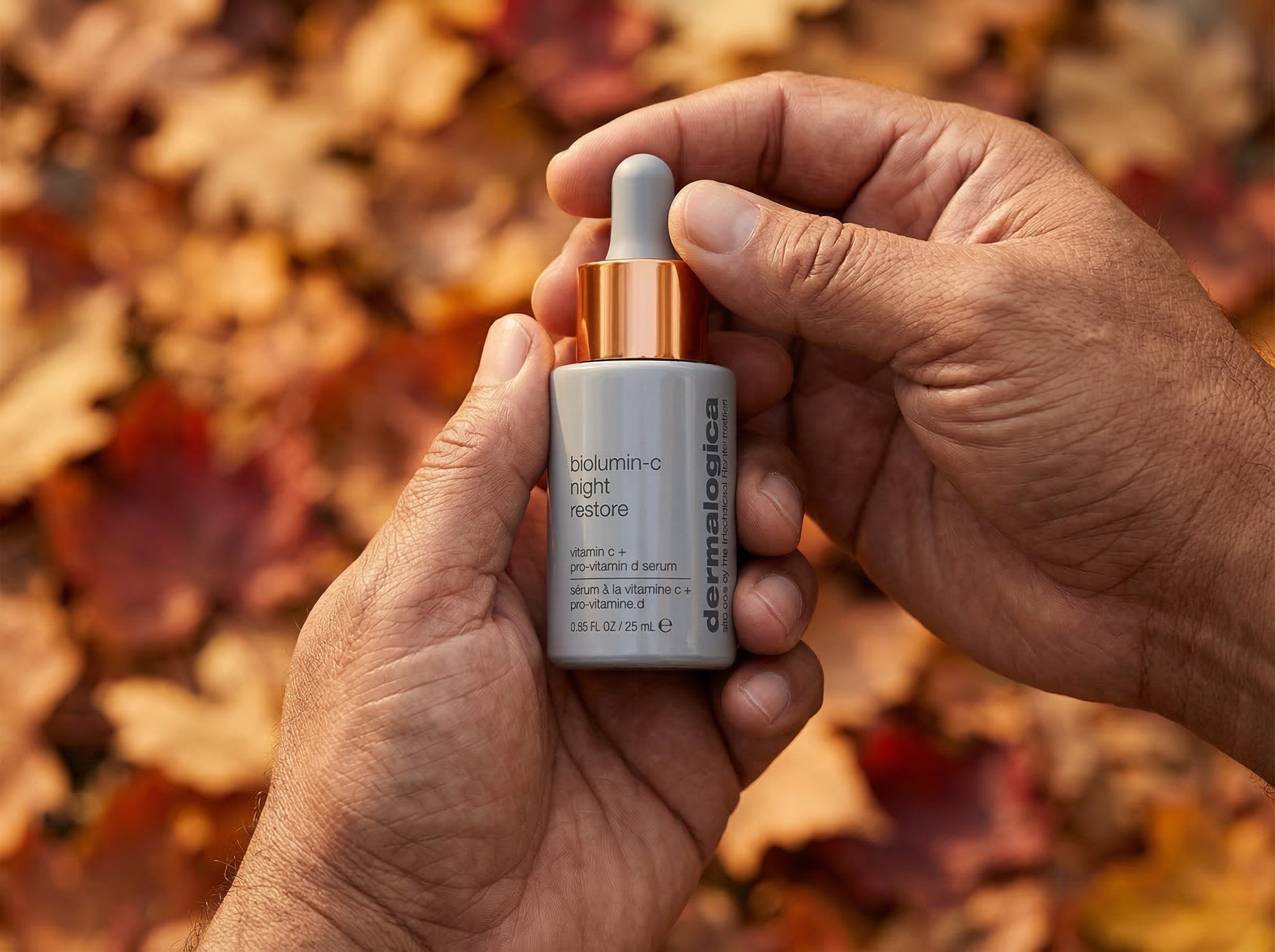
Priority One: Repair summer damage before it becomes permanent. UV exposure triggers ongoing causing swelling processes that continue damaging collagen and elastin even after you're out of the sun. protective support right now interrupts these cascades and supports your skin's natural repair mechanisms. This is where Dermalogica's BioLumin-C Serum becomes essential, the stable vitamin C complex combined with sophora flower extract and lactic acid doesn't just brighten surface pigmentation, it actively supports collagen synthesis and neutralises the free radicals still causing damage from summer exposure.
Apply this every morning after cleansing, before your moisturiser. You're giving your skin the building blocks it needs to repair while protecting against ongoing oxidative stress. The research on topical vitamin C and photoaging repair is extensive, a study in Dermatologic Surgery found that consistent vitamin C use for 12 weeks greatly improved fine lines, roughness, and overall skin tone in photodamaged skin.
Priority Two: Strengthen your barrier for the drier air ahead. Your skin barrier, the outermost layer of lipids and proteins that holds moisture in and irritants out, has been stressed by summer. Chlorine, salt water, sun exposure, and maybe over-cleansing have all compromised its integrity. Before the dry autumn air makes this worse, you need to actively rebuild barrier structure.
This is where Dermalogica's AGE Smart range shines for this transition. The AGE Reversal Eye Complex combines encapsulated retinol with tripeptides and vitamin C ester, addressing the delicate eye area where dehydration lines show up first. For the full face, layering Phyto-Nature Firming Serum (with plant-based retinol alternative and peptides) under your moisturiser provides both barrier support and active wrinkle prevention.
The key is consistency over intensity. You don't need to overhaul everything overnight. You need to support your barrier daily so it's resilient when the real cold hits in June and July.
Priority Three: Adjust hydration without overwhelming your skin. Your summer moisturiser, likely something light and gel-based, won't cut it as humidity drops. But jumping straight to a heavy cream can trigger congestion if your skin isn't ready. The solution is strategic layering: keep your lighter moisturiser but add a barrier-supporting serum underneath and possibly a few drops of face oil on top for the driest areas.
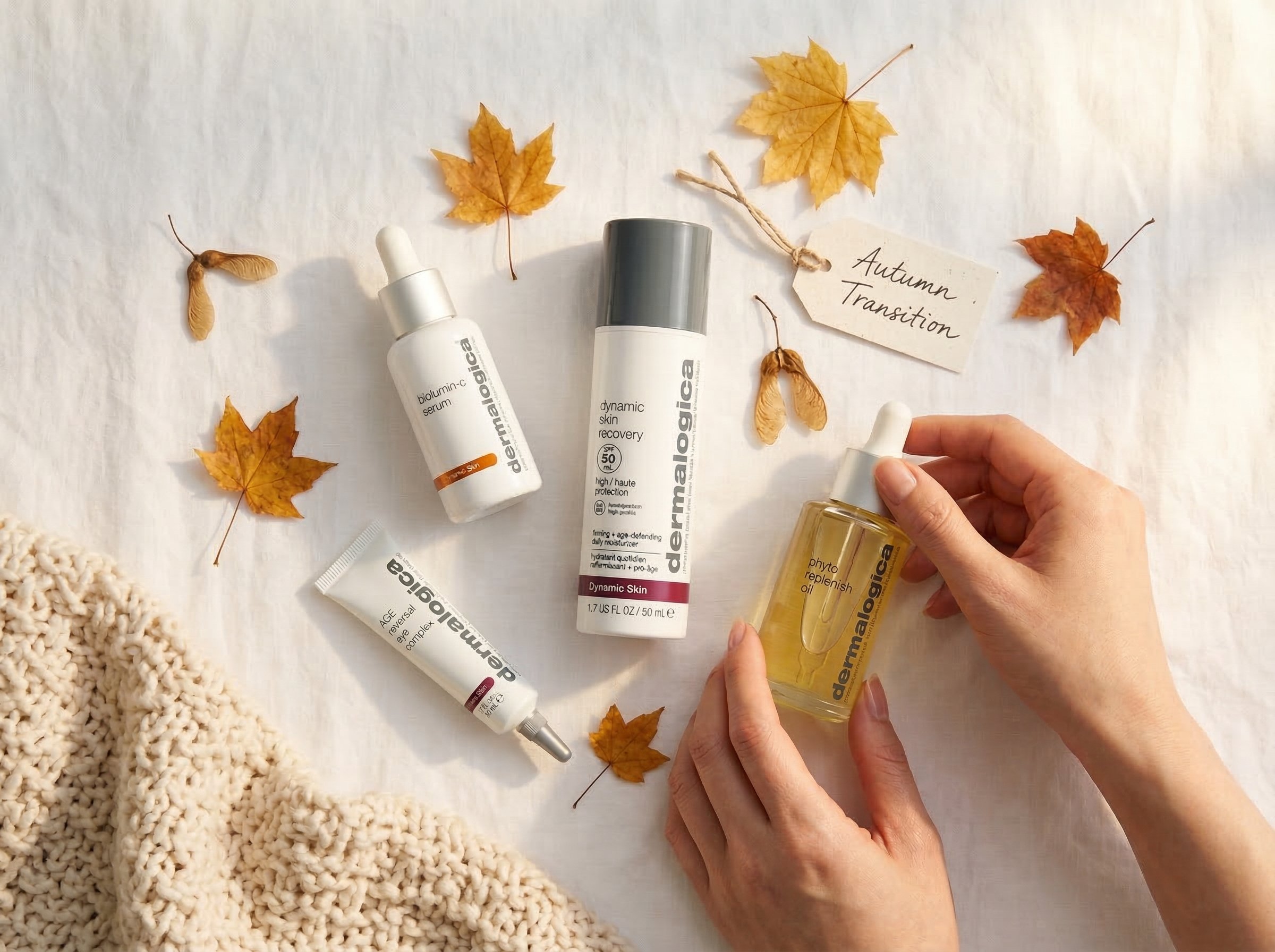
Dermalogica's Phyto Replenish Oil is perfect for this, it's a blend of camellia and tamanu oils that strengthens barrier lipids without feeling heavy or greasy. Three to four drops warmed between your palms and pressed onto your face after moisturiser creates an occlusive layer that dramatically reduces moisture loss overnight. You wake up with plump, comfortable skin instead of that tight, drawn feeling that signals dehydration.
Key Takeaways
- Preparing your skin for autumn involves repairing summer damage, strengthening your barrier against cooler, drier air, and adjusting your routine to support increased cell turnover.
- The key is starting this transition in late summer, before your skin shows signs of stress.
- Focus on barrier repair with ceramides and peptides, maintain consistent sun protection despite cooler weather, and gradually introduce richer textures as humidity drops.
- This proactive approach prevents the dehydration lin...
Your Practical Autumn Transition Protocol
Let me give you the exact routine adjustment I recommend for this seasonal shift. This isn't about buying everything new, it's about strategic additions and modifications to what you're already doing.
Morning Routine Adjustments:
Keep your current cleanser unless it's stripping (if your skin feels tight after cleansing, switch to Special Cleansing Gel or UltraCalming Cleanser). After cleansing, while skin is still slightly damp, apply BioLumin-C Serum. This is your summer damage repair and ongoing protection. Give it 60 seconds to absorb, then apply your current moisturiser. Here's the key change: don't skip SPF just because it's cooler. UV damage happens year-round in Australia, and autumn sun is still major. Dynamic Skin Recovery SPF50 gives you both broad-spectrum protection and additional peptide support for wrinkle prevention.
If you're noticing particular dryness around your eyes (this is where dehydration lines show up first), add AGE Reversal Eye Complex after your serum, before moisturiser. Pat it gently around the orbital bone, you don't need much, and the encapsulated retinol works gradually to strengthen this delicate area.
Evening Routine Adjustments:
This is where you do the heavier lifting for barrier repair and active treatment. Cleanse thoroughly, you're removing the day's SPF, pollution, and any residual summer damage like chlorine or salt. If you're using an active treatment like retinol, this is the right time for it. If you're not currently using retinol and want to start, autumn is actually ideal, you're out of peak UV season, so photosensitivity is less of a concern.
Dermalogica's AGE Reversal Night Cream combines time-released retinol with peptides and evening primrose oil. It's doing multiple jobs: stimulating cell turnover to clear out summer damage, supporting collagen production, and providing rich barrier support your skin needs overnight. Start with three nights per week if you're new to retinol, gradually increasing to nightly use as your skin adapts.
On non-retinol nights, or after your retinol has absorbed, add Phyto Replenish Oil as your final step. This seals everything in and works while you sleep to rebuild barrier lipids. You'll notice the difference in skin texture and comfort within a week.
Weekly Additions:
Once a week, use Dermalogica's Daily Resurfacer, these single-use pods contain a precise blend of lactic acid and fermented pomegranate enzymes that gently resurface without the irritation risk of harsher peels. This accelerates the removal of sun-damaged surface cells and allows your treatment products to reach more well. Apply to clean, dry skin, leave for three minutes, then rinse. Follow with your regular routine. Your skin will look brighter and feel smoother right away, and over weeks, you'll notice improved texture and reduced fine line visibility.
The Mistakes That Make Autumn Wrinkles Worse
I need to address what not to do, because I see these mistakes every year and they genuinely set people back.
Mistake One: Dropping your SPF because it's cooler. UV radiation doesn't correlate perfectly with temperature. Autumn in Australia still brings major UV exposure, especially in northern regions. The UV damage you prevent now is wrinkle prevention for next year and beyond. Keep your SPF in your routine every single day, even when it's overcast. The research is unequivocal: daily broad-spectrum SPF is the most effective anti-ageing intervention available.
Mistake Two: Over-exfoliating to 'fix' summer damage. I understand the impulse, your skin looks dull, maybe has some pigmentation, and you want to scrub it away. But aggressive exfoliation on already-compromised barrier function makes everything worse. You strip away the protective layers your skin desperately needs, increase sensitivity, and actually accelerate moisture loss. The result is more visible wrinkles, not fewer.
If you're using chemical exfoliants, stick to gentle options like lactic acid (in Daily Resurfacer) once weekly. If you're using physical exfoliants, Daily Microfoliant is the only one I recommend, it's rice-based and very gentle, suitable for daily use without barrier disruption. Anything harsher goes in the bin.
Mistake Three: Switching to heavy products your skin isn't ready for. Your skin has been in summer mode, lighter products, more sebum production in response to heat. If you suddenly slather on thick creams, you risk congestion and breakouts, especially if you're acne-prone. The transition needs to be gradual. Add one richer product at a time, give your skin a week to adjust, then assess whether you need more or if that's sufficient.
Mistake Four: Ignoring hydration from within. I know this is a skincare article, but I'd be doing you a disservice not to mention it: as the weather cools, people often reduce their water intake. Your skin's hydration status is partly determined by your overall hydration. If you're dehydrated systemically, no amount of topical product will fully compensate. Keep your water intake consistent even though you're not sweating as much.

Dermalogica Dynamic Skin Recovery SPF50
Provides broad-spectrum SPF50 protection against both UVA and UVB radiation
When to Expect Results (and What Results Look Like)
Let me set realistic expectations because this matters for your consistency and confidence.
Within one week: You'll notice your skin feels more comfortable, less tightness, less sensitivity to temperature changes. This is your barrier starting to strengthen and your hydration improving. Fine lines won't look dramatically different yet, but your skin will feel better, which is the foundation for everything else.
Within two to three weeks: Surface texture improves noticeably. Those dehydration lines that appeared when the weather shifted start softening. Your skin tone looks more even as vitamin C begins addressing summer pigmentation. If you're using retinol, you might feel some adjustment (slight dryness or flaking), this is normal and temporary. Support your barrier with the oil and it passes quickly.
Within six to eight weeks: This is where the deeper changes become visible. Collagen production from consistent vitamin C and retinol use starts showing up as improved skin firmness. Fine lines are genuinely less visible, not just for now plumped. Your skin is resilient to the now-cooler, drier air instead of constantly playing catch-up. If you're doing everything consistently, people might start asking if you've done something different, that's the confirmation you're on the right track.
By mid-winter: Your skin should be thriving, not just surviving. The preparation you did in autumn means you're not dealing with the severe dryness, sensitivity, and accelerated ageing that many people feel in June and July. You've built resilience that carries you through the hardest season for Australian skin.
The key is starting now, in late summer or early autumn, before your skin is already stressed. Prevention is always easier than correction. If you're reading this in April or May, you're perfectly timed. If you're reading it later, don't worry, start where you are. Your skin will still benefit, you're just doing some catch-up rather than pure prevention.
How to Know If Your Routine Is Actually Working
You need objective markers to assess progress, not just subjective feelings. Here's what to track:
The morning mirror test: When you wake up and look in the mirror before applying anything, does your skin look plump and comfortable, or tight and drawn? If it's the latter, you need more barrier support overnight. Add or increase your face oil use.
The makeup use test: If you wear makeup, how does it sit on your skin? If it's clinging to dry patches or settling into lines more than it did in summer, your hydration strategy needs adjustment. Well-hydrated skin provides a smooth canvas; dehydrated skin emphasises every texture irregularity.
The touch test: Run your fingers gently across your cheek and forehead. Does your skin feel smooth and supple, or rough and tight? Texture changes are early indicators of barrier compromise. Catching them early means easier correction.
The product absorption test: Are your products absorbing nicely, or sitting on the surface? If they're not reaching, either your barrier is so compromised it can't accept them, or you're using too much. Scale back slightly and see if absorption improves. If it doesn't, you need barrier repair before adding more active treatments.
If you're seeing positive changes in these markers within two to three weeks, your routine is working. If you're not, something needs adjustment, and this is where professional guidance helps. The Skin Blueprint™ consultation is just designed to troubleshoot these transitions and personalise your approach.
Featured Product
Delivers broad-spectrum SPF30 protection covering both UVA and UVB wavelengths
The shift from summer to autumn is your opportunity to set your skin up for success through the cooler months, not just react to problems as they appear. What you do right now, in late summer and early autumn, determines whether your skin thrives or struggles through winter.
You don't need a complete routine overhaul. You need strategic additions: vitamin C for summer damage repair, barrier support for the drier air ahead, and possibly retinol for active wrinkle prevention. Layer these thoughtfully into your existing routine, give your skin two to three weeks to respond, and adjust based on what you're seeing and feeling.
If you're unsure where to start or want this personalised to your specific skin, that's exactly what The Skin Blueprint™ consultation is for. We'll look at your current routine, assess how your skin is handling the transition, and create your specific protocol, the right products in the right order with realistic expectations about timing and results. Book your consultation and let's make sure your skin is ready for what's coming, not just coping with it.


