


You've added a hydrating serum. Then another. Maybe a facial mist between layers. Your bathroom shelf is lined with products promising deep hydration, yet your skin still looks flat, feels tight, and makeup sits oddly on the surface. You're doing everything the beauty blogs suggest, but something basic isn't working.
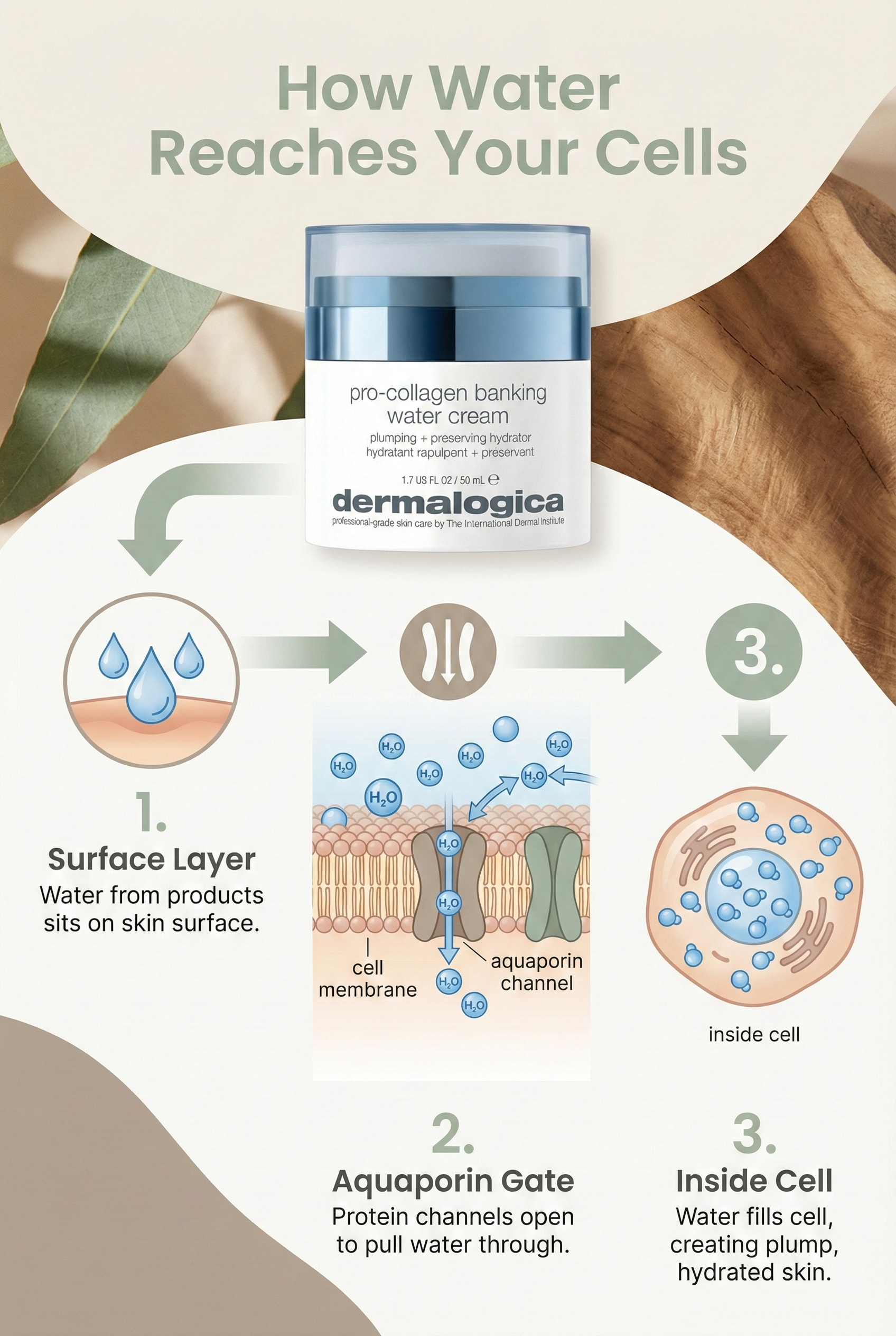
Here's what's actually happening: you're flooding the surface while your cells are parched. It's like watering a plant with compacted soil, the water runs off instead of soaking in. Your skin has tiny channels called aquaporins that pull water into cells, and when these slow down, no amount of layering fixes the problem. In fact, it often makes things worse. Let me show you why your hydration routine might be working against you, and what actually needs to happen at the cellular level.
How Your Skin Actually Absorbs Water (And Why Surface Moisture Isn't Enough)
Your skin doesn't absorb water the way a sponge does. Instead, it relies on specialised protein channels called aquaporins that act like tiny gates in your cell membranes. Think of them as selective doorways, they open to let water molecules pass through into cells, then close behind them. Without functioning aquaporins, water simply sits on your skin's surface, evaporating away or pooling between cells without ever reaching where it's needed.
When you apply hyaluronic acid, likely the hero ingredient in most of your hydrating products, it binds water molecules on the skin's surface. A single hyaluronic acid molecule can hold up to 1,000 times its weight in water, which sounds impressive. And it is, for surface hydration. Your skin feels plump right away after use because there's moisture sitting on top. But here's the limitation: hyaluronic acid molecules are too large to reach deeply, and even smaller fragments need those aquaporin channels to actually deliver water into cells.
This is why your skin can feel hydrated right after your routine but look dull and dehydrated by midday. The surface moisture evaporates, and if your aquaporins aren't actively pulling water into cells, you're back where you started. You haven't addressed cellular dehydration, you've just for now masked it.
The difference between surface hydration and cellular hydration shows up in how your skin looks and behaves. Surface-hydrated skin might feel soft to touch but still appears lacklustre, with makeup clinging to dry patches. Cellularly hydrated skin has that plump, light-reflective quality that no amount of highlighter can fake. The cells themselves are filled with water, creating volume from within rather than just a slick surface layer.
Key Takeaways
- Layering more hydrating products often fails because they only provide surface hydration without activating your skin's aquaporins, the water channels that pull moisture into cells.
- When aquaporins slow down due to age, stress, or environmental damage, water pools on the surface rather than reaching deeply.
- This creates a paradox: more products, but persistently dehydrated skin.
- The solution isn't adding more layers, but activating these cellular water channels with specific peptides while su...

Why Your Water Channels Slow Down (And What Dehydrated Skin Actually Means)
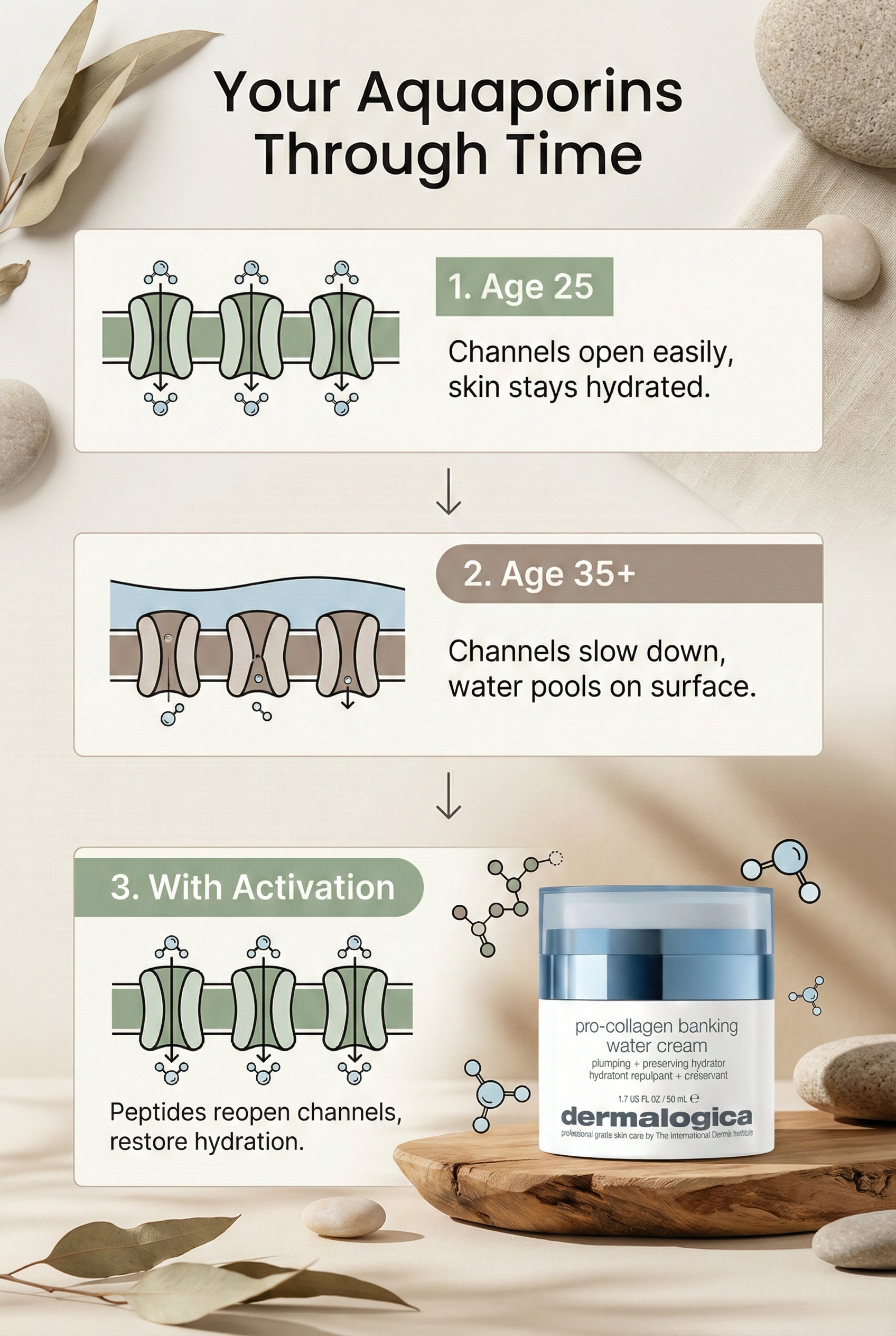
Aquaporin activity naturally declines as we age. By your mid-30s, these water channels start becoming less responsive, opening less often and less efficiently. It's not that they disappear, they're still there in your cell membranes, but they're sluggish, like doors that have swollen in their frames and won't open smoothly anymore.
Stress accelerates this decline greatly. When cortisol levels rise, it triggers causing swelling responses that interfere with aquaporin function. I see this constantly with clients going through demanding periods, their skin suddenly looks flat and dehydrated despite no changes to their routine. The products haven't stopped working; their stress response has disrupted the cellular mechanisms those products rely on.
Environmental damage compounds the problem. UV exposure, pollution, and even harsh weather create oxidative stress that damages the delicate protein structures of aquaporins. Sun damage doesn't just create pigmentation and wrinkles, it literally impairs your skin's ability to hydrate itself at the cellular level. This is why sun-damaged skin often looks perpetually dehydrated no matter how much moisture you apply.
Here's the crucial distinction many people miss: dehydrated skin lacks water in the cells, while dry skin lacks oil on the surface. You can have oily, dehydrated skin, in fact, it's very common. Your skin produces more oil trying to compensate for the water deficit, creating that confusing combination of shine and tightness. This is why mattifying products and skipping moisturiser backfires spectacularly for people with oily, dehydrated skin. You're addressing the wrong problem.
Dehydrated skin has a specific appearance: it looks dull and flat, lacking that light-reflective quality of well-hydrated skin. Fine lines appear more pronounced because the cells aren't plump enough to smooth them out from within. Makeup sits oddly, emphasising texture you didn't know you had. And paradoxically, your skin might produce more oil while still feeling tight, your body's confused response to cellular dehydration.

The Hydration Illusion: Why More Layers Don't Equal More Moisture
When your aquaporins aren't functioning ideally, layering more hydrating products creates what I call water pooling. The moisture sits between cells rather than entering them, creating a temporary plumping effect that quickly disappears. You might notice your skin looks great right away after your routine, all that surface water is reflecting light beautifully, but within an hour or two, you're back to looking flat and dehydrated.
This is the hydration illusion: you're creating the appearance of hydration without the cellular reality of it. It's like painting over a crack instead of repairing the foundation. The surface looks better for now, but the underlying problem persists and often worsens because you're not addressing what's actually broken.
The oily skin paradox is especially frustrating. Your skin detects cellular dehydration and responds by producing more sebum, thinking oil will solve the problem. But oil and water are different needs, your cells are crying out for water while your sebaceous glands flood the surface with oil. You end up with that distinctive combination of surface shine and underlying tightness, often with flaky patches appearing through the oil. Blotting papers and mattifying products might control the shine, but they don't address why your skin is overproducing oil in the first place.
The solution isn't another hydrating serum or a richer moisturiser. You don't need more water on the surface; you need to activate the channels that pull water into cells. Otherwise, you're just creating an increasingly elaborate ritual that addresses symptoms rather than causes.
Activating Your Water Channels: What Actually Works at the Cellular Level
The solution to cellular dehydration is surprisingly straightforward once you understand the mechanism: you need ingredients that activate aquaporins and ingredients that hold moisture once it's inside cells. This is a two-part process, and both steps are essential.
Polyglutamic acid (PGA) is the moisture-holding component that works differently from hyaluronic acid. While HA binds water on the surface, PGA forms a protective film that prevents water loss while also holding moisture in deeper skin layers. It's smaller than HA, allowing better reach, and it doesn't just attract water, it actively prevents it from evaporating. Think of it as creating a reservoir system within your skin rather than just a surface puddle.
But holding water is only half the solution. You need to activate those sluggish aquaporins to pull water into cells in the first place. This is where Acetyl Hexapeptide-37 becomes crucial, it's a peptide just designed to stimulate aquaporin-3 activity. Research shows it increases aquaporin expression and function, really waking up those dormant water channels and getting them working efficiently again.
The Dermalogica Pro-Collagen Banking System approaches this two-step process methodically. The serum delivers PGA to create that moisture reservoir and prepare the skin, while the Water Cream contains Acetyl Hexapeptide-37 to activate the aquaporins. Used together, they address both holding moisture and getting it into cells, surface hydration and cellular hydration working in tandem.
This isn't about adding more layers to your routine; it's about using the right actives in the right sequence. Most people see initial improvements within a week, that tight feeling eases, and skin looks less flat. But the real transformation happens around the 4-6 week mark when aquaporin function has been consistently supported and cellular hydration is genuinely restored. Your skin develops that plump, light-reflective quality that comes from cells filled with water, not just a well-moisturised surface.
If you're dealing with persistent dullness despite a thorough hydrating routine, the problem likely isn't your products, it's that your cellular water channels need activation.
The hydration paradox isn't about needing more products, it's about understanding that surface moisture and cellular hydration are basically different processes. You can layer hydrating serums endlessly, but if your aquaporins aren't functioning properly, that water never reaches the cells that need it. The solution isn't more of the same; it's activating the cellular mechanisms that pull water where it belongs.
When you shift focus from flooding the surface to activating water channels, everything changes. Your skin develops genuine hydration that lasts beyond the first hour after your routine. That flat, dull appearance lifts as cells fill with water from within. And often, other concerns, excess oil, makeup use issues, emphasised fine lines, improve as cellular hydration is restored.


