


You've been diligent. Your brightening serum goes on every morning. You've seen those dark spots fade, slowly, yes, but they're for sure lighter than they were three months ago.
Then you notice it. A new spot near your cheekbone. Another one forming along your jawline. It's like playing pigmentation whack-a-mole, and you're losing.
Here's what's happening: your brightening serum is doing exactly what it's supposed to do, fading the spots you can see. But something else is creating new pigmentation faster than you can fade it. Until you address both sides of this equation, you'll stay stuck in the same frustrating cycle.

Why Do Dark Spots Keep Coming Back?
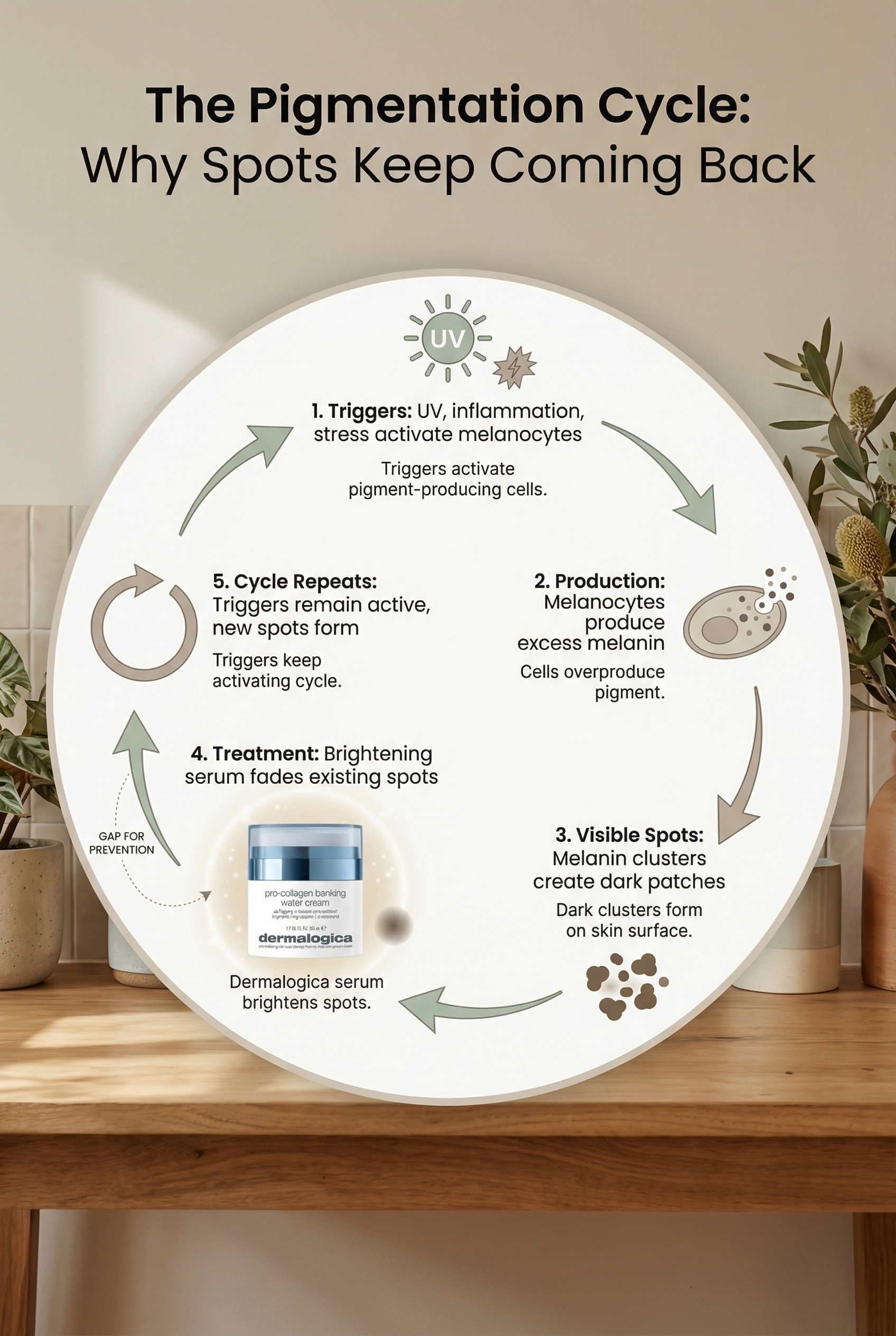
Dark spots form when melanocytes, the cells that produce pigment, go into overdrive. This happens in response to triggers: UV exposure, swelling, hormonal fluctuations, or injury to the skin. Your melanocytes pump out excess melanin, which clusters in certain areas and creates those visible dark patches.
Brightening serums work by interrupting this melanin production and helping your skin shed pigmented cells faster. They're excellent at addressing the result of overactive melanocytes. But here's the problem: they don't stop the triggers that set off melanin overproduction in the first place.
Think of it like bailing water out of a boat while the leak keeps flowing. You're working hard, making progress, but the boat keeps filling up again. Your brightening serum is the bucket. What you need is something to patch the leak.
This is why so many people feel frustrated with their pigmentation routine. They're doing everything right, consistent use, proper sun protection, patience with the timeline, but new spots keep appearing. The issue isn't that your brightening serum isn't working. It's that you're only treating half the problem.
Key Takeaways
- Brightening serums fade existing dark spots by inhibiting melanin production and accelerating cell turnover.
- However, they don't address the root triggers that create new pigmentation, swelling, oxidative stress, and glycation.
- Without prevention, you're stuck in an endless cycle of fading spots while new ones form.
- A complete approach requires both treatment (brightening actives) and prevention (protective protection and anti-causing swelling support) to stop the pigmentation cycle at its so...
What Your Brightening Serum Does (And What It Doesn't)
Let's be clear: brightening serums are genuinely effective for fading existing pigmentation. Ingredients like niacinamide, vitamin C, and alpha arbutin work by inhibiting tyrosinase, the enzyme responsible for melanin production. Others, like AHAs, accelerate cell turnover to shed pigmented cells faster.
When you use a quality brightening serum consistently, you should see visible fading within 8-12 weeks. The spots become lighter, less defined, and gradually blend with your surrounding skin tone. This is real progress, and it matters.
But here's what brightening serums don't do: they don't address the causing swelling cascade that triggers new pigmentation. They don't neutralise the oxidative stress that damages melanocytes and causes them to malfunction. They don't prevent the glycation process that creates chronic, low-grade swelling throughout your skin.
This is why you can be religious about your brightening serum and still see new spots forming. The triggers are still active. Your melanocytes are still being provoked into overproduction. You're fading yesterday's spots while tomorrow's spots are already being created beneath the surface.
What you need is a prevention strategy that works alongside your brightening serum, something that addresses the root triggers before they create new pigmentation.

The Hidden Triggers Creating New Dark Spots
The primary driver of new pigmentation isn't UV exposure alone, it's swelling. Every time your skin experiences swelling, whether from sun damage, irritation, hormonal fluctuations, or even aggressive skincare, it can trigger melanocytes to produce excess pigment. This is called post-causing swelling hyperpigmentation, and it's responsible for the majority of dark spots that appear outside of direct sun exposure.
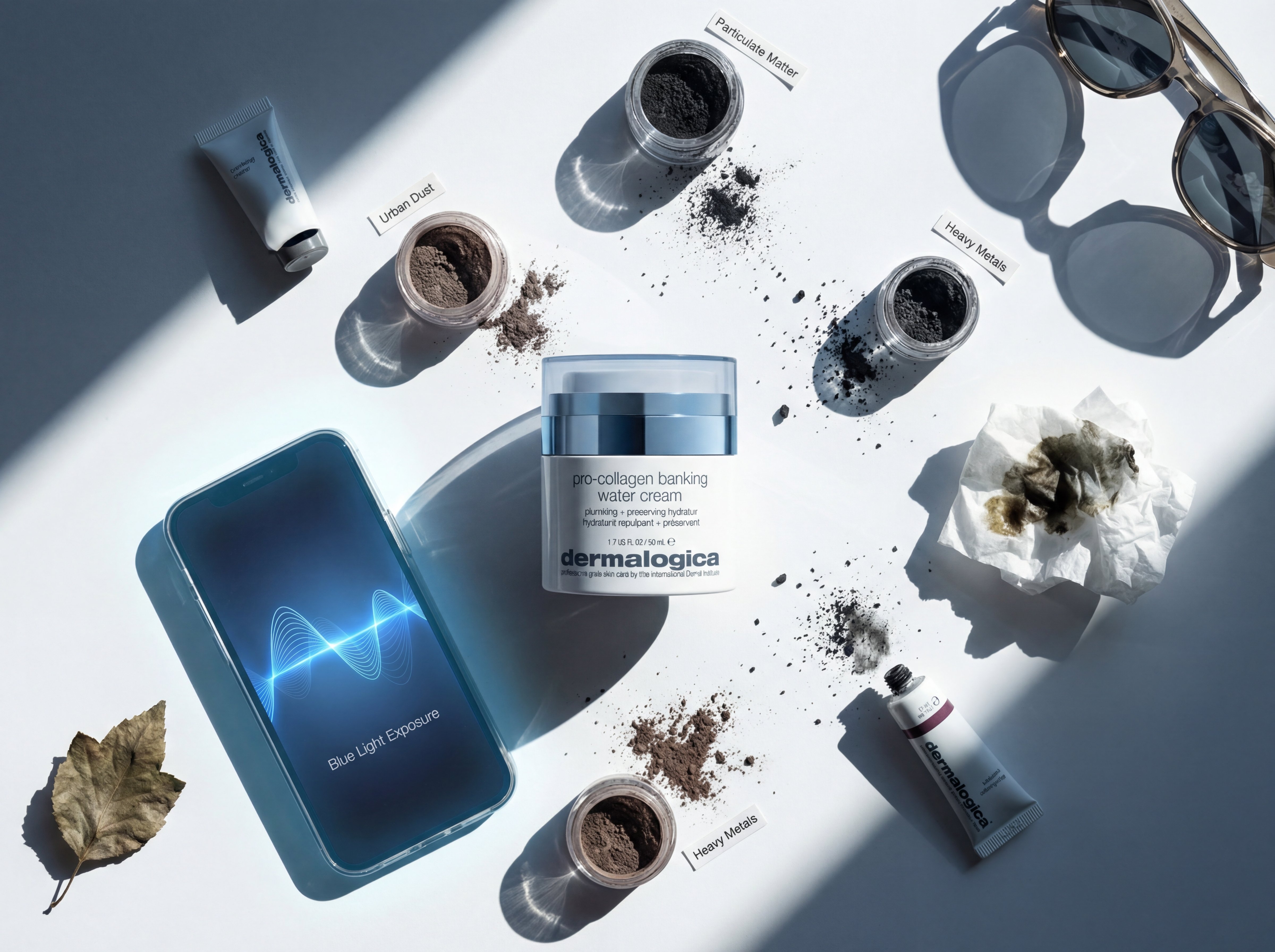
Here's where it gets interesting: swelling doesn't just come from obvious sources like breakouts or irritation. It's also generated by oxidative stress, the damage caused by free radicals from UV rays, pollution, and even blue light from screens. When free radicals attack your skin cells, they create a cascade of causing swelling signals. Your melanocytes respond to this swelling by producing more melanin as a protective mechanism.
Then there's glycation, the process where excess sugar molecules bind to proteins in your skin, creating causing swelling compounds called AGEs (advanced glycation end products). These AGEs generate chronic, low-grade swelling that keeps your melanocytes in a constant state of activation. Even without obvious triggers, glycation can drive ongoing pigmentation.
This is why some people notice their pigmentation worsens during stressful periods, after poor sleep, or when their diet shifts. These factors all increase swelling and oxidative stress, which trigger new melanin production. Your brightening serum can't address these root causes, it can only fade the pigmentation after it's already formed.
To truly break the pigmentation cycle, you need to prevent the causing swelling triggers that create new spots in the first place. This is where a two-pronged approach becomes essential.
The Complete Prevention System That Actually Works
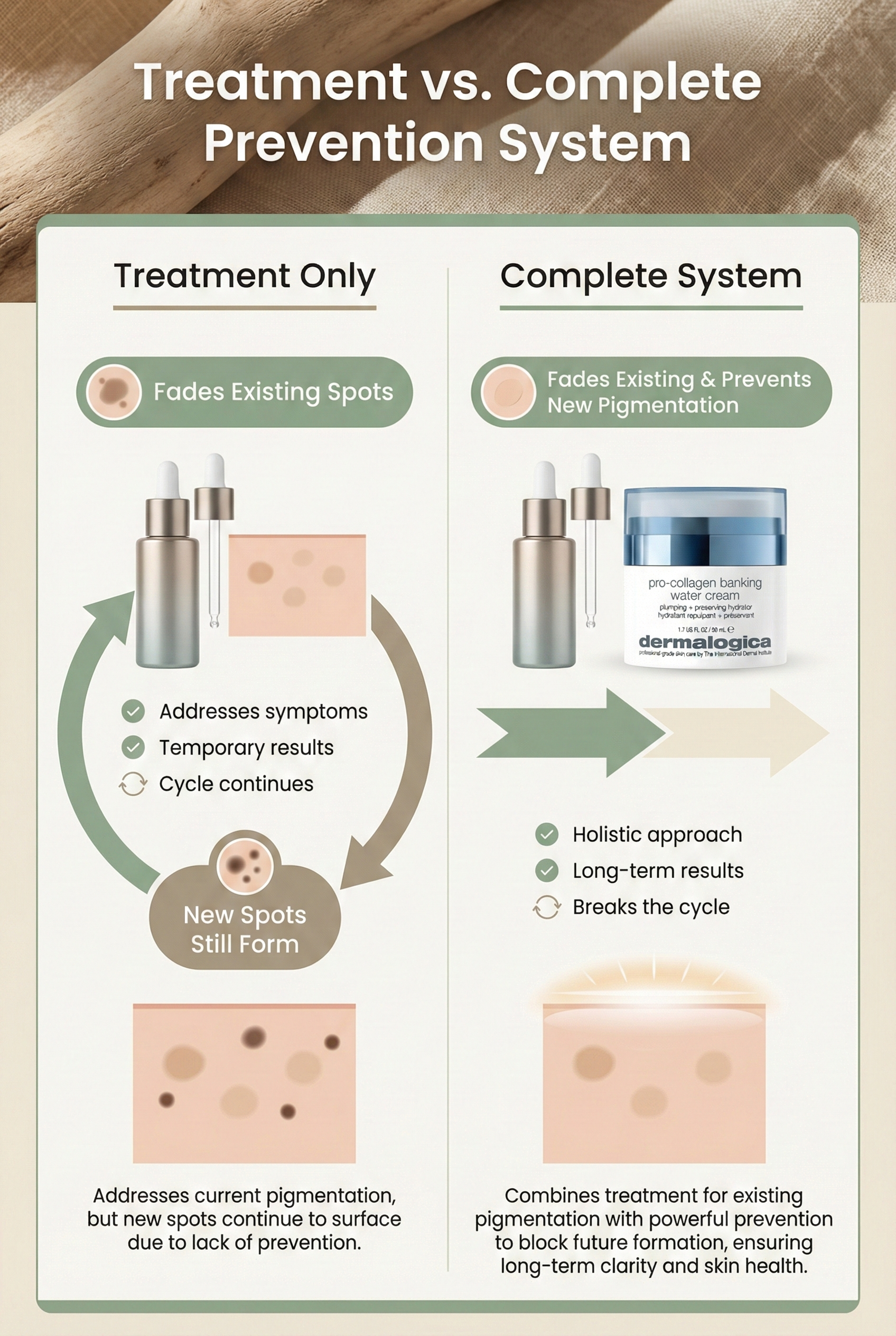
A complete pigmentation strategy requires two distinct actions: fading existing spots and preventing new ones from forming. Your brightening serum handles the first part. What you need alongside it is protection against the causing swelling triggers that create new pigmentation.
This is where the Pro-Collagen Banking Water Cream fits into your routine. While your brightening serum works on visible spots, this water cream addresses the root triggers. It delivers concentrated antioxidants, including vitamin C, vitamin E, and CoQ10, that neutralise free radicals before they can trigger swelling. By stopping oxidative stress at its source, you prevent the causing swelling cascade that leads to new melanin production.
The water cream also contains anti-glycation actives that prevent sugar molecules from binding to skin proteins and creating causing swelling AGEs. This addresses the chronic, low-grade swelling that keeps melanocytes overactive even when there's no obvious trigger.
Here's how the complete system works: your brightening serum (applied first, on clean skin) fades existing pigmentation by inhibiting melanin production and accelerating cell turnover. The Pro-Collagen Banking Water Cream (applied after your serum) prevents new pigmentation by neutralising oxidative stress and reducing swelling. Together, they address both sides of the pigmentation equation.
The timeline for this approach is realistic: within 8-12 weeks, you should see existing spots continue to fade while noticing that new spots aren't forming as often. By 4-6 months, most people see major improvement in overall skin tone evenness, not just because spots have faded, but because new pigmentation has been prevented.
This is the difference between treating symptoms and addressing causes. Your brightening serum treats the pigmentation you can see. Prevention stops the pigmentation you can't see yet from ever forming.
The frustration of fading dark spots only to see new ones appear isn't a failure of your brightening serum, it's a sign that you're only addressing half the problem. Pigmentation isn't just about what you can see on your skin's surface. It's about the causing swelling triggers happening beneath it, creating new melanin production faster than you can fade it.
A complete approach requires both treatment and prevention: brightening actives to fade existing spots, and protective protection to stop new ones from forming. When you address both sides of the pigmentation equation, you finally break the cycle.
Ready to prevent new spots while fading existing ones? Learn more about the Pro-Collagen Banking system and how it works alongside your brightening routine.


