


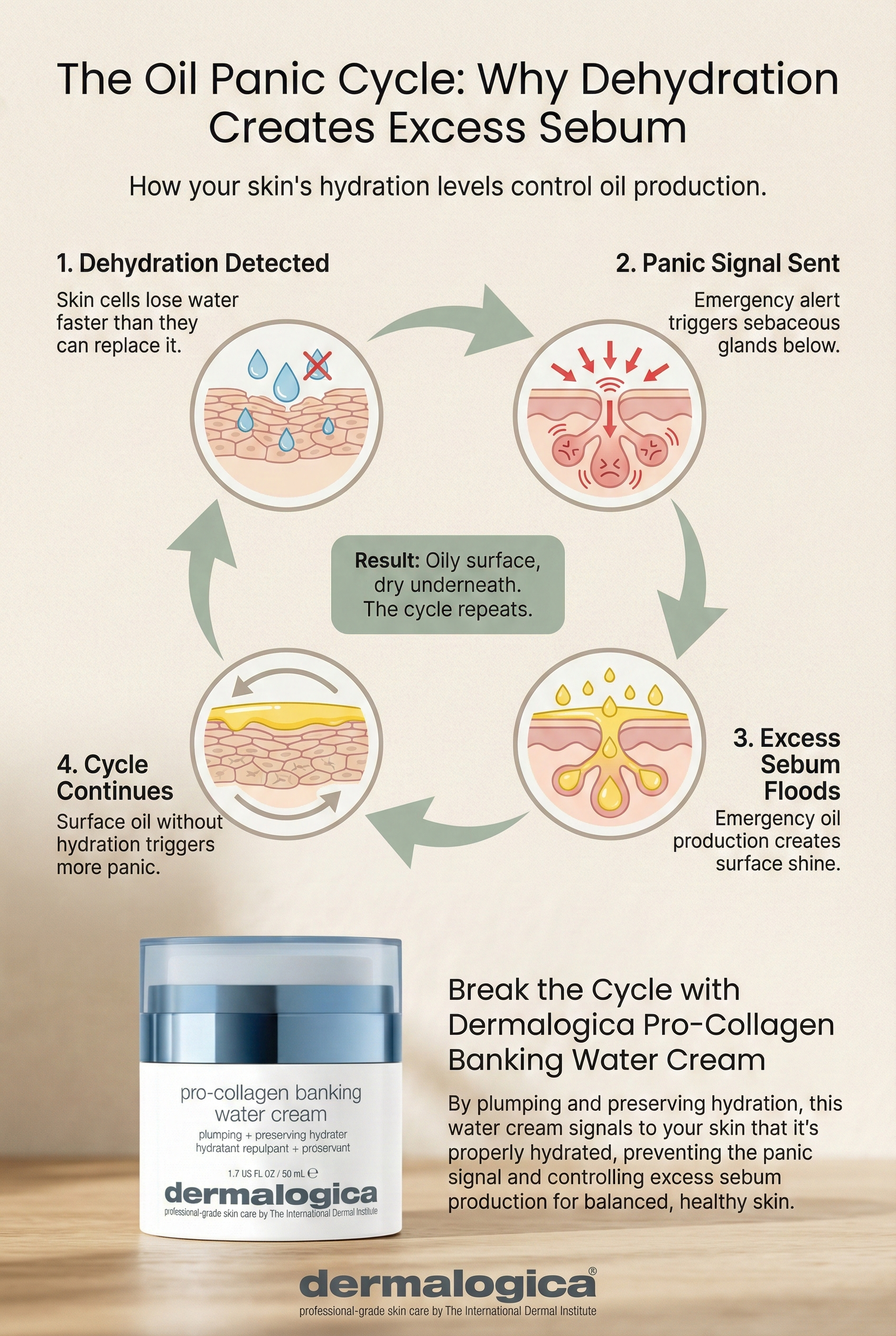
If you've been skipping moisturiser because your skin feels oily by lunchtime, you're not alone. It's logical thinking: why add more moisture to skin that's already producing too much? But here's what's actually happening, your skin isn't naturally oily. It's dehydrated and panicking.
When skin detects it's losing water faster than it can hold onto it, it triggers an emergency response. It floods the surface with sebum, not because you have oily skin, but because dehydrated skin desperately needs protection. This compensatory oil production is your skin's backup plan, and skipping moisturiser only reinforces the panic cycle. Let me show you what's really going on beneath that shine, and why lightweight hydration is the solution your skin's been waiting for.

The Oil Panic Mechanism: What Your Skin Does When It Detects Dehydration
Your skin has a sophisticated detection system that constantly monitors hydration levels in the stratum corneum, the outermost layer where water retention happens. When this layer starts losing water faster than it can replace it, specialised cells send distress signals to the sebaceous glands below. Think of it as your skin's emergency alert system.
The sebaceous glands respond by ramping up sebum production. This isn't random, sebum acts as an occlusive barrier that slows down water loss from the surface. It's your skin's backup plan when its primary hydration system isn't working properly. The problem? This emergency sebum response creates that greasy, shiny appearance you've been trying to avoid.
Here's the crucial distinction: naturally oily skin produces consistent sebum levels throughout the day because that's its baseline. Dehydration-triggered oil production fluctuates, you might wake up with fairly normal skin, then notice increasing shine as the day progresses and your hydration levels drop. By afternoon, your T-zone is slick, your pores look larger, and you're reaching for blotting papers.
This is why so many people with oily-looking skin are actually dealing with dehydration. The sebum you see isn't a sign of naturally oily skin, it's a symptom of skin that's working overtime to protect itself from water loss. When I see clients whose skin feels tight after cleansing but looks oily an hour later, this compensatory mechanism is almost always the culprit.
The biological reality is fascinating: your skin will continue this panic response as long as it detects insufficient hydration. Stripping away the oil with harsh cleansers or skipping moisturiser doesn't solve the underlying dehydration, it just triggers another round of emergency sebum production. You're stuck in a cycle where your skin never receives the signal that it's safe to stop producing excess oil.
Key Takeaways
- Oily skin often appears greasy because it's dehydrated, not naturally oily.
- When skin lacks water, it triggers a panic response that floods the surface with sebum as a protective backup plan.
- This compensatory oil production makes skin look greasier while the deeper layers remain dehydrated.
- Skipping moisturiser worsens this cycle because skin continues producing excess sebum to compensate for missing hydration.
- The solution isn't stripping oil away, it's providing lightweight, water-based hy...
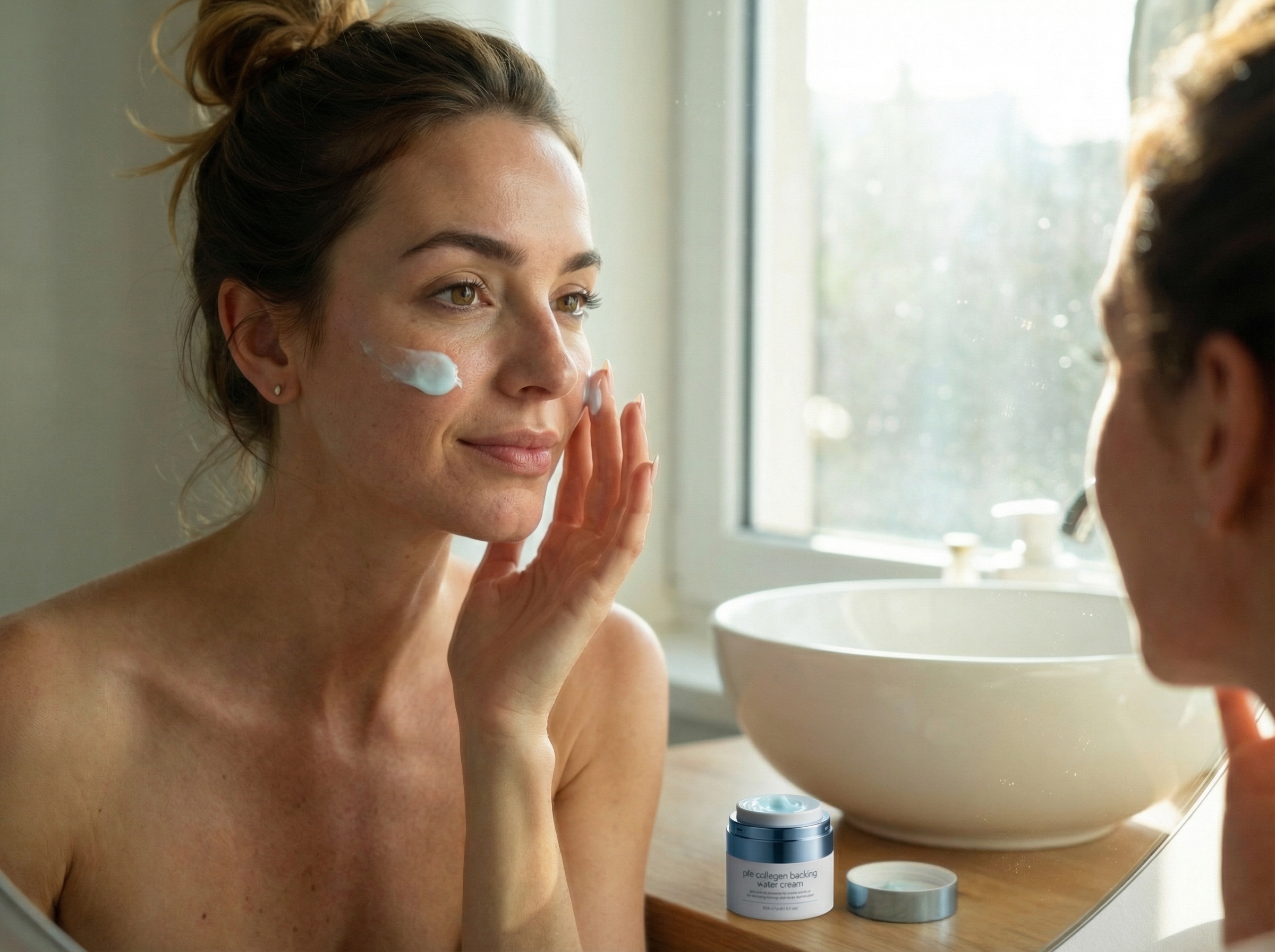
Why Skipping Moisturiser Makes Oil Production Worse
The logic seems sound: if moisturiser adds moisture and your skin already looks too moist (oily), then skipping it should help, right? But skin doesn't recognise sebum and water-based hydration as the same thing. Sebum is lipid-based protection; hydration is water content within cells. Your skin needs both, and one cannot substitute for the other.
When you skip moisturiser, you're denying your skin the water-based hydration that would signal to those sebaceous glands that the emergency is over. Instead, skin continues detecting dehydration in the stratum corneum and keeps flooding the surface with sebum. You end up with a greasy surface layer sitting on top of dehydrated skin underneath, the worst of both worlds.
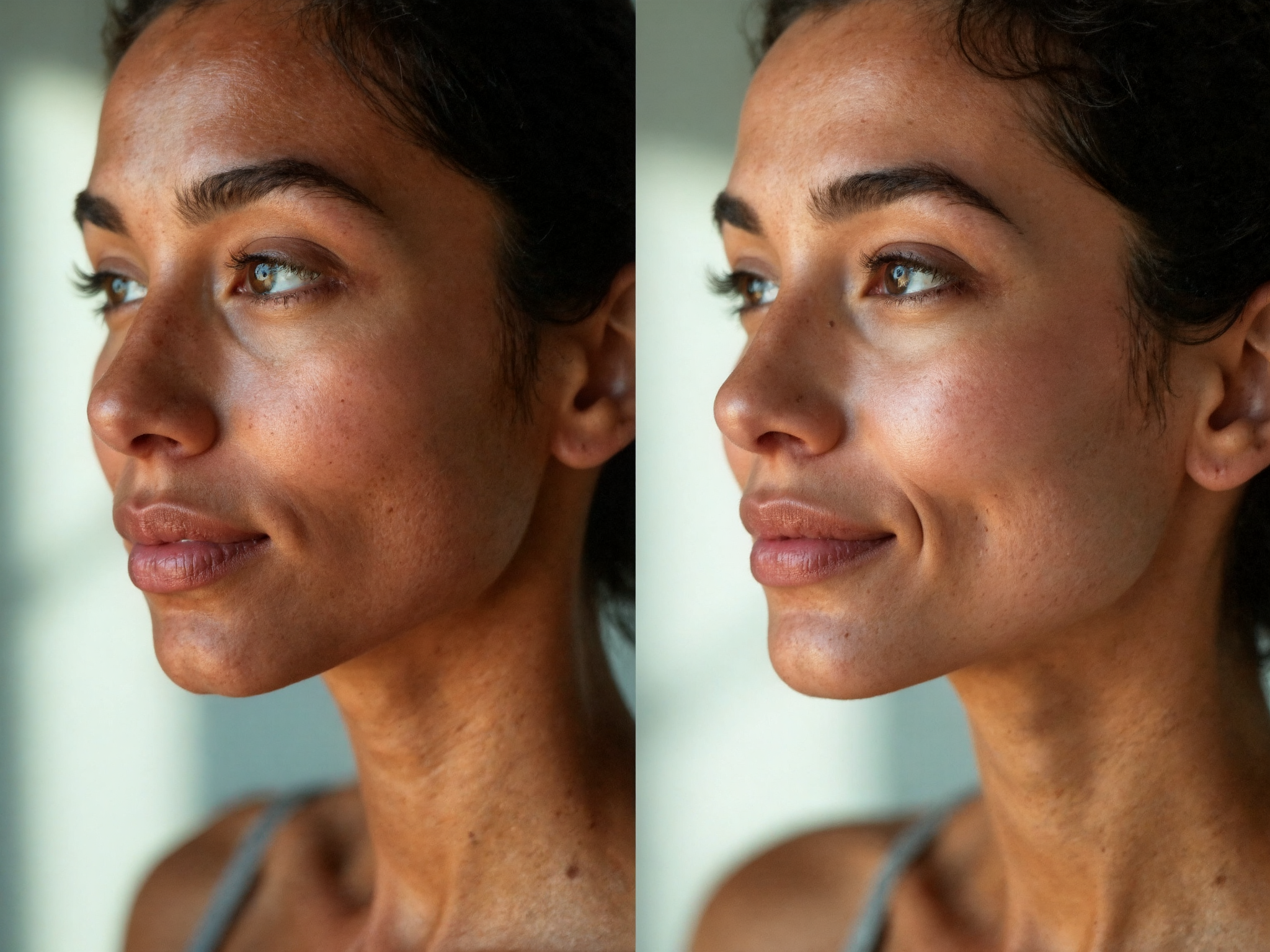
The enlarged pore connection is worth understanding too. When skin is chronically dehydrated, the lack of plumpness in the surrounding tissue makes pores appear larger and more visible. Add excess sebum production to already-visible pores, and you get that congested, rough texture that makes skin look even oilier. Proper hydration helps plump the skin around pores, making them appear smaller while at once reducing the compensatory oil production that was making them look worse.
This is counterintuitive, I know. Everything in the beauty industry tells you to mattify, control, and reduce oil. But the biological reality is clear: dehydrated skin produces more oil, not less. The solution isn't removing moisture, it's providing the right kind of moisture so your skin can stop panicking.
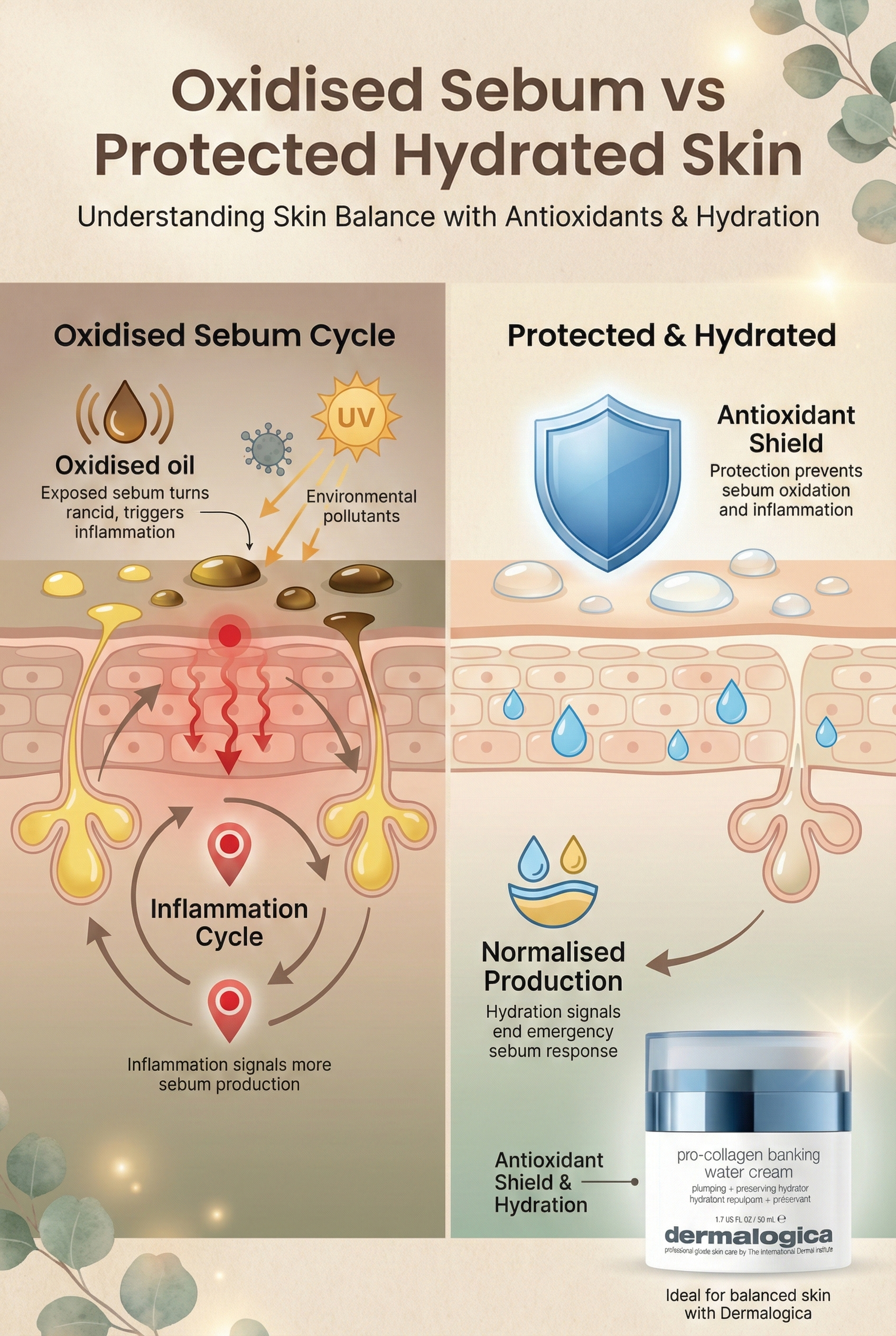
The Oxidative Stress Factor: Why Excess Sebum Creates More Problems
Here's where the situation gets more complicated. That excess sebum sitting on your skin's surface doesn't just make you look shiny, it oxidises. When sebum is exposed to air, UV radiation, and environmental pollutants, it undergoes a chemical transformation called lipid peroxidation. The oils literally become rancid on your skin's surface.
Oxidised sebum is one of the most causing swelling substances your skin encounters. It triggers immune responses, activates causing swelling pathways, and creates an environment where acne-causing bacteria thrive. This is why people with excess oil production often struggle with persistent swelling, even when they're not having active breakouts. The oxidation process creates a chronic low-grade causing swelling state that keeps skin irritated and reactive.
The swelling from oxidised sebum then signals skin to produce even more sebum as part of the causing swelling response. You're now in a vicious cycle: dehydration triggers excess sebum, excess sebum oxidises and inflames, swelling triggers more sebum production. Each cycle makes the problem worse, and no amount of oil-control products can break this pattern because they're not addressing the root cause.
protective defence becomes crucial here. Your skin needs protection against the oxidative damage that's making the oil problem worse. This is where the right products make a measurable difference, not by stripping oil away, but by protecting the sebum that's there from oxidising in the first place. When sebum doesn't oxidise, it doesn't trigger the causing swelling cascade that perpetuates excess production.
The connection between oil production and breakouts isn't as simple as "oil clogs pores." It's the causing swelling environment created by oxidised sebum that makes skin at risk to acne. This is why some people have very oily skin with no breakouts, their sebum isn't oxidising and inflaming, while others with moderately oily skin struggle with constant congestion. The oxidative stress factor is often the missing piece in understanding why your skin behaves the way it does.
The Lightweight Hydration Solution: How to Break the Cycle
Breaking this cycle requires a two-part approach: protective defence to protect sebum from oxidising, and lightweight hydration to signal to skin that the dehydration emergency is over. This is where the Pro-Collagen Banking System's approach makes biological sense.
The Pro-Collagen Banking Serum delivers concentrated antioxidants including vitamin C and white tea extract directly into skin. These antioxidants neutralise the free radicals that would otherwise oxidise sebum, breaking the swelling-oil cycle before it starts. The serum's lightweight texture absorbs right away without adding heaviness, making it ideal for skin that's already producing excess surface oil. This is your first line of defence, protecting the sebum that's there from becoming causing swelling.
The Pro-Collagen Banking Water Cream then provides the crucial hydration component. Its water-burst technology delivers intense hydration in a weightless gel-cream texture that feels like nothing on skin. This is the signal your sebaceous glands have been waiting for, confirmation that skin has adequate water content and can stop the emergency sebum response. The cream's hyaluronic acid holds up to 1,000 times its weight in water, providing sustained hydration throughout the day without any greasy residue.
Why both together? The serum addresses the oxidative stress that's perpetuating swelling and excess oil production. The water cream addresses the dehydration that's triggering the compensatory sebum response in the first place. Used together, they interrupt the cycle at both points, allowing your skin to finally normalise its oil production.
The timeline matters here. You won't see overnight transformation, skin needs time to recalibrate its sebum production once it receives consistent hydration signals. Most clients notice reduced midday shine within two weeks. By six weeks, sebum production has typically normalised to healthy levels. By three months, the difference is dramatic, skin that was chronically greasy now maintains a healthy, balanced appearance throughout the day.Understanding how dehydration manifests differently across skin types helps you recognise what your specific skin is telling you.
Ready to stop the oil panic cycle? The Pro-Collagen Banking System gives your skin the protective protection and lightweight hydration it needs to finally normalise sebum production.
Your oily skin isn't the problem, it's the symptom. When skin detects dehydration, it responds with emergency sebum production that makes you look greasier while the deeper layers remain thirsty. Skipping moisturiser doesn't solve this; it reinforces the panic cycle that's creating excess oil in the first place.
The solution is counterintuitive but biologically sound: lightweight, water-based hydration that signals to your sebaceous glands they can stop the emergency response. Combined with protective protection that prevents sebum oxidation and swelling, you finally break the cycle that's been keeping your skin stuck in oil-overproduction mode. Your skin isn't naturally this oily, it's just been waiting for the right support to normalise.


