


Every winter, I have the same conversation in the treatment room. Someone tells me their skin feels tight by 3pm, even though they're using the same cleanser and moisturiser that worked fine in summer. They're not doing anything wrong. Their skin is just asking for something different, and most of us were never taught how to listen.
This year's World Skin Health Day theme is Better Knowledge, Better Skin Health. I love this, because the answer to winter skin struggles usually isn't another product. It's learning to read the signs your skin is already giving you. Once you know what your skin needs, you can respond to it, instead of just restocking the same things out of habit.
Why Does Your Skin Feel Different in Winter?
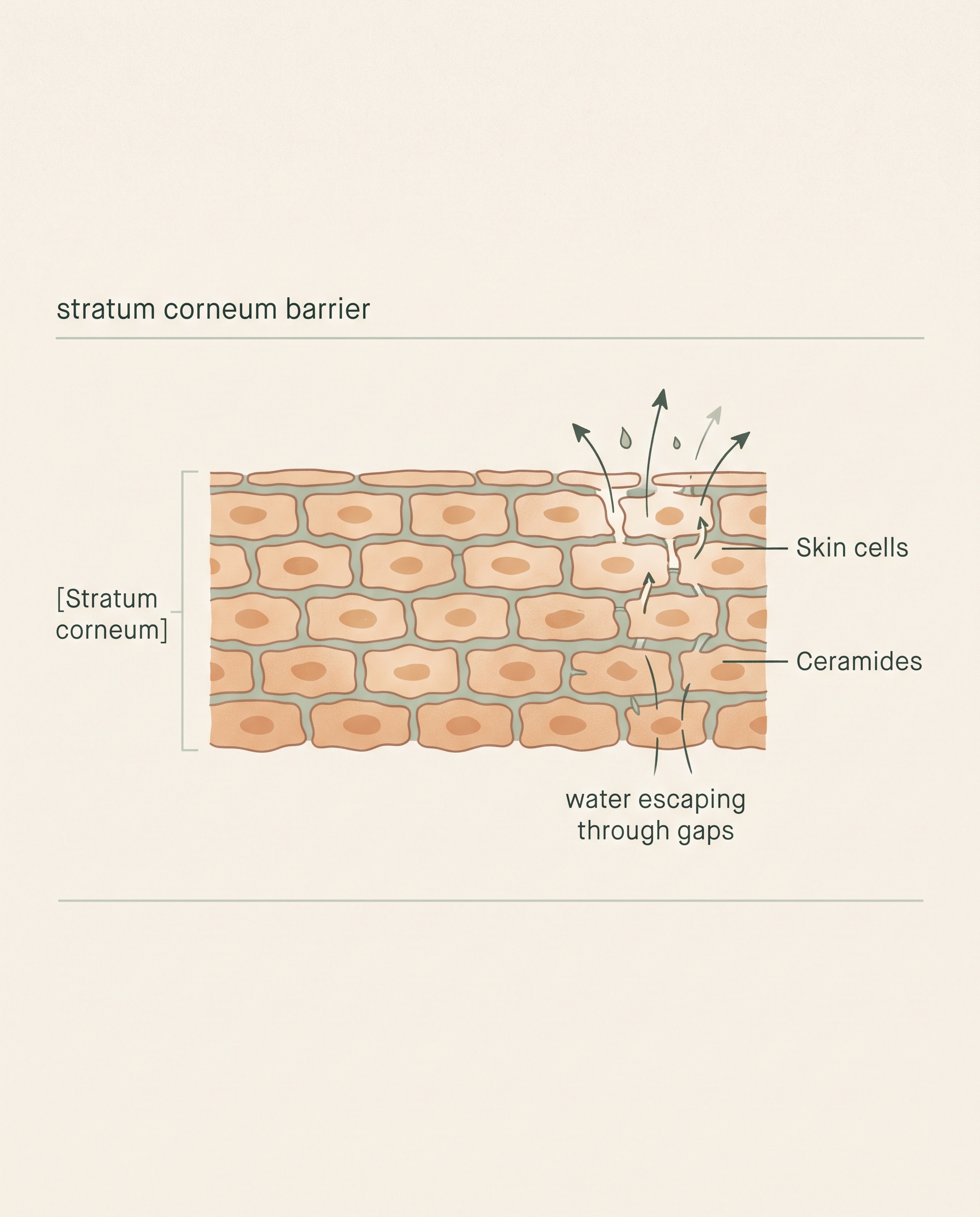
Winter changes the air around you, and your skin feels that shift fast. Cool temperatures and lower humidity pull water out of your skin faster than usual. This is called transepidermal water loss, or TEWL. It simply means water is escaping through your skin's outer layer, instead of staying where it should.
Your skin's outer layer is called the stratum corneum. Think of it as a brick wall. Your skin cells are the bricks. Natural fats called ceramides act as the mortar, holding everything together and keeping water locked in.
In winter, that mortar comes under more pressure. Cold air outside, heating indoors, and hot showers all pull moisture from your barrier. When the mortar wears thin, water escapes faster than your skin can replace it. That's when the signs start to show up.

Does Your Skin Feel Tight or Flat by the Afternoon?
This is one of the most common signs I hear about in winter. Your skin feels fine in the morning. By early afternoon, it feels tight, flat, or a little uncomfortable, even though you moisturised.
This usually means your barrier is running low. Water is leaving your skin faster than your moisturiser can replace it. Your skin isn't broken. It's simply asking for more support to hold onto the moisture you're already giving it.
This is different from needing a heavier cream. It's about giving your skin ingredients that help it hold water, not just add water on top. Once you understand this, that tight feeling makes a lot more sense.
Key Takeaways
- Your skin gives clear signals when it needs support, especially in winter.
- If it feels tight or flat by afternoon, your barrier (the skin's outer protective layer) is losing water faster than it can replace it.
- Dullness that won't lift means your skin's reserves of vitamins and antioxidants are running low.
- New sensitivity to products you've always used shows your barrier has thinned, lowering your skin's resilience.
- Dry patches that keep returning mean your skin can't hold onto moisture, eve...
Is Your Skin Looking Dull and Not Bouncing Back?
Dull skin in winter is often a sign that your skin's reserves are running low. Your skin uses vitamins and antioxidants (protective compounds that help defend against everyday stress) to repair itself and handle things like cold wind and indoor heating.
In winter, your skin works harder with less help from the environment. There's less natural oil production, less humidity in the air, and more indoor heating drying things out. Over time, this uses up your skin's reserves faster than it can restock them.
When reserves run low, your skin looks flat instead of healthy. It doesn't bounce back the way it used to after a big week or a late night. That dullness is a sign your skin needs to be fed, not just hydrated.
Is Your Skin Reacting to Things It Used to Handle?
If a cleanser or serum that never bothered you suddenly feels sharp or stings, that's worth paying attention to. It usually means your barrier has thinned, and your skin's resilience, its ability to handle everyday products and changes, has dropped.
A weaker barrier lets more get through to the nerve endings underneath. That's why things sting that never used to. It's not that your skin has become fussy. It's that the protective layer between your skin and everything you put on it isn't as strong right now.
This is a sign to simplify, not add more. Your skin is asking for calm and repair, not a new active ingredient to push through.
Do Dry Patches Keep Coming Back No Matter What You Do?
Some clients tell me they moisturise the same dry patch every single day, and it still comes back. This usually means the problem isn't a lack of moisturiser. It's that your skin can't hold onto the hydration you're giving it.
This comes back to that barrier again. If the ceramides and natural fats that seal moisture in are depleted, water passes straight through your skin instead of staying put. You can apply cream all day, but if the barrier can't hold it, the patch returns.
Recurring dry patches are your skin telling you it needs repair first, then hydration. Once the barrier is stronger, the same moisturiser you've been using often works far better.
What Does Recovery Actually Look Like?
Once you can read these signs, winter skincare gets much simpler. Most of the time, run-down winter skin isn't asking for a new routine. It's asking for recovery.
This is where the Dermalogica MultiVitamin Power Recovery Masque comes in. It's a deep vitamin treatment for skin that feels tired, flat, and depleted. Think of it as a reset for skin that's been through a hard week, or a hard winter.
For everyday support, the Dermalogica MultiVitamin Power Recovery Cream keeps your skin fed with vitamins daily. So it has what it needs to repair itself and stay resilient as the season goes on.
Neither of these is about adding another step for the sake of it. They're about giving your skin what run-down winter skin is actually asking for: repair, not just more moisture on top.
Reading your skin is a skill, and like any skill, it gets easier with practice. Once you notice these signs, you can start to work out what your skin actually needs. Tightness by afternoon. Dullness that won't lift.
New sensitivity. Dry patches that keep returning. Each one is your skin asking for something specific, instead of you just restocking what you've always bought.
If you're not sure what any of this means for your own skin, that's exactly what we're here for. You can get free skin advice from our team, online or over video, no pressure and no need to buy anything. Learn more about our free skin advice and let's work out what your skin is really asking for this winter.


