


If your skin stings when you cleanse, flushes in the wind, or itches for no clear reason, you've probably been told to find something "soothing." But reactive sensitised skin usually needs two different things, not one. Soothing calms the moment. A second job, helping your skin hold steady underneath, is often missing from the conversation altogether.
I'm Sarah, a skin therapist. Why does skin react, will it always be this way, and what actually helps? Let's slow down and look at what's going on, on your face and on your body, because reactive skin doesn't stop at your jawline.
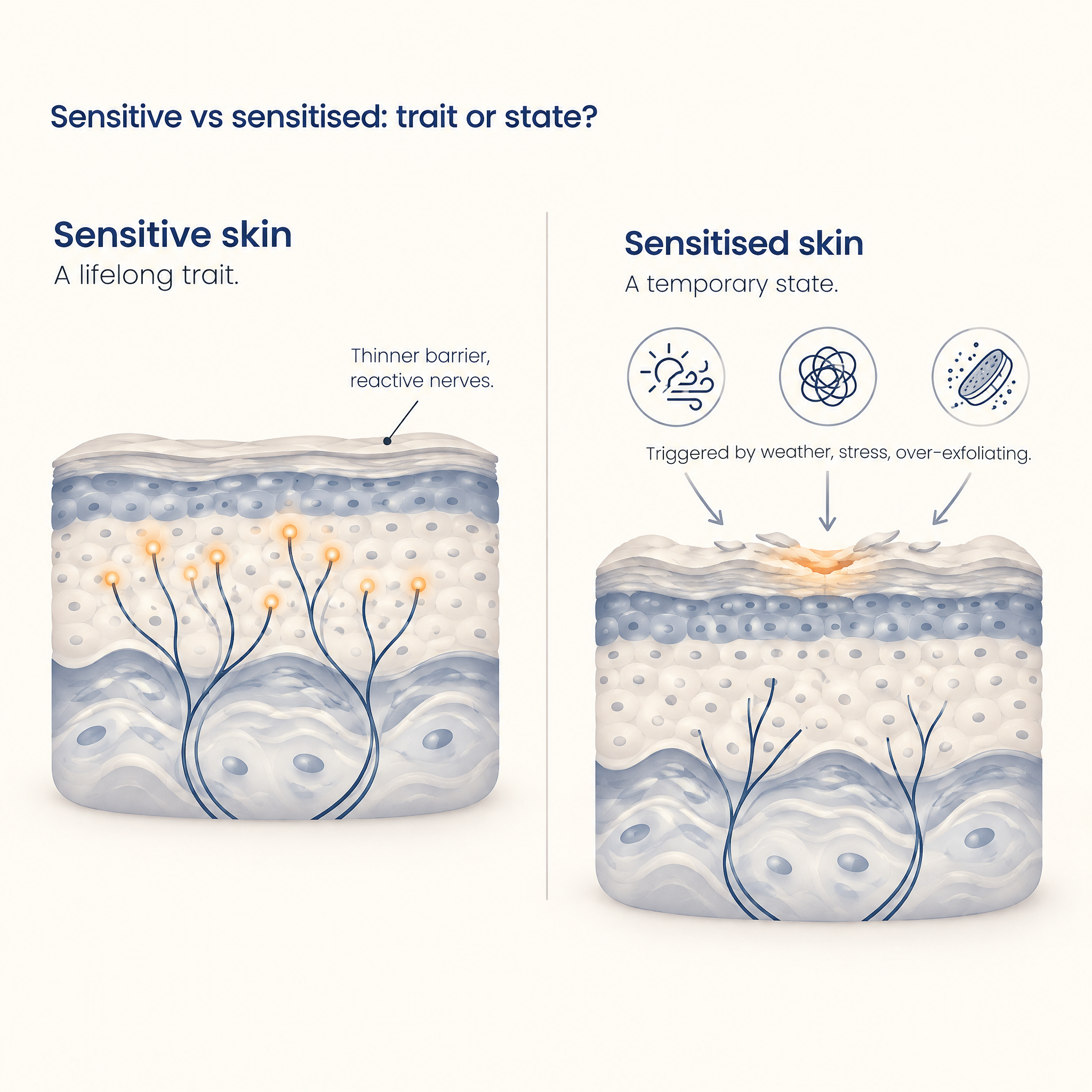
Is your skin sensitive, or is it sensitised?
These two words get used as if they mean the same thing. They don't, and the difference matters for how you approach your routine.
Sensitive skin is a trait. Some people are simply born with skin that reacts more easily, often linked to a thinner barrier or nerve endings that fire off more readily. It tends to be a lifelong pattern, though it can be managed well.
Sensitised skin is a state. It's what happens when skin that wasn't especially reactive starts behaving that way, often after harsh weather, over-exfoliating, a run of stress, or simply getting older. The good news is that a sensitised state can shift. Skin that's sensitised can often move back toward feeling calmer, given the right support. You can read more about how this outer layer works in our guide to your skin's barrier function.
Here's why the distinction matters. If your skin is sensitive by nature, your goal is ongoing management. If it's sensitised, your goal is helping it recover its steadiness. Either way, the approach starts with understanding what's happening beneath the surface, not just calming the sting.
Why soothing and holding steady are two different jobs
Most products aimed at reactive skin focus on one thing: soothing. And soothing matters. It settles the itch, the sting, the flush, right when you feel it. That immediate comfort is genuinely important, especially on a bad skin day.
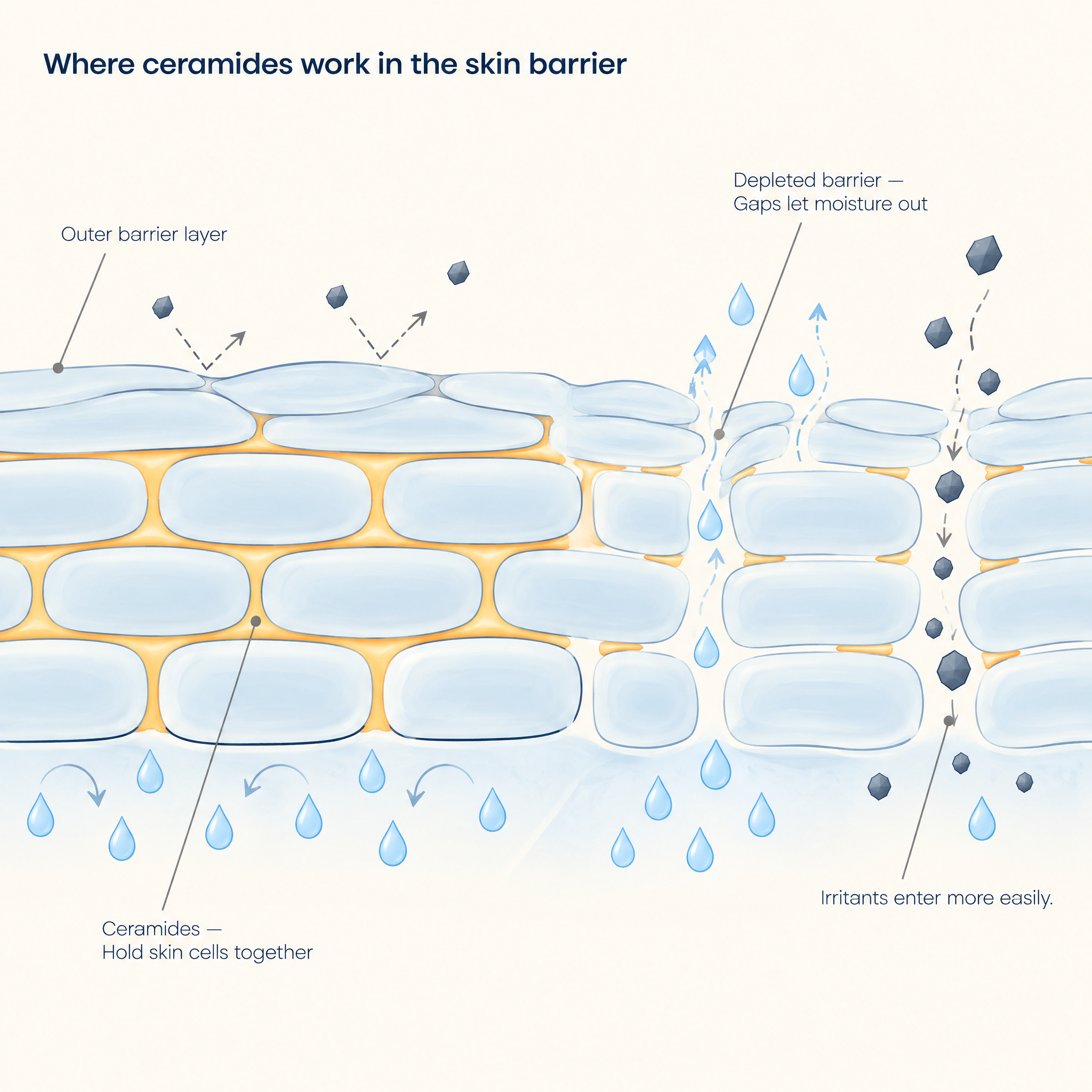
But soothing a feeling isn't the same as helping skin hold steady over time. Your skin's barrier is made up largely of ceramides, the natural fats that sit between skin cells like mortar between bricks. When that mortar is depleted, your barrier develops gaps. Moisture escapes more easily, and irritants get in more easily too. This is often what sits underneath ongoing reactivity, not just a single trigger.
So the other job, alongside soothing, is supporting that lipid structure so skin reacts less over time. This is a separate task from calming a flare-up. And it's one that's often missing from "gentle" or "calming" products that focus purely on the moment. If you've tried our soothing duo for sensitive skin, you'll know how valuable that instant comfort is. What we're talking about here works alongside it, not instead of it.
Key Takeaways
- Reactive sensitised skin reacts fast to things like weather, products, or rubbing, with stinging, redness, or itch.
- 'Sensitive' is a trait you are born with.
- 'Sensitised' is a state your skin moves into, often when its barrier (the outer layer that holds moisture in and irritants out) is low on ceramides, the natural fats that hold skin cells together.
- Soothing settles how skin feels right now.
- A separate job is helping skin hold steady over time, so it reacts less often.
What reactive skin looks like on your face, and on your body
When people think of sensitive or sensitised skin, they usually picture a red, stinging face. But reactive skin shows up on the body just as often, and it's frequently ignored.
Think of inner arms that sting after a hot shower, a chest that flushes with certain fabrics, or shins that feel tight and itchy in winter. The same barrier gaps and nerve sensitivity happening on your face can happen anywhere on your skin. Body skin is often thinner in some areas than people assume. And it's exposed to just as many triggers, hot water, friction, and dry air among them.
Common triggers for both face and body include temperature swings, harsh cleansing, wind, and stress. If stress is a pattern you notice in your own reactions, our piece on connecting stress to the skin digs into why that link is real, not just a feeling. Visible redness, wherever it shows up, is worth understanding rather than just covering. We've also written about practical ways to settle redness if that's your main concern right now.

What helps skin hold steady, ingredient by ingredient
This is where Dermalogica Stabilizing Repair Serum comes in. It's a new addition designed for reactive, irritated skin, and it's made for face and body use alike, not just a facial afterthought.
It's built around three main things. Colloidal oatmeal is a finely milled oat that's long been used to calm the feeling of itch and irritation. A biomimetic lipid complex is a blend of fats designed to resemble the ones already found in your skin. This is the "holding steady" piece we talked about above. Soothing botanical extracts round out the formula, working alongside the lipids rather than just sitting on the surface.
Used together, this serum is formulated to visibly calm redness and dryness, ease the feeling of itch, sting and tightness, and help skin hold onto moisture, building a reserve it can draw on through the day. It's worth being clear about what it isn't, too. It's not formulated to target breakouts, it won't fade pigmentation, and it's not an anti-ageing product, it doesn't build collagen. Its whole job is comfort and steadiness, not a long list of other things.
How to use Stabilizing Repair Serum, on face and body
Application is simple by design. Squeeze a small amount into your palm, rub your hands together to warm it slightly, then press it onto your face and neck. If you've got reactive patches on your body, arms, chest, or anywhere else, press it into those areas too. You can use it up to twice daily.
A couple of practical notes. If your T-zone runs oily, this richer formula may feel heavier there than you'd like. It's not formulated as an oil-control product, so on an oily facial T-zone specifically, you might prefer to use it more lightly or only where you need comfort most. This doesn't apply to body use, where richer formulas are usually welcome.
One more thing worth being upfront about. This serum isn't intended for broken or weeping skin. If your skin is open, weeping, or you're not sure what's going on, see a skin professional first before introducing anything new.
What to expect, and by when
I always think timelines matter more than vague promises, so here's what Dermalogica's consumer perception study found. Relief from the feeling of irritation was reported from around 30 minutes. By 5 days, skin was reported as soothed and smoother. By 28 days of twice-daily use, people reported reduced reactivity, along with less scabbing and flaking (Dermalogica consumer perception study, 33 subjects, twice daily, 4 weeks).
That early comfort is genuinely quick. But holding steady, the slower, underlying job of supporting your barrier, takes longer to show. This isn't an overnight fix, and it isn't meant to be one. Give it the full four weeks before deciding how it's working for your skin.
Reactive sensitised skin isn't one problem with one fix. It's a combination of a trait you might be born with and a state your skin can move in and out of, shaped by weather, stress and how well your barrier is holding together. Soothing the moment matters, but so does the slower job of helping skin hold steady underneath.
If you'd like to understand more about what's happening with your own skin, our team is always here to help you work through it. Learn more about building a routine that covers both jobs, comfort now and steadiness over time.


