


You look closer in the mirror and there it is again, that stubborn darker patch under your eye that no amount of concealer seems to fully hide. You have tried a serum here, a cream there, and you are left wondering if under-eye pigmentation is just something you have to live with.
Here is the good news. Pigmentation around the eyes is one of the most well understood skin concerns, and it responds to the right ingredients used the right way. The catch is timing.
Your skin needs a few weeks of steady, daily care before you see the shift. That is not a flaw in the process. It is actually the process working as it should.
What Causes Pigmentation Around the Eyes?
The skin under your eyes is thinner than skin almost anywhere else on your face. That thinness makes it more reactive to triggers that cause extra pigment production.
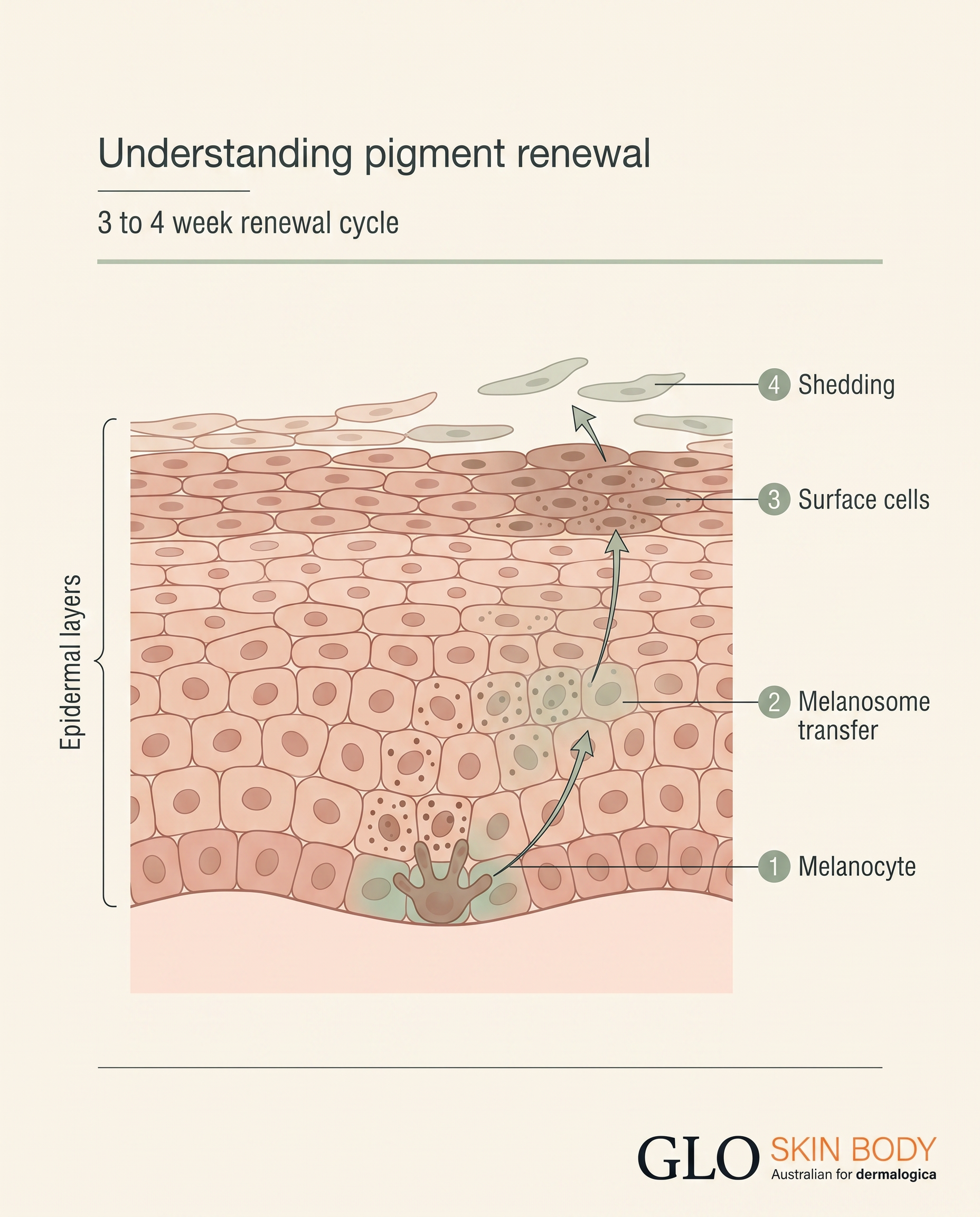
Your melanocytes are the cells responsible for making melanin, the pigment that gives skin its colour. When these cells are triggered by sun exposure, rubbing, allergies, or inflammation, they can go into overdrive and produce more pigment than usual. This is sometimes called post-inflammatory hyperpigmentation, or PIH for short. It is your skin's healing response, not a sign of damage.
UV exposure is one of the biggest triggers. Even short, everyday sun exposure can stimulate pigment-producing cells in the eye area, especially in Australia's strong UV conditions. If you want to understand more about how sun exposure affects skin long term, our piece on why you need SPF every day covers this in more depth.
Key Takeaways
- Under-eye pigmentation happens when melanocytes (your skin's pigment-making cells) produce extra melanin in response to sun exposure, rubbing, or inflammation.
- Because the eye area's skin cycle takes about 3 to 4 weeks to renew itself, ingredients like niacinamide need that same window of daily, consistent use to show visible change.
- The timeline is not a delay.
- It is simply how long your skin needs to shed pigmented cells and slow new pigment production.
- Sticking with a simple routine every...
Why Does Under-Eye Pigmentation Take 3 to 4 Weeks to Improve?
Your skin renews itself on a cycle. Old cells shed from the surface, and new cells rise up to replace them. This cycle takes roughly 3 to 4 weeks to complete.
This matters because pigmented cells need to move through that full cycle before they shed and reveal fresher, more even-toned skin underneath. No product can skip this biological process. What a good formula can do is work with it, by slowing new pigment production while your skin does its natural renewal.
Niacinamide is one of the most studied ingredients for this. Research shows it can reduce the transfer of melanosomes (the tiny pigment packages melanocytes hand off to surface skin cells) by a significant margin when used consistently. That word, consistently, is the key. Skipping days means restarting the clock on that 3 to 4 week window, because your skin needs steady daily input to keep the process moving forward.
Think of it less like a countdown and more like training. One workout does not build strength. Daily, repeated effort does. The same logic applies here.

What Ingredients Help Fade Pigmentation Under the Eyes?
A handful of ingredients have strong evidence behind them for pigmentation support around the delicate eye area.
Niacinamide reduces pigment transfer to surface cells and calms inflammation at the same time, which helps prevent new marks from forming. Peptides support skin density and firmness, which matters under the eyes where thin skin can make pigment and shadowing look more obvious. Vitamin C works differently again, interfering with the enzyme that produces melanin in the first place.
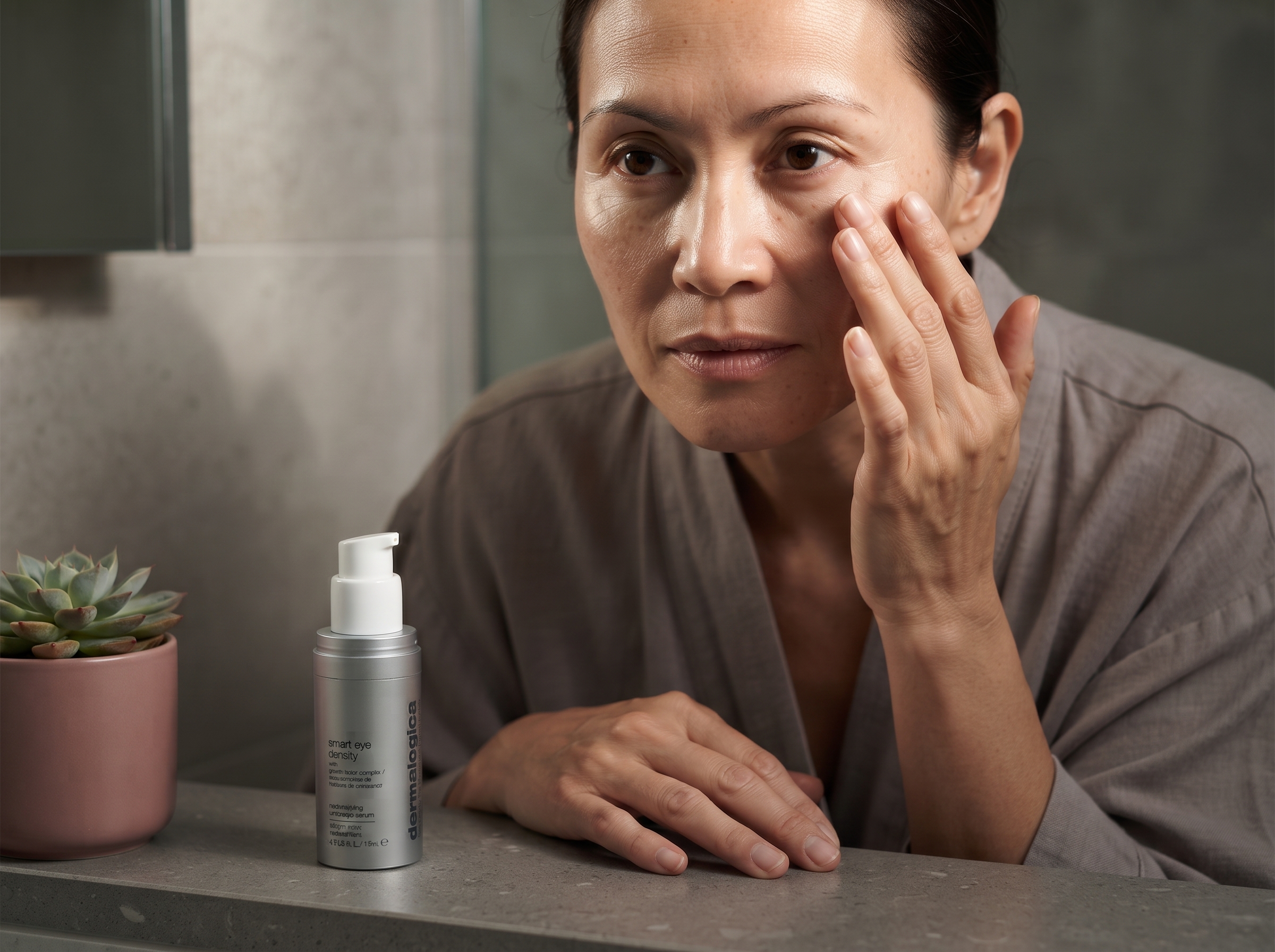
This is exactly why the Smart Eye Density Booster combines niacinamide with peptides designed for this specific area. If you want to explore vitamin C's role for the eye area further, our article on brightening your eyes with a boost of vitamin C explains the mechanism in more detail. We also recommend reading about the PowerBright TRx range, which uses similar tone-evening ingredients across the face.
None of these ingredients work instantly. They work steadily, which is precisely why daily use matters more than product-hopping.
How to Build a Routine That Actually Works
The most effective under-eye pigmentation routine is often the simplest one, used every single day.
Apply your treatment morning and night to clean, dry skin. Follow with a broad-spectrum SPF during the day, since UV exposure can undo the progress you are working towards. Understanding how your skin's protective barrier functions can also help you choose products that support rather than irritate this sensitive area. This you can read about in your skin's barrier function explained.
Give your routine the full 3 to 4 weeks before judging results. Take a photo in the same light each week if it helps you track subtle change. Most people who stick with a simple, consistent routine start noticing a difference in tone and brightness within that window, with continued improvement the longer they stay consistent.
Under-eye pigmentation is not permanent, and it is not a mystery either. It is your skin's natural pigment response, and it responds well to ingredients like niacinamide and peptides when you give them the time they need to work.
The 3 to 4 week timeline is not something to work around. It is the actual window where consistent, daily use creates real change. If you are ready to build that habit, the Smart Eye Density Booster brings niacinamide and peptides together in one simple step.


