


You've slept well. You've drunk enough water. But your undereye area still looks hollow, shadowed, and somehow older than the rest of your face. This is undereye deflation, and it has nothing to do with how tired you are.
Deflation is a structural change. It happens beneath the surface, where collagen, fat, and even bone shift with age. No amount of concealer or sleep fixes it, because it isn't caused by fatigue. It's caused by biology. Once you understand what's actually happening under your eyes, the right kind of care starts to make a lot more sense.
What Is Undereye Deflation, Exactly?
Deflation means volume loss. Think of your undereye area at 25. It sat plump against your cheekbone, with a smooth, even transition from lower lid to cheek. That smoothness relied on a cushion of fat, firm skin, and solid bone structure underneath.
Over time, that cushion shrinks. The skin above it thins. The result is a hollow or a shadow that looks like tiredness but doesn't behave like tiredness.
It's there in the morning. It's there after a good night's sleep. It's there no matter how much water you drink.
This is different from puffiness or pigmentation. Deflation is a loss of structure, not a surface issue. If you've ever wondered why your undereye area seems to need its own kind of care, this is exactly why.
What Five Biological Changes Cause Undereye Deflation?
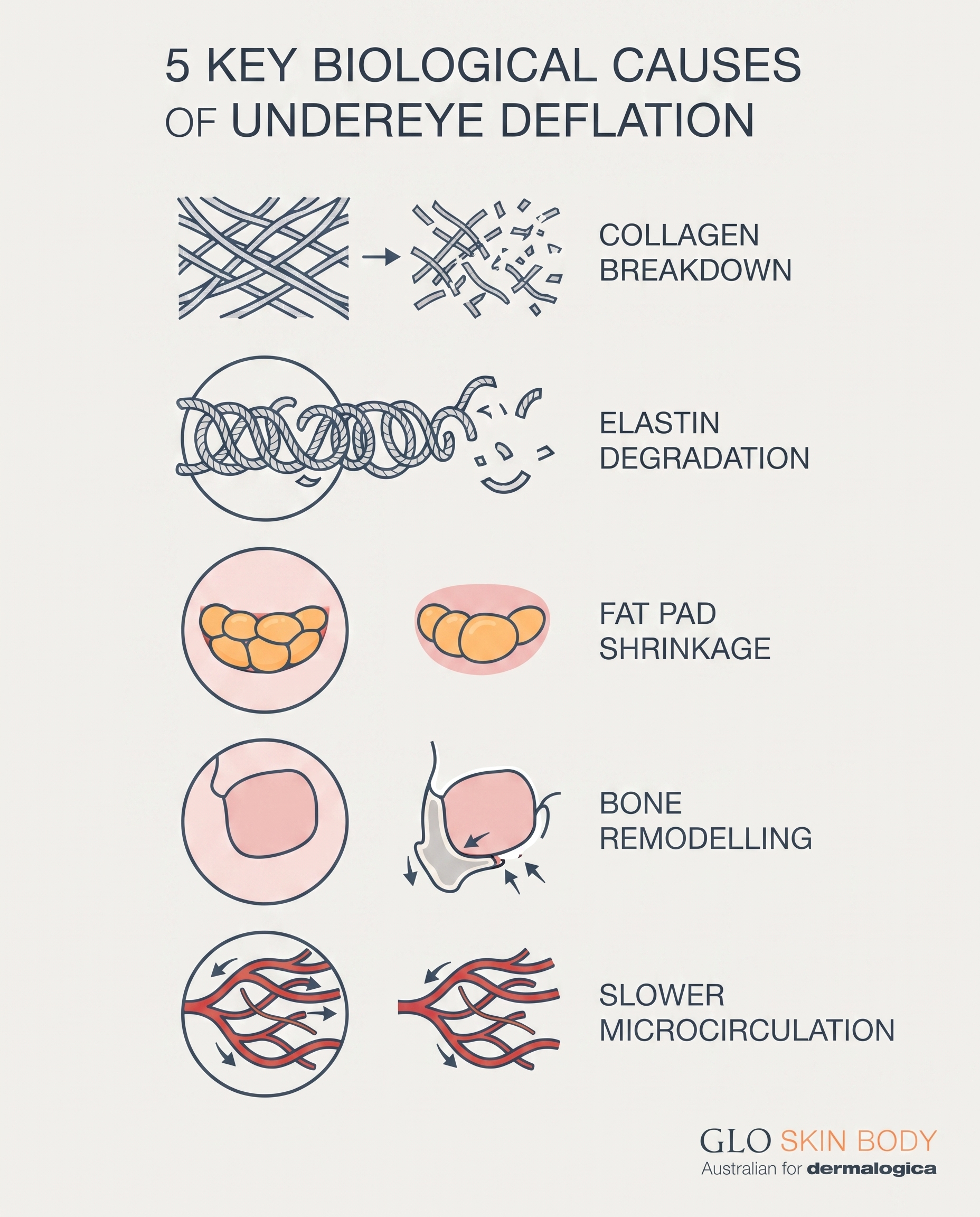
Deflation isn't one process. It's five separate changes happening at once, each one chipping away at the support your undereye area relies on.
- Collagen breakdown: Collagen is the protein that gives skin its firmness. Production drops by around 1% every year after your 20s, and the undereye area, where skin is already thinner, feels this loss first.
- Elastin degradation: Elastin gives skin its bounce, its ability to spring back. As it breaks down, skin loses that recoil and starts to sit looser against what's underneath.
- Fat pad shrinkage: The small fat pads that once cushioned your undereye area shrink and shift lower on the face. This is a major reason for hollowing, not just skin ageing.
- Bone remodelling: Your eye socket itself changes shape with age. The bony rim that used to support the undereye area gradually recedes, removing part of its foundation.
- Slower microcirculation: Blood flow to this delicate area declines with age, meaning less oxygen and fewer nutrients reach the cells that are meant to repair and rebuild it.
These five changes compound. Less blood flow means less energy for repair. Less collagen means less structure. Less fat means less cushioning. Together, they explain why undereye deflation is so hard to shift with hydration alone, and why general anti-ageing advice often misses the mark here.
Key Takeaways
- Undereye deflation is the loss of volume and structural support under your eyes as you age.
- Unlike tiredness or dark circles, deflation comes from real biological changes: collagen and elastin breakdown, shrinking fat pads, bone remodelling, slower microcirculation, and reduced cell repair.
- These five processes work together to create hollows and shadows that don't fade with sleep or concealer.
- Clinical testing on Dermalogica's Smart Eye Density Booster showed a 129% increase in measured skin...
Why Doesn't Your Eye Cream Fix This?
Most eye creams are built to hydrate and smooth the surface. That's genuinely useful for fine lines and dryness. But surface hydration can't rebuild a fat pad, restore collagen density, or improve blood flow to cells that have slowed down.
This is what we'd call the ceiling of a traditional eye cream. It does what it's formulated to do, and it does that well. But deflation is a structural problem, and structural problems need products that can support the skin's actual rebuilding process, not just its surface feel.
If you've tried a range of eye products, including options like our BioLumin-C Eye Serum for brightness. And still feel like your undereye area looks hollow, this is likely why. Different concerns need different tools.
What Does the 129% Density Result Actually Mean?
In skincare, it's easy to see impressive numbers and wonder what's really behind them. So let's be honest about this one.
In consumer testing, 97% of people said they noticed a visible improvement in their undereye area. That's a self-reported result, based on how people felt about their own skin. It's meaningful, but it's also subjective.
The 129% figure is different. That's a measured increase in skin density, tracked using clinical instruments rather than personal opinion. Density refers to how thick and firm the dermis (the supportive layer beneath your skin's surface) actually is. A 129% increase means the skin's structure genuinely changed and rebuilt, not just that it looked better under makeup or light.
We think that distinction matters. Feeling like your skin looks better is valuable. Proof that your skin's structure has actually improved is something else entirely.
How Does Energy Turn Into Density?
Here's the logic behind real undereye repair, and it starts with something most people don't think about: energy.
Your skin cells, including the fibroblasts responsible for producing collagen, need energy to do their job. That energy comes from good blood flow delivering oxygen and nutrients. But as we covered earlier, microcirculation slows with age, especially in the thin, delicate skin under your eyes.
Less energy delivered to cells means less fuel for repair. Less repair means less new collagen. Less collagen means lower density, and lower density is what shows up as deflation.
This is why products built for the undereye area need to do more than sit on the surface. Supporting cellular energy first gives skin the fuel it needs to repair itself, which then supports real, measurable density. Energy, then repair, then density. That's the chain, and it's the reason a targeted formula can achieve what a standard moisturiser can't.
What Can Actually Help With Undereye Deflation?
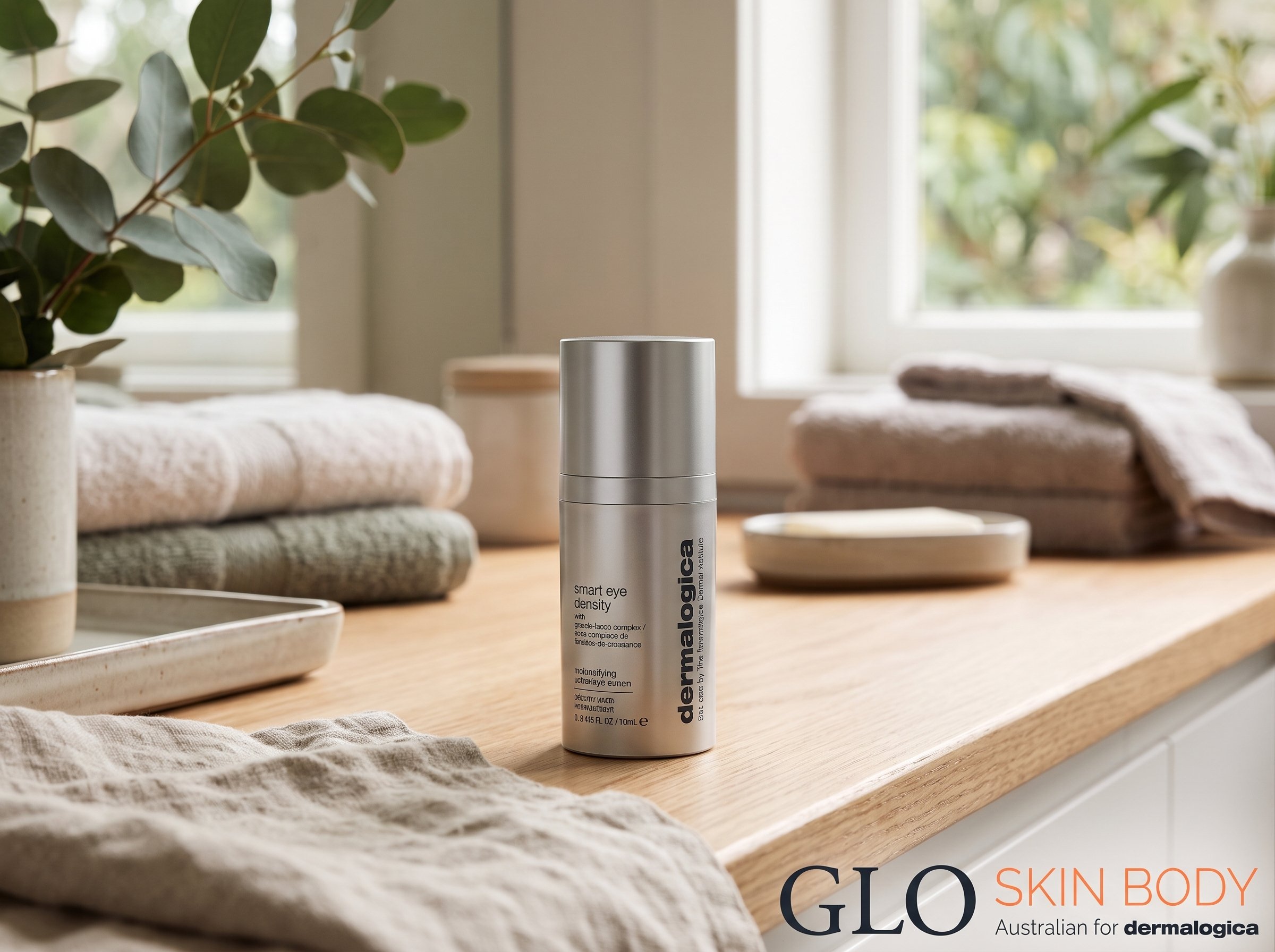
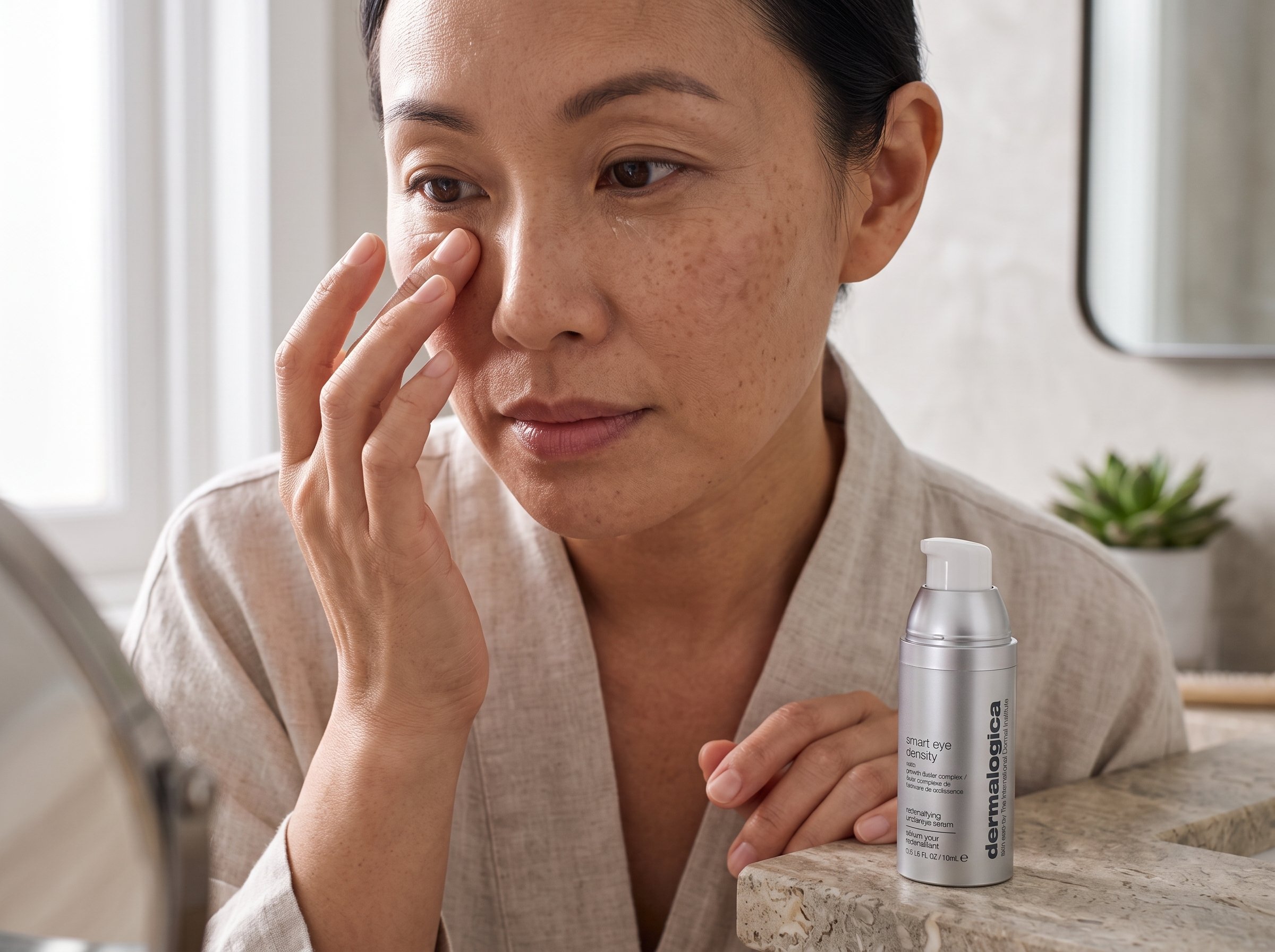
Dermalogica's Smart Eye Density Booster was developed around this exact energy-to-repair-to-density logic. Rather than just hydrating the surface, it's formulated to support the cellular energy that fuels collagen repair in the undereye area, where deflation actually happens.
It includes peptides and growth factor technology, ingredients that support your skin's own repair signals. If you have sensitive skin, it's worth asking our team about patch testing before starting any growth factor formula. We'd rather you feel confident from the first application than guess.
Deflation isn't something hydration alone can reverse, and it isn't something that responds to more sleep. But understanding the five processes behind it, and choosing a formula built to work with your skin's actual repair chain, gives you a genuine path forward. If dehydration is also part of your undereye story, it's worth reading about how hydration reservoirs affect skin as a complementary piece of the puzzle.
Undereye deflation isn't about looking tired. It's a real structural change driven by five biological processes: collagen breakdown, elastin loss, shrinking fat pads, bone remodelling, and slower microcirculation. Understanding this is the first step to choosing care that actually addresses the cause.
If you're ready to support your undereye area at a structural level, explore the Smart Eye Density Booster and its clinically measured 129% density result. Book a skin consultation to see how it fits into your routine, or read more about supporting hydration reservoirs alongside it.


