


Look closely at your under-eye area in the mirror tomorrow morning. Chances are it tells a different story than the rest of your face, even on a day when everything else looks calm and even.
This is not something you did wrong. The skin under your eyes is genuinely built differently from your cheeks, forehead, or jawline. Before we talk about what to do about it, it helps to understand what is actually going on beneath the surface. That understanding changes how you think about caring for this part of your face.
Have You Noticed Your Under-Eye Skin Runs on Its Own Schedule?
Most of us notice it at some point. You slept fine, your skin looks normal everywhere else, but your under-eye area still looks a little tired or uneven. Or you apply your usual moisturiser and it seems to sit differently here than it does on your cheeks.
These are simple observations, not problems to fix. The under-eye area often reacts first to a late night, a salty meal, or a long day of screen time. It also tends to be the first place fine lines appear, long before other parts of the face show the same changes.
None of this means your skin is doing anything wrong. It is just responding the way this particular skin is built to respond. Once you understand the biology behind it, these patterns start to make a lot more sense.
Key Takeaways
- It is up to five times thinner, has fewer oil glands, and sits directly over blood vessels and muscle with very little fat underneath.
- This is why it shows fluid, colour changes, and fine lines before other areas do.
- It is not a sign that anything is wrong.
- It is simply how this skin is built.
What Actually Makes This Skin Different?
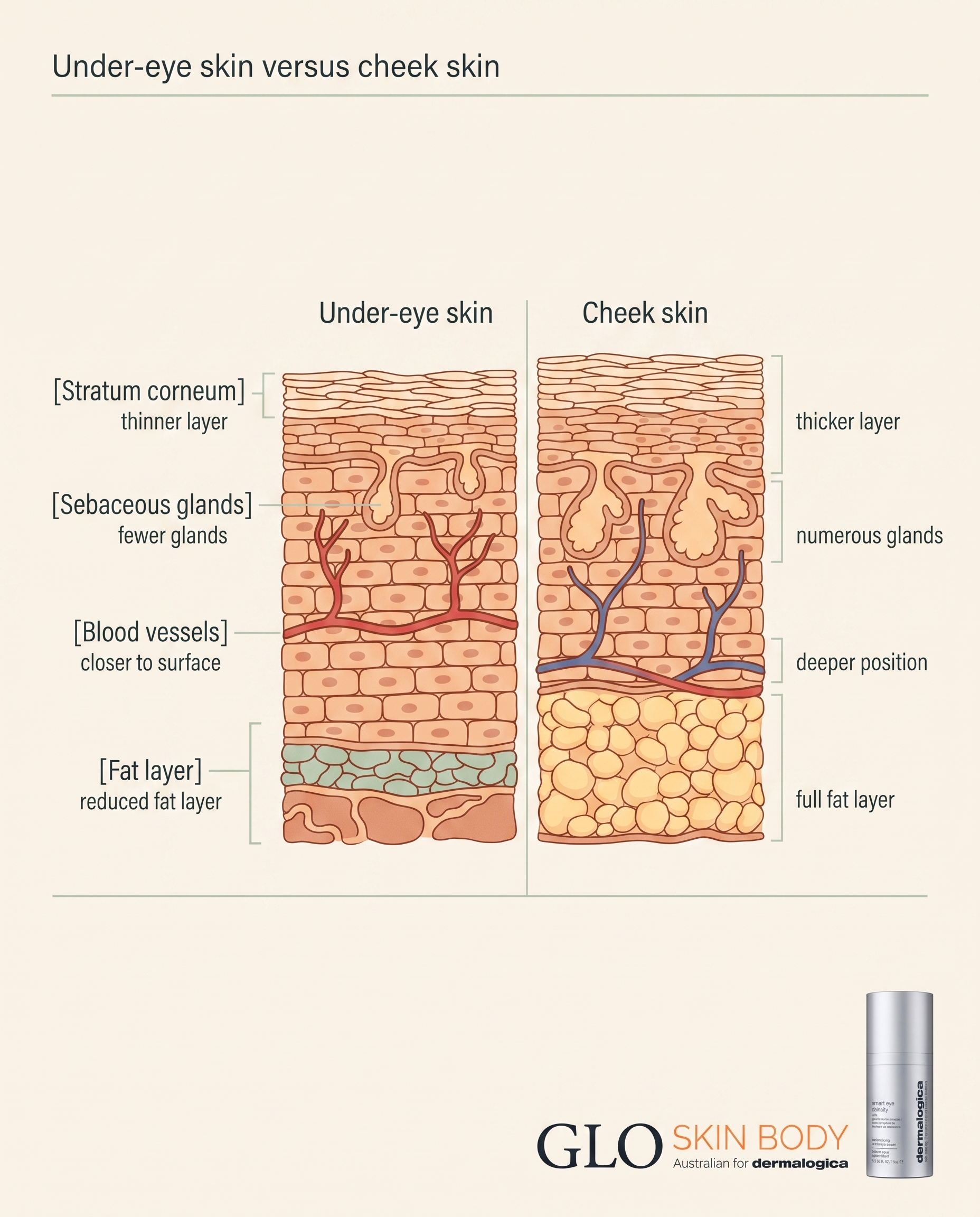
The skin under your eyes is not a thinner version of your regular skin. It is structurally its own thing. The outer layer, called the stratum corneum (the protective top layer of skin cells), is far thinner here than almost anywhere else on the face.
This area also has very few oil-producing glands, called sebaceous glands. Your cheeks and forehead rely on these glands to stay naturally lubricated and resilient. The under-eye area barely has any, which is part of why it can feel drier and more delicate to the touch.
There is also far less fat and muscle support underneath this skin compared to the rest of your face. Blood vessels sit closer to the surface here too, which is part of why colour changes are more visible in this specific spot. You can read more about how your skin's barrier function actually works to understand why some areas protect themselves better than others.
Why Do Fluid and Colour Show Up Here Before Anywhere Else?
Because this skin has so little supporting structure underneath it, it holds onto fluid differently than the rest of your face. This is why puffiness often appears here first, especially in the morning, before your body has had a chance to move that fluid along.
The closeness of blood vessels to the surface also plays a role in how colour shows up in this area. It is not necessarily about being tired or unwell. It is simply that this skin has less tissue to soften what is happening underneath it.
These are observations worth paying attention to, not signs that something needs urgent correcting. Many people find it useful to build in some dedicated care here, the same way you might treat your lips or your neck differently to the rest of your face. If you are curious about small daily habits that support this area, our piece on making your eyes a priority looks at this in more detail.
Does Your Regular Moisturiser Actually Reach This Area?
Here is an honest question worth sitting with. If your facial moisturiser is formulated for skin with more oil glands and a thicker outer layer, is it really designed to work on skin that has neither?
This is not about telling you your routine is failing. It is simply a fair question, given how different this skin is structurally. Many facial formulations are built with thicker, more resilient skin in mind. This means they may not be doing much for the delicate area around your eyes.
Some people find that products designed with this area's biology in mind, like a serum formulated specifically for the eye area or a treatment such as Stress Positive Eye Lift, feel more suited to this skin than a general facial cream. Whether that is the right step for you is worth exploring further, and that is exactly what we unpack next.
The skin under your eyes was never meant to behave like the rest of your face. It is thinner, drier, and more exposed to fluid and colour changes simply because of how it is built. Noticing these differences is not about finding something to fix. It is about understanding what you are actually working with.
Once you see this area for what it is, the next question becomes worth asking honestly: does your current routine genuinely support this skin, or is it just an afterthought at the end of your regular facial routine? That is exactly what we explore next. Learn more about giving this part of your face the attention its biology actually calls for.


