


Can skin feel tight again by mid afternoon, even after a hydrating serum in the morning? It can, and there's a simple reason for it. Drawing water in and holding it there are two different jobs.
If your skin feels tight after moisturising, this is usually why. Hydration and lipid are two separate jobs in your routine. When lipid runs low, water escapes before it has a chance to do its work. In this article, I'll explain the difference between dry and dehydrated skin. I'll also cover why tight skin can look dull, and where a lipid-focused serum fits alongside the hydrating products you already use.
Why Does Skin Feel Tight After Moisturising?
Skin can feel plump and dewy for an hour after a hydrating serum, then tight and uncomfortable again by early afternoon. The hydrating serum is doing its job. Hydration and lipids are two different jobs, and a hydrating serum covers only one of them.
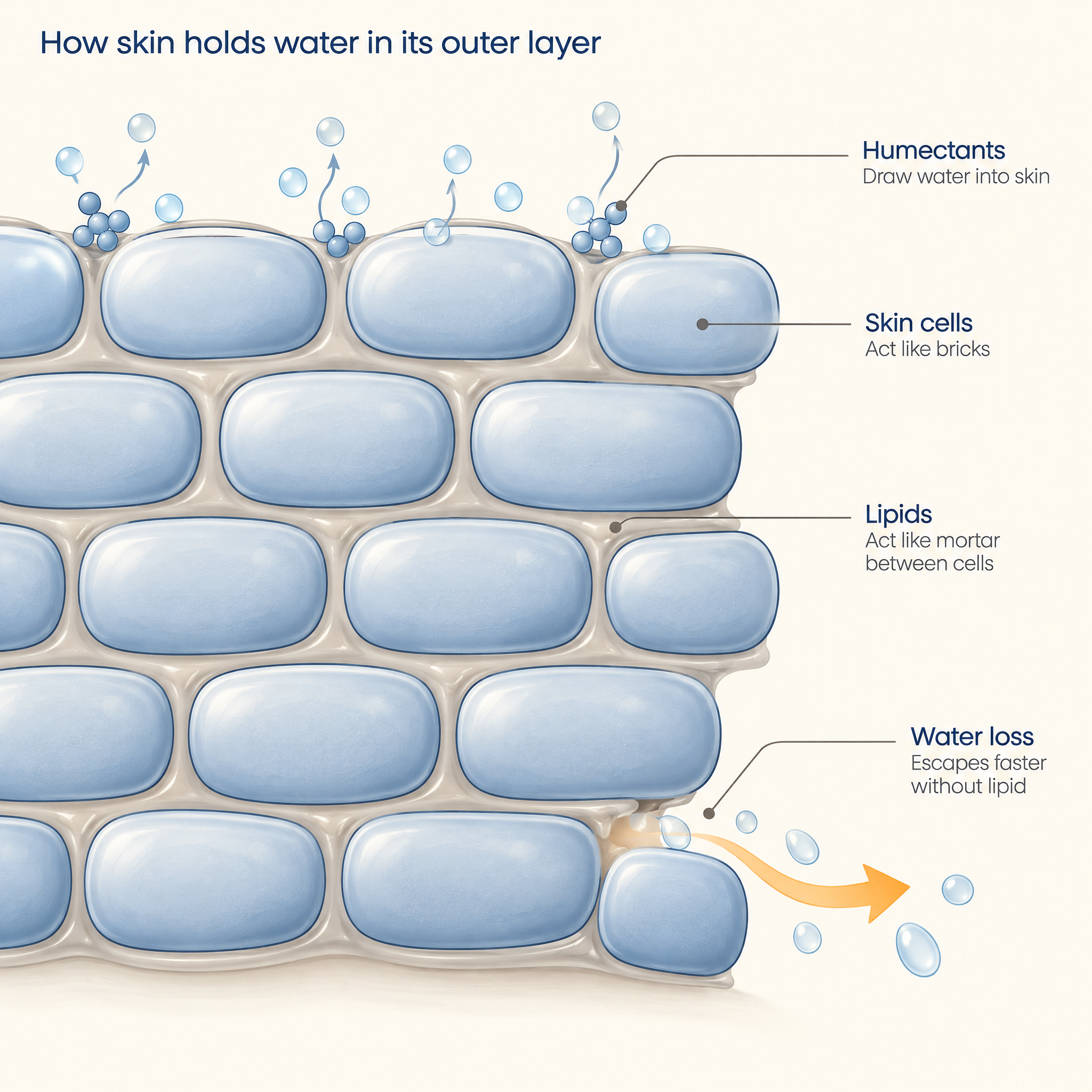
Think of your skin's outer layer like a brick wall. Your skin cells are the bricks. The lipids sitting between those cells are the mortar, holding everything together and keeping water from escaping.
Humectants like hyaluronic acid and glycerin are brilliant at drawing water into skin. But they don't hold that water in place. That's the lipid's job.
When your skin is short on lipid, water moves through the surface faster than it should. This is called transepidermal water loss, or TEWL for short. It's why a hydrating serum can feel wonderful in the morning, then your skin feels tight again by mid afternoon. The water hasn't disappeared on its own. It's simply had nothing to hold it there.
If you'd like a deeper look at how this protective layer works, our guide to your skin's barrier function explains it in more detail.
Is This Dry Skin or Dehydrated Skin?
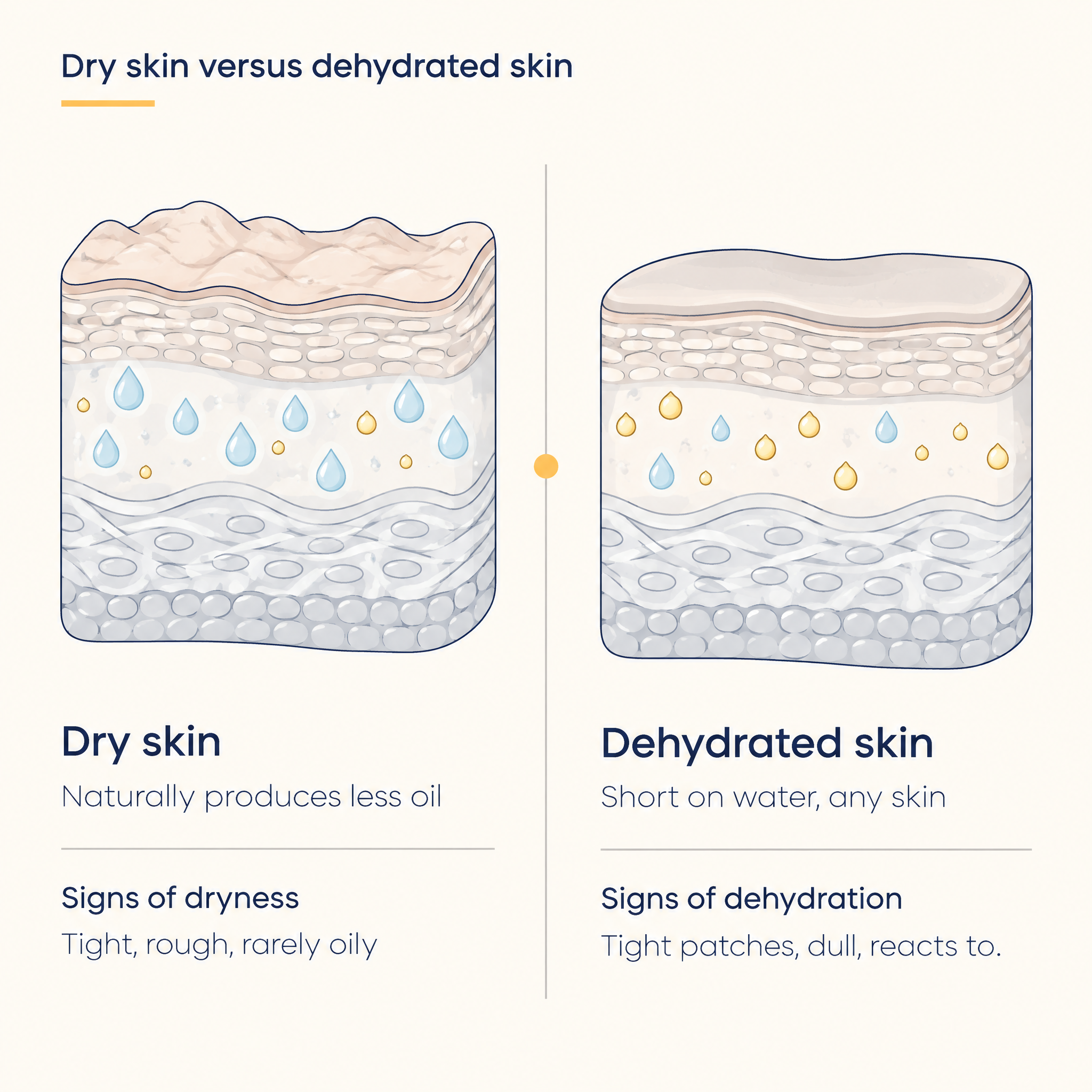
These two terms get used interchangeably, but they describe different things. Dry skin is a skin type. It means your skin naturally produces less oil, so it's often short on lipids long term. Dehydrated skin is a state, not a type. It means skin is short on water, and this can happen to anyone, including people with oily or combination skin.
If your skin often feels tight, looks a little rough, and rarely feels oily, you might be naturally dry. If your skin can feel tight in patches, look temporarily dull, or react to weather and hot showers, that sounds more like dehydration. Many people experience a mix of both at different times of year.
You don't need to work out which one applies before supporting your skin. If your skin ever feels tight after moisturising, it's worth looking at both the water step and the lipid step in your routine. Our article on why hydration matters for every skin type covers this in more depth.
Key Takeaways
- If your skin feels tight after moisturising, it often means your skin has enough water but not enough lipid to hold onto it.
- Humectants like hyaluronic acid and glycerin draw water into skin.
- Lipids, the fats between skin cells, act like mortar between bricks, sealing that water in.
- When lipid levels run low, water escapes faster through the skin's surface, so a hydrating step alone can wear off by afternoon.
- This can happen with dry skin, which is naturally short on oil.
Why tight skin reads as dull
There's another reason tight skin can look less than its best. It isn't always pigment. Sometimes it's texture. When skin is short on water and lipid, the surface becomes slightly uneven. Light bounces off unevenly instead of reflecting smoothly, and skin can look flat or tired even without any change in colour.
This is often mistaken for dullness caused by pigment or buildup, when really it's a hydration and lipid issue. Supporting your skin's ability to hold onto moisture can help the surface feel smoother, which often means it looks a little more even too.
It's Not Just Your Face: Where Else Skin Runs Short on Mortar
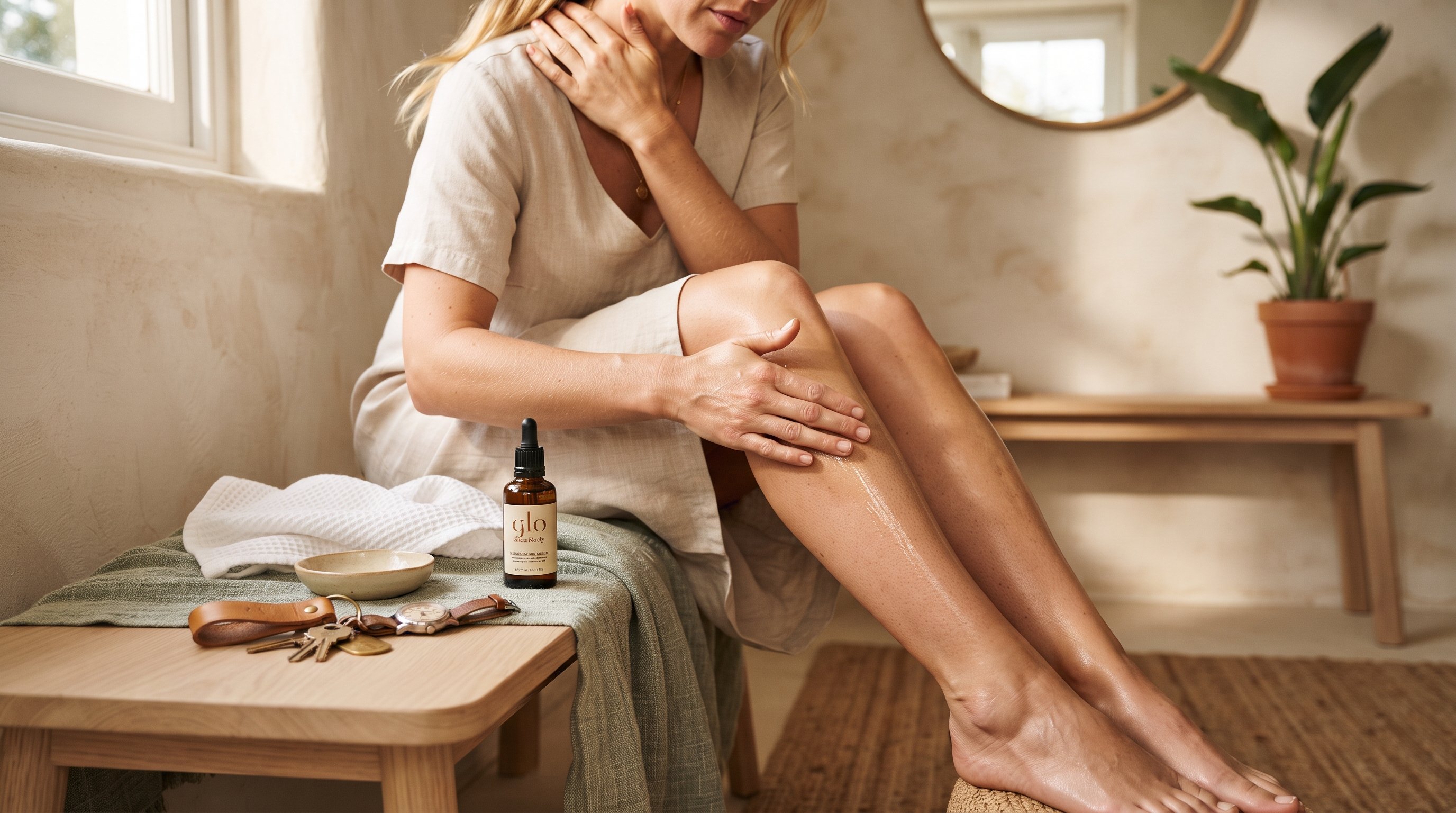
Tightness and dryness aren't only a facial concern. Your legs and shins can feel tight and look flaky after a hot shower, especially in winter. Hands can feel dry and tight after frequent washing, particularly if you use hot water or strong soap. The chest and neck, often left out of a routine altogether, can show the same signs.
These areas have thinner skin and fewer oil glands than other parts of the body, which means they can run short on lipid more easily. The same brick and mortar idea applies everywhere on the body, not just your face. If sensitivity is also part of the picture, our guide to soothing sensitive skin might help too.
Where a Lipid-Replenishing Serum Fits in Your Routine
If you already use a hydrating serum with hyaluronic acid, you don't need to replace it. Hyaluronic acid draws water in. A lipid-focused serum works differently. It helps give that water somewhere to stay. The two sit well together rather than competing for the same job.
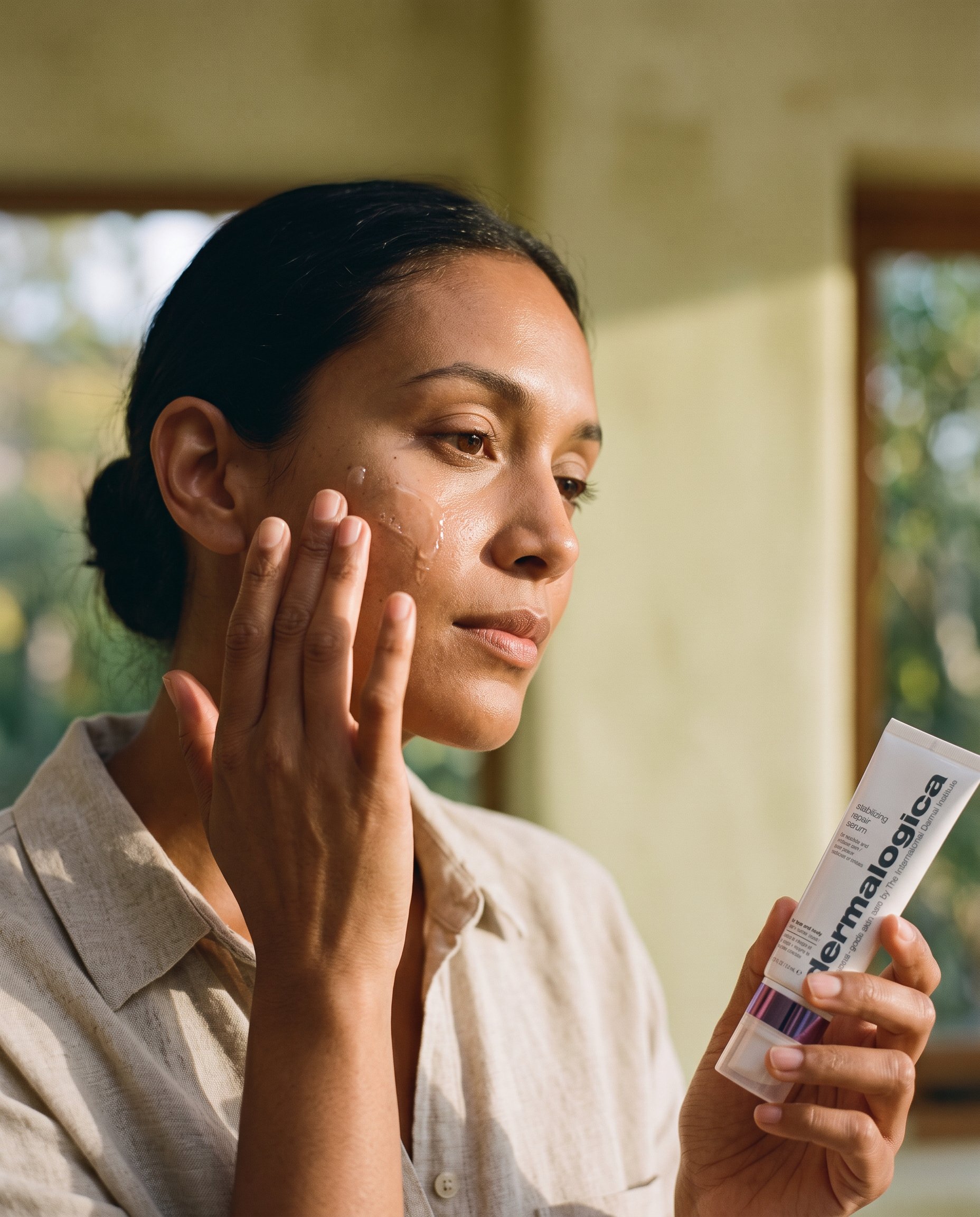
Dermalogica's new Stabilizing Repair Serum is designed to support this lipid side of the routine. It's formulated for both face and body. It contains colloidal oatmeal, along with a biomimetic lipid complex of skin-replenishing lipids, phytosterols and ceramide-like compounds, plus soothing botanical extracts. These ingredients are formulated to help skin hold onto moisture and visibly calm the look of redness and dryness.
If you're ever unsure about layering order, our piece on applying products in the right order covers this well. In terms of routine order, apply your hydrating step first. This could be a hyaluronic acid serum or toner. Then follow with Stabilizing Repair Serum while skin is still a little damp.
Finish with your moisturiser to help seal everything in. A richer moisturiser such as Stabilizing Repair Cream can be a good next step on top, though it isn't required. Simple layering with what you already own works too.
To use it, squeeze a small amount into your palm. Rub your hands together to warm it. Then press it onto your face and neck, or any body area that needs it. It can be used up to twice daily.
A few things worth knowing. This isn't an oil control product, so it may feel a little rich if you use it on an oily T-zone on your face. It isn't an overnight fix either. Skin needs consistent use over time to feel steadier. And if your skin is broken or weeping anywhere, that's one for a healthcare professional before anything new, including this.
What the Research Shows, and What to Expect
Dermalogica ran a consumer perception study with 33 people. They used the product twice daily for 4 weeks. People reported relief from around 30 minutes after application. By 5 days, skin was reported as soothed and smoother. By 28 days, people reported less reactivity, along with reduced scabbing and flaking.
Here's how I'd read that timeline. The first hours are about comfort, easing that tight or itchy feeling. The following days are about skin starting to feel smoother to the touch. The following weeks are when skin that's been reactive tends to feel steadier, with consistent, twice-daily use.
This is Dermalogica's own research, reported by the people who used it. The pattern is comfort first, then smoother texture, then steadier skin over time.
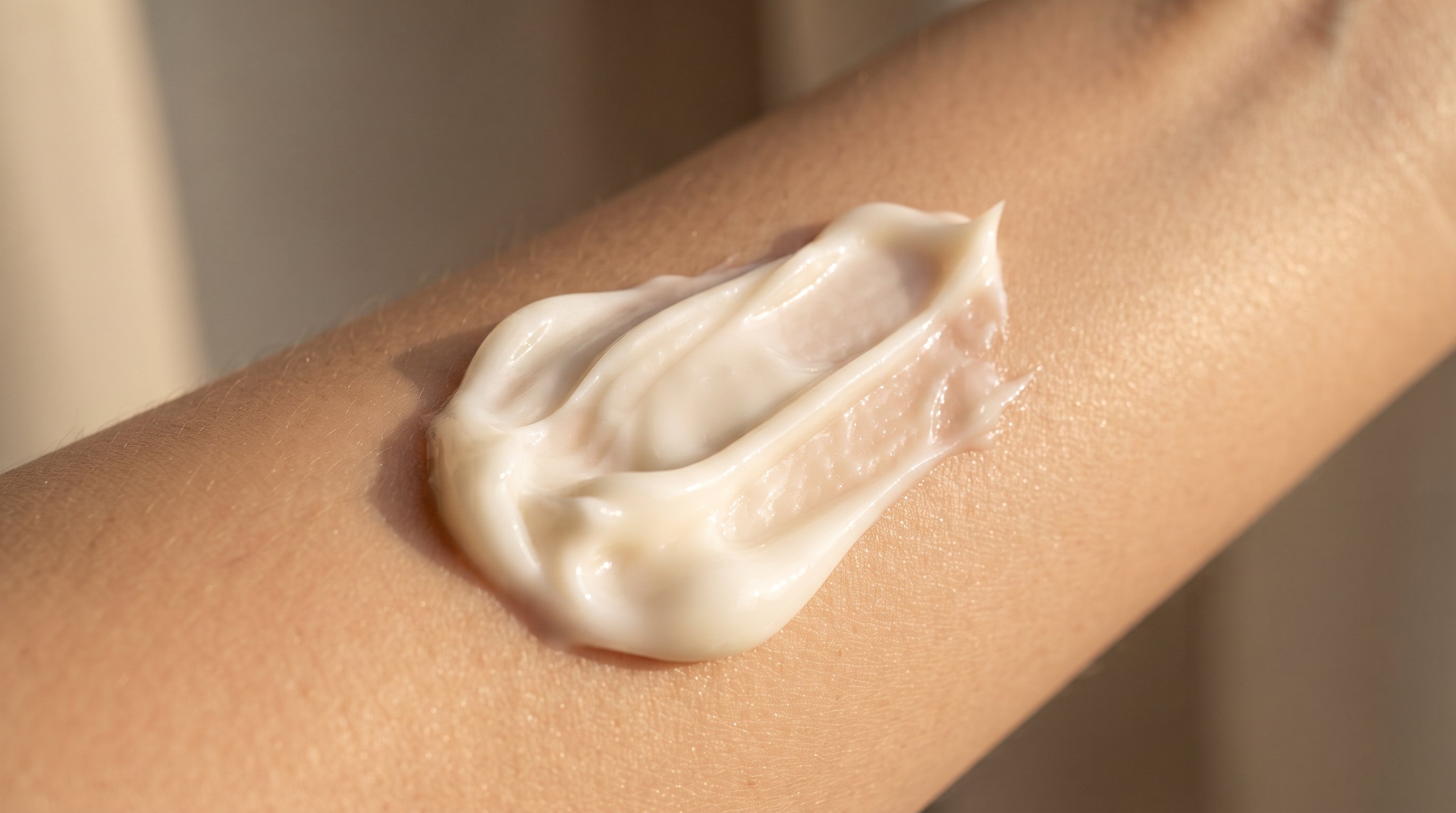
Feeling tight after you've just moisturised doesn't mean your routine has failed. It usually just means your skin needs both water and lipid support, not one or the other. Understanding the difference between drawing water in and holding it there is the simplest way to work out what your skin needs next.
If you'd like help building this into your routine alongside what you already use, our team is here to talk it through with you. Learn more about how your skin's barrier works, and where Stabilizing Repair Serum might fit for you.


