


You bought the eye cream. You used it every night. For the first few weeks, your under-eye area looked smoother and felt softer. Then, somewhere around week six, the change stopped. This is what we call the eye cream ceiling, and almost everyone with an eye cream in their bathroom cabinet has hit it.
It is not that your product is bad, or that you are using it wrong. Most eye creams are built to do one job well: sit on the surface and hold moisture there. That job matters. But it has a limit. Understanding where that limit sits, and why, is the first step to choosing products that actually keep working past week six.
What Is the Eye Cream Ceiling?
The eye cream ceiling is the point where your product has done everything it can, and nothing more happens. Your skin still looks better than it did with no product at all. But the hollows are still there. The fine lines have not softened further. The area still looks tired by 3pm.
This happens because most eye cream formulas are built around humectants (ingredients that pull water into skin) and occlusives (ingredients that sit on top and stop water escaping). Both are useful. Both also work almost entirely on the skin's surface.
Once your skin is as hydrated as that formula allows, there is nowhere left for it to go. You have hit the ceiling. If you want to understand more about how your skin holds onto moisture in the first place, our guide on your skin's barrier function is a good place to start.
Why Does Skin Under Your Eyes Behave Differently?
The skin around your eyes is not the same as the skin on your cheeks or forehead. It is roughly three to five times thinner, with far fewer oil glands and almost no fat layer underneath. This thinness is exactly why this area shows tiredness, dehydration, and ageing before anywhere else on the face.
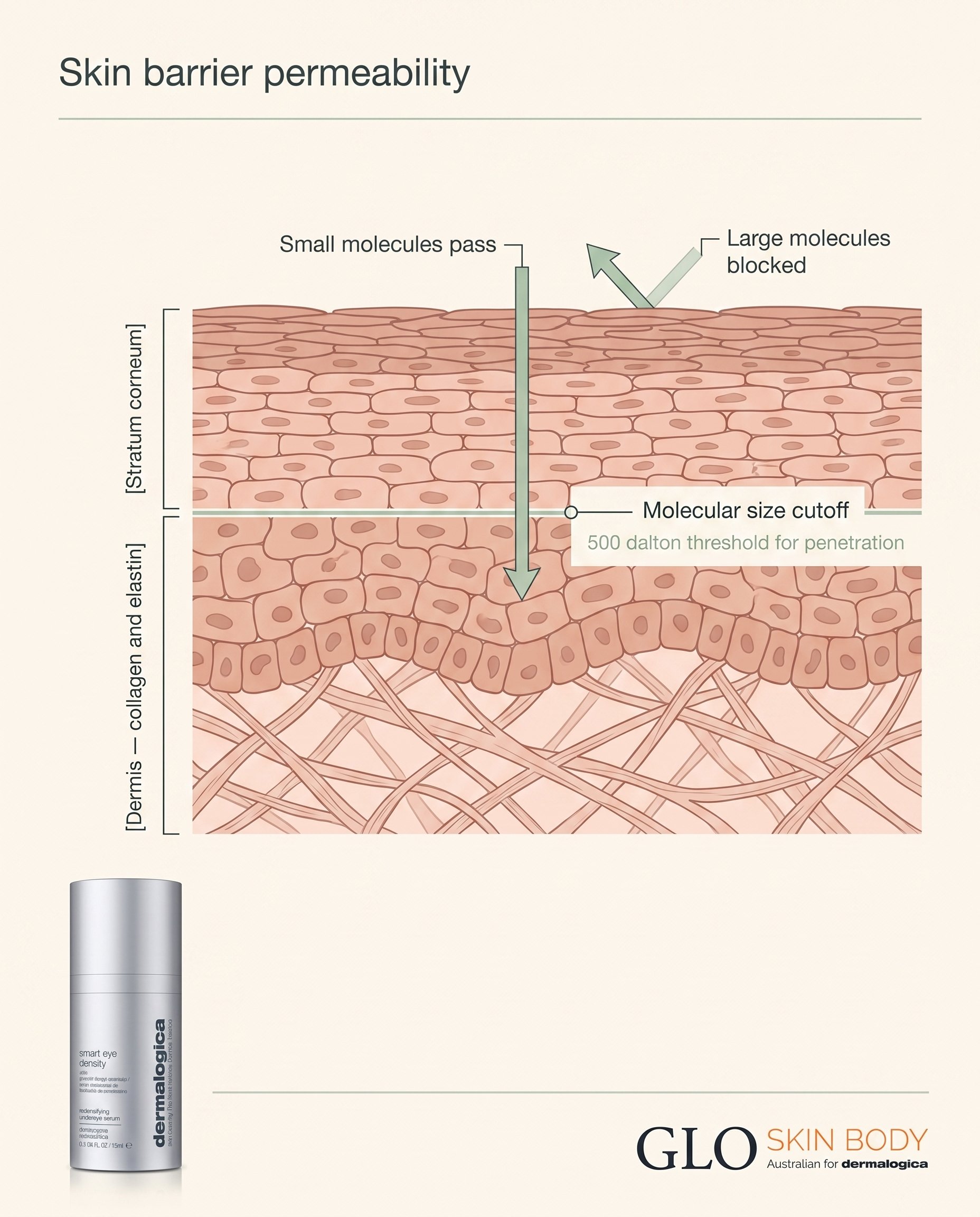
Your stratum corneum, the outer, protective layer of skin, is thinner here too. That sounds like it should make it easier for products to get in. In some ways it does. But the deeper structures under your eyes, including the collagen and elastin that give skin its bounce, sit even closer to the surface with less protection around them.
This is part of why under-eye skin is often described as fragile. It is not weaker exactly. It just has a smaller safety margin, and less structural support holding everything up over time.
Key Takeaways
- The eye cream ceiling is the point where a product stops giving visible change.
- It happens because most eye cream ingredients only sit on the skin's outer layer, called the stratum corneum.
- Larger molecules cannot pass through this layer to reach where collagen and elastin are made.
- This is why hydration improves fast, but hollows, fine lines, and volume loss stay the same.
- Real change under the eyes needs ingredients small enough to reach deeper skin layers, not just formulas that sit on top...
Why Do Most Eye Creams Stop Working After a Few Weeks?
Here is the part most product labels never explain: ingredient size matters. Skin scientists often refer to what is called the 500 Dalton rule, a guideline from Bos and Meinardi's 2000 research on skin penetration (Experimental Dermatology). It suggests that molecules larger than roughly 500 Daltons in weight struggle to pass through the stratum corneum at all.
Many eye cream ingredients, including some peptides (small chains of amino acids that signal skin cells) and certain forms of hyaluronic acid, are simply too large to get past this outer layer in meaningful amounts. They sit on top. They feel hydrating. They do not reach the layers where collagen and elastin are actually produced.
This is not a flaw unique to one brand or product. It is a basic limit of topical skincare, and it is the real reason your eye cream's results plateau instead of building over time.
What's the Difference Between Sitting on Skin and Rebuilding It?
Think of your skin in two parts: what is on top, and what is underneath. Products that sit on top plump the surface temporarily, smooth texture, and reduce the look of dryness. These effects are real, but they wash off, wear off, or fade by evening.
Products that rebuild work differently. They are formulated with smaller, more targeted actives designed to reach deeper layers, where they can support your skin's own collagen and elastin production over weeks, not hours. This is a slower process, but it is the only kind of change that actually lasts.
Application order also affects how much of any active ingredient gets a fair chance to work. If you are applying products in the wrong sequence, even a well-formulated active can end up blocked by a heavier layer applied too soon. Our article on applying your products in the right order covers this in more detail.
How Can You Tell If Your Eye Cream Has Hit Its Ceiling?
There are a few signs. Your under-eye area still looks smooth right after application, but the hollowness or shadow returns by midday. Fine lines look softer in the mirror at 7am but are just as visible in photos taken later in the day.
Another sign: you have been using the same product for more than three months with no new change since around week four or five. Early results (better texture, less dryness) are usually the humectant and occlusive ingredients doing their surface-level job well. If nothing has shifted since, you have likely reached the ceiling that formula was always going to hit.
None of this means your routine has failed. It means it is time to look at what is actually in your eye cream. And whether it is built to go further than the surface.

What Should You Look for Beyond the Ceiling?
If you want change that continues past week six, look for formulas built around smaller, well-researched actives rather than just rich textures. Ingredients like peptides at the right molecular weight, retinol (a vitamin A derivative that supports cell turnover). And stabilised vitamin C are worth understanding, not just buying because the jar looks luxurious.
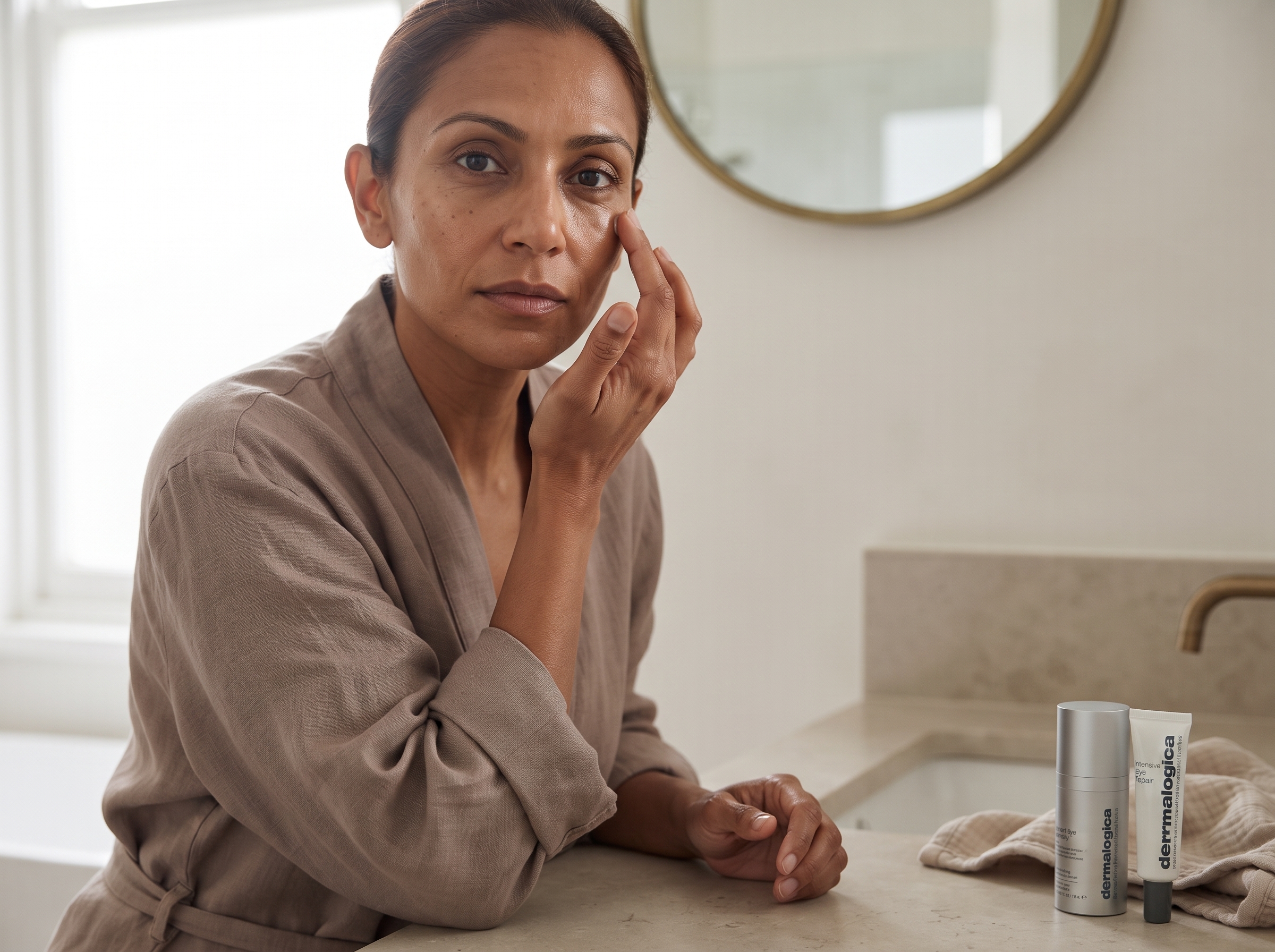
Dermalogica's eye range takes this layered approach. Intensive Eye Repair targets fine lines and dryness with barrier-supporting lipids. Meanwhile, Stress Positive Eye Lift is built for tired, stressed skin that needs both firming and calming support. For antioxidant protection alongside brightness, our piece on BioLumin-C Eye Serum explains how stabilised vitamin C works around the delicate eye area.
We are also preparing to introduce the Smart Eye Density Booster, formulated specifically to work past where most eye creams stop, supporting the deeper structure of under-eye skin rather than just its surface. If your priority is really giving this area proper attention, our guide on making your eyes a priority is worth a read too.
The eye cream ceiling is not a sign you are doing something wrong. It is simply what happens when a formula's job is to sit on the surface, not rebuild what lies underneath. Once you understand the difference between the two, choosing your next product gets a lot simpler.
If tired, hollow-looking eyes are your main concern, our next guide looks at undereye volume loss and what actually helps. If dryness and dehydration are the bigger issue for you, we cover how to support your skin's own moisture reserves in detail. Wherever your skin needs the most support, we're here to help you find a routine that goes past the ceiling. Learn more about building a routine suited to your skin.


