


Last week, a cold snap moved through as it sometimes does when the seasons are changing. If like me you noticed your skin feeling tighter than usual, looking a little dull, or just not quite right, that wasn't in your head. Cold weather changes what your skin has to deal with, and your daily routine often isn't enough to keep up. This is the moment I reach for the Dermalogica Multivitamin Power Recovery Masque.
It's not a product I'd describe as exciting. It's not a new launch or a trend. It's the one I come back to every time the season shifts, because it does something specific that the rest of a routine can't quite cover. If you've been wondering whether a masque is worth adding, this is the one I'd point you to first.
What Cold Weather Actually Does to Your Skin
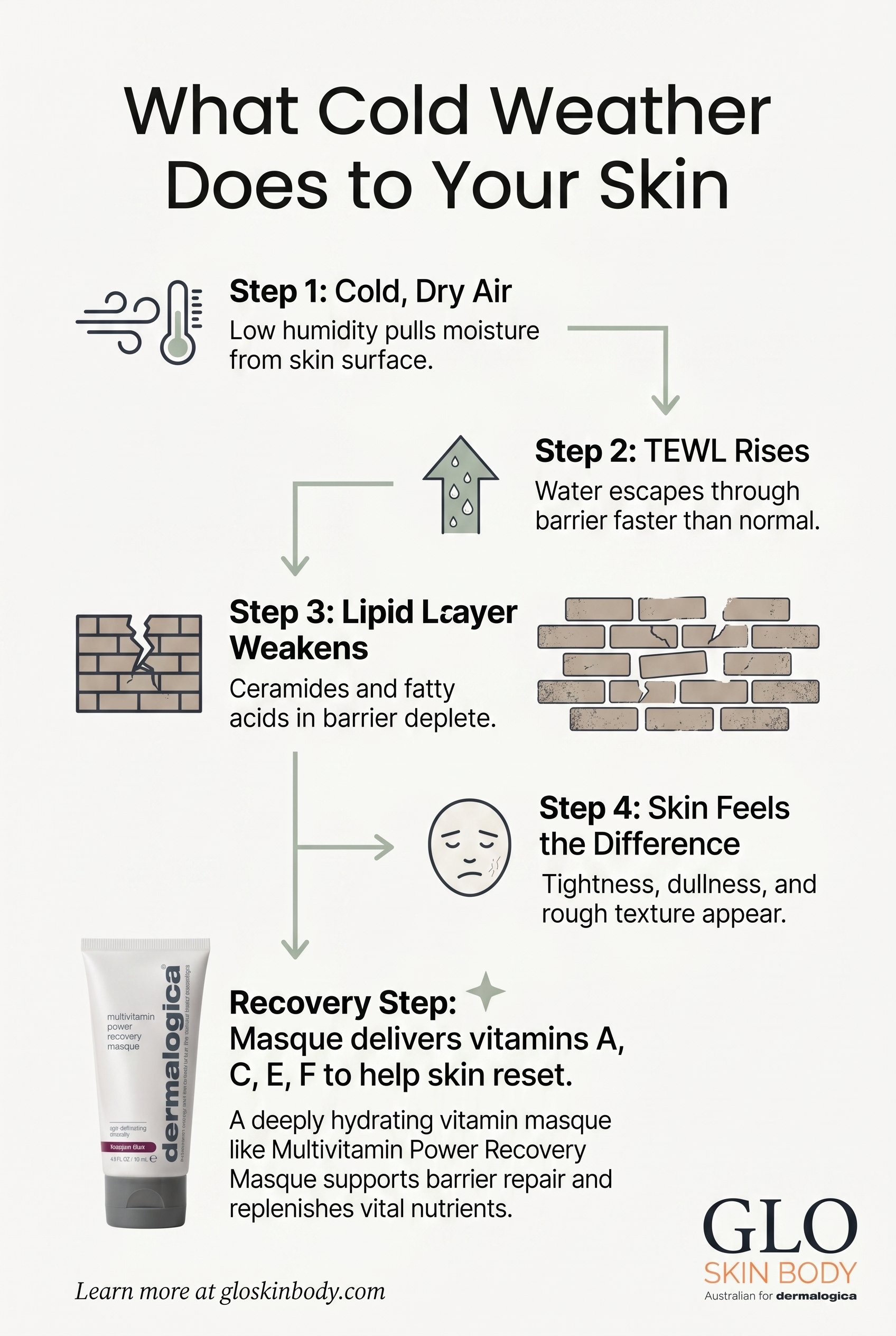
When the temperature drops, your skin barrier faces more pressure. The barrier is your skin's outer protective layer, made up of skin cells held together by lipids (natural fats, including ceramides). Think of it like a brick wall, with the lipids acting as the mortar. Cold air is dry air, and dry air pulls moisture out through that wall faster than usual.
This is called transepidermal water loss, or TEWL. It's the rate at which water escapes through your skin. In healthy, well-supported skin, TEWL stays low.
But cold weather, indoor heating, and wind all increase it. Your skin loses water faster than it can replace it. The result is that familiar tightness, some dullness, and a surface that feels rough or looks flat.
What's also happening is that cold temperatures slow down lipid production in the skin. Your barrier is losing structure at the same time it's under more environmental stress. Understanding how your skin's barrier works makes it easier to see why this matters. And why your usual routine sometimes isn't enough to bridge the gap. For more on adapting through the colder months, our winter skincare guide covers the full picture.
Key Takeaways
- The Dermalogica Multivitamin Power Recovery Masque is a weekly recovery step that helps support skin's barrier function after weather changes.
- Cold snaps increase transepidermal water loss (TEWL), the rate at which water escapes through your skin.
- Daily moisturiser helps, but a masque delivers a concentrated dose of vitamins A, C, E, and F to help skin feel comforted and hydrated.
- Used once or twice a week after cleansing, it fills the gap between your daily routine and what skin genuinely ne...
Why a Weekly Recovery Step Changes Things
Your daily routine is built for maintenance. Cleanser, serum, moisturiser, SPF. That sequence protects and supports your skin on a normal day. But after a weather event, or a run of cold, dry days, skin needs something more concentrated. A masque fills that gap.
The difference between a serum and a masque isn't just texture. A masque stays on your skin for longer, which gives active ingredients more time to penetrate the stratum corneum (your skin's outermost layer). It delivers a higher load of ingredients in one sitting. You're not replacing your daily routine. You're giving skin a focused recovery session, once or twice a week, when it needs it most.
Think of it this way. Your daily moisturiser is like regular meals. A masque is like a really good meal after a hard week.
It's not that one replaces the other. They do different things at different times. Masking your way to healthier skin is a concept worth understanding, especially when your skin is reactive to seasonal change.

Why the Multivitamin Power Recovery Masque Specifically
The Dermalogica Multivitamin Power Recovery Masque works because of what's in it and how those ingredients work together. The core of the formulation is a vitamin A, C, E, and F complex. Each of these plays a specific role.
Vitamin A (a retinoid precursor) helps support normal skin cell development. Vitamin C is an antioxidant, meaning it helps defend skin against oxidative stress from the environment. Vitamin E works alongside vitamin C to help stabilise that antioxidant effect. Vitamin F refers to essential fatty acids, which help support the lipid layer in your skin. Together, they help skin feel hydrated and comforted after the kind of barrier stress that cold weather brings.
The texture is rich but not heavy. It absorbs well, which means it works both as a 10-minute reset (apply, wait, remove) and as an overnight treatment for nights when your skin feels particularly depleted. I want to be clear about what this masque is. It's not a miracle.
It's a reset. It helps reduce the appearance of dryness and helps support your skin's barrier function. That's meaningful, and it's enough.
If you're curious about the broader role of vitamins in a skincare routine, the Multivitamin Power Serum article gives good context on how this vitamin complex works across the range.
Featured Product
Multi-retinoid technology delivers the skin-renewing benefits of vitamin A with a reduced risk of irritation compared to retinol alone
How It Fits With the Rest of Your Routine
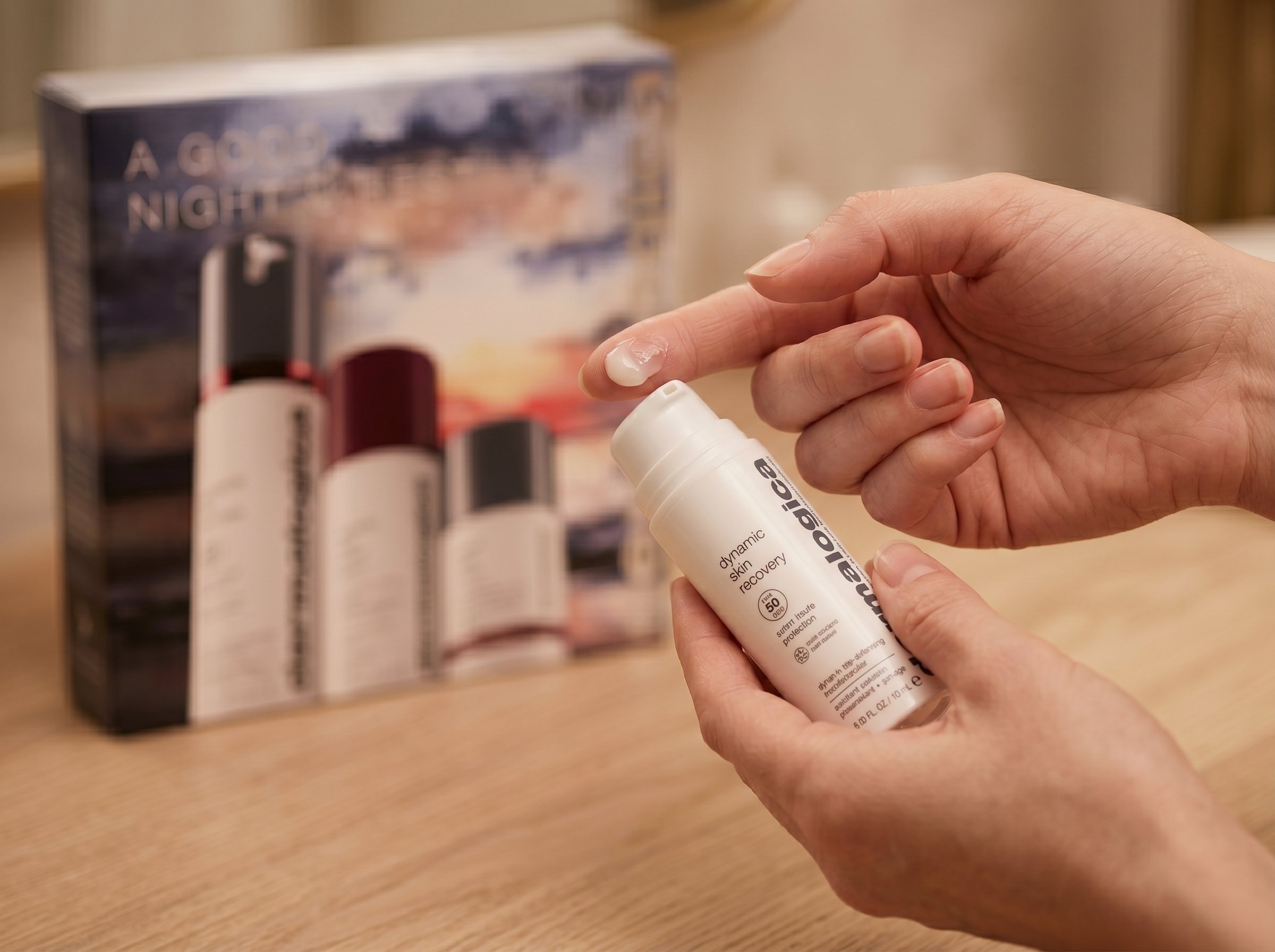
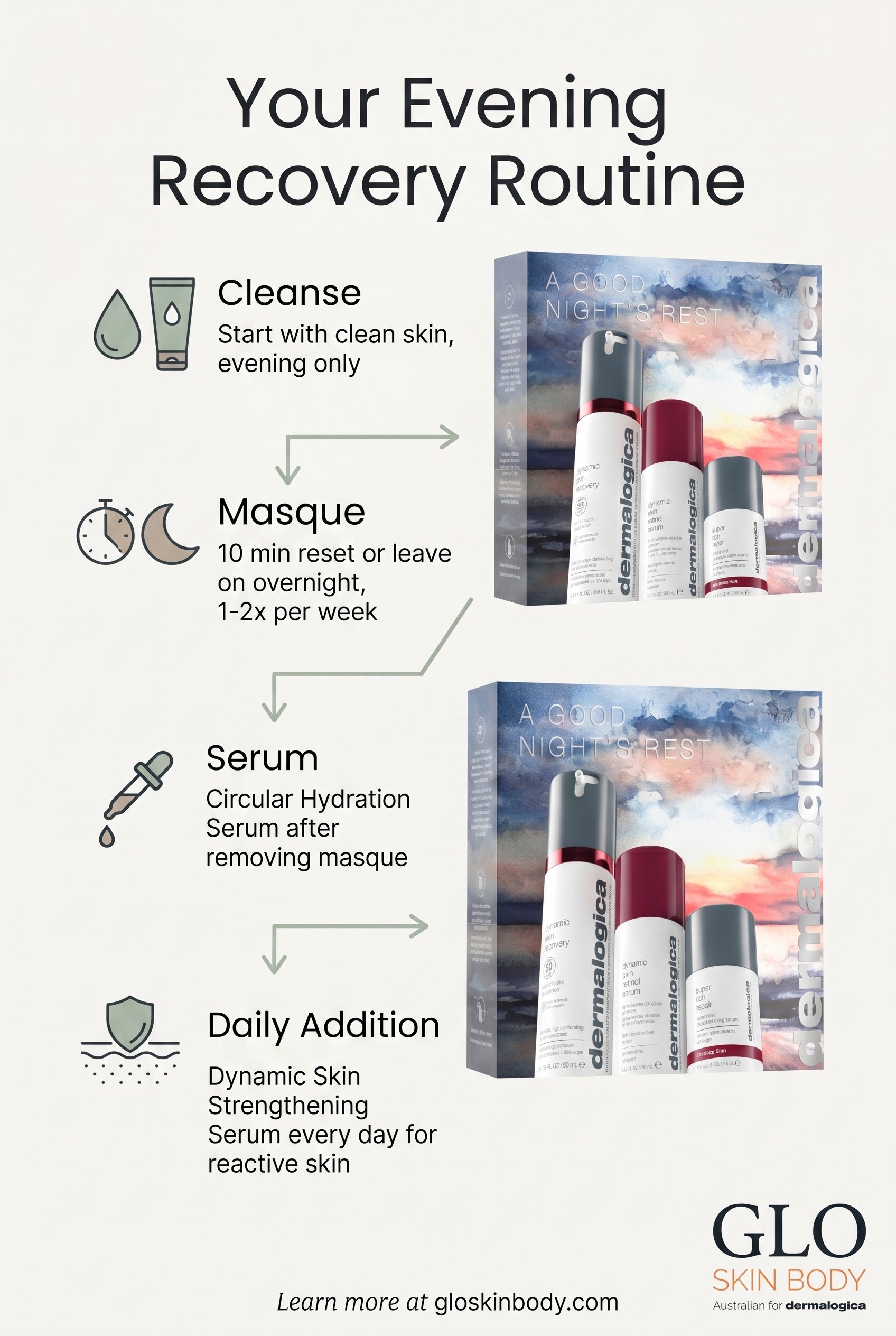
The masque belongs in your evening routine, after cleansing. Apply it to clean skin, leave it for 10 minutes, then remove. Or apply a thin layer and leave it overnight. Both work. The overnight option is worth trying on nights when your skin feels particularly tight or stressed.
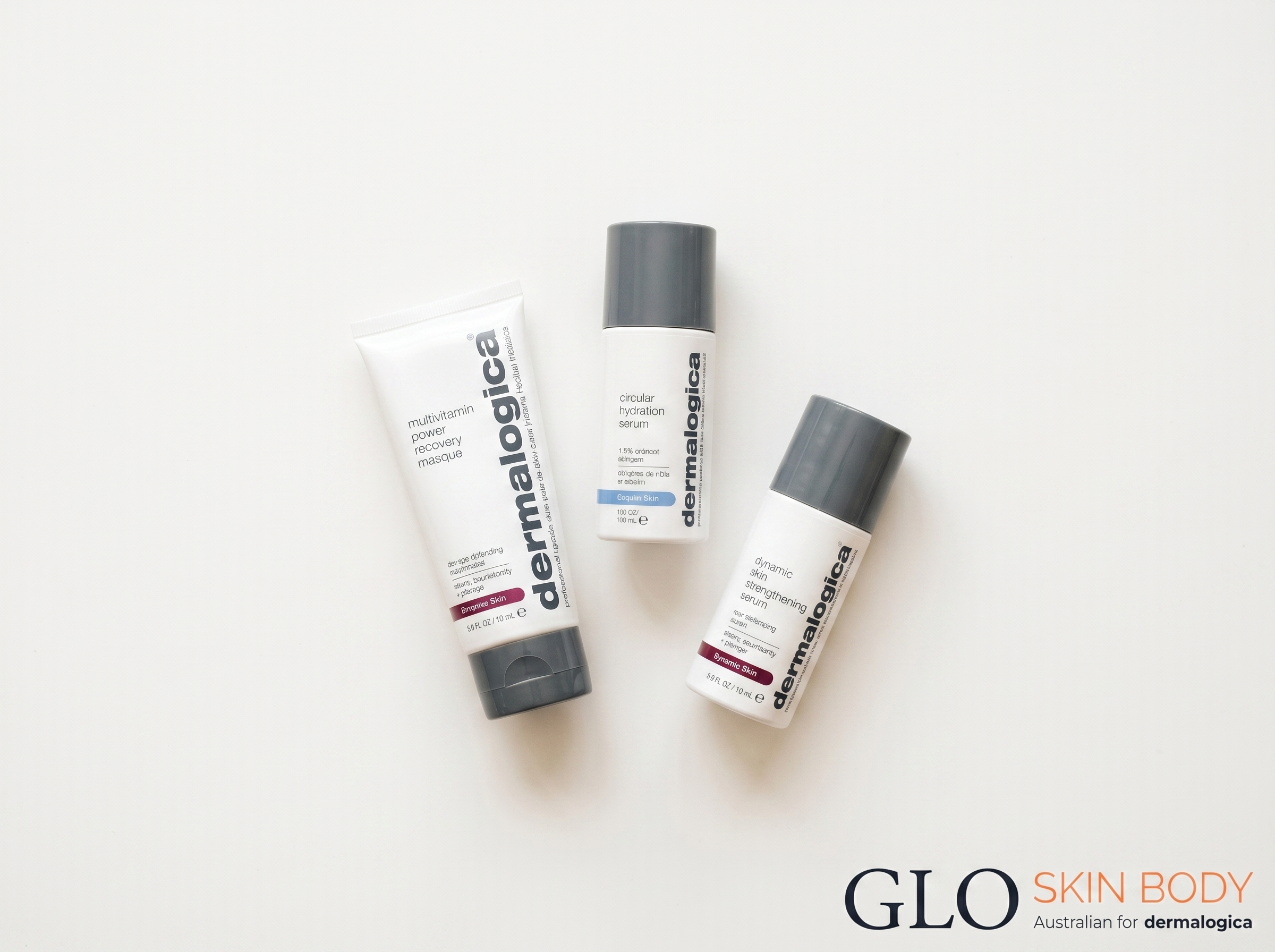
To get the most from it, pair it with the Dermalogica Circular Hydration Serum. Apply the serum after removing the masque. The serum's glycerin-rich formulation helps draw and hold moisture, so you're layering hydration on top of the barrier support the masque has already provided. It's a simple two-step evening boost that takes less than five minutes.
If your skin is reactive, or if you're going through a period of sensitivity, adding the Dermalogica Dynamic Skin Strengthening Serum to your daily routine alongside the masque makes sense. Use the strengthening serum every day, and the masque once or twice a week in the evening. You're not overcomplicating things. You're just giving skin what it needs at two different frequencies.
One or twice a week is the right rhythm for most people. More than that isn't necessary, and for sensitive skin, it may be too much. Let your skin tell you. If it feels comfortable and less tight after one use, once a week is probably enough. If you're in the middle of a cold snap and your skin is struggling, twice a week for a couple of weeks is fine.
Here's what I'd say if you came to me in the treatment room and asked whether this masque is worth adding. If your skin shifts with the seasons, if you notice tightness or dullness when the weather turns cold. And if your daily routine feels like it's doing its job but not quite keeping up, then yes. This is the step that fills that gap.
It's not complicated. It's not a big commitment. It's one extra step, once or twice a week, that helps your skin feel more like itself when the weather is working against it.
If you'd like help working out where this fits in your specific routine, or whether there's something else your skin needs right now, you're welcome to us a message. We're here to help you figure it out, without the pressure of buying things you don't need.


