


You start your retinol with good intentions. A few nights in, your skin feels tight or looks a little pink, so you stop. A week or two later, you try again, and the same thing happens. If this sounds familiar, it is a pattern worth understanding properly, because it usually has very little to do with willpower.
Retinol irritation and barrier comfort are closely linked. When your skin barrier, the outer layer that holds moisture in and keeps irritants out, is dry or unsettled, even a product you have used before can feel uncomfortable. This article looks at why that stop-start cycle happens, and where a new comfort-focused serum from Dermalogica fits in alongside the actives you already own.
Why does my retinol routine keep stopping and starting?
Retinol and exfoliating acids work by speeding up cell turnover. That is useful for texture and tone, but it also places a small, temporary strain on your skin barrier. If your barrier is already a little dry or reactive, that strain can show up quickly as stinging, flaking or redness.
So the stop-start pattern is rarely about the active failing, or about you doing something wrong. It is usually about how settled your skin was on that particular night. Some weeks your skin copes beautifully with retinol. Other weeks, the same product feels too much.
Our guide to how your skin barrier works goes into more detail on this, if you would like the fuller picture.
How does skin barrier readiness affect retinol irritation?
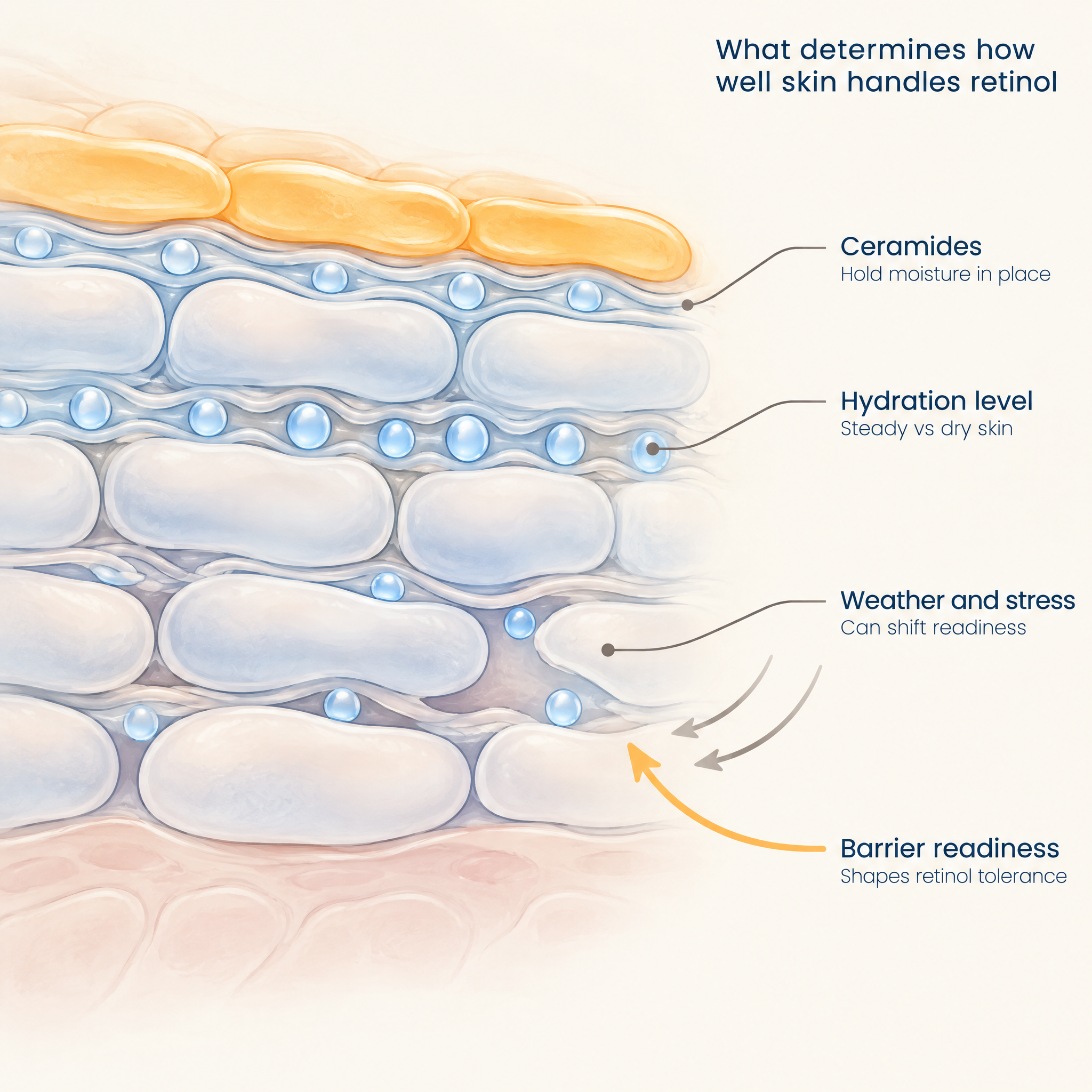
Readiness simply means how comfortable and moisture-steady your skin feels before you apply an active. Skin with enough ceramides (the fats that help hold moisture in place) and a steady level of hydration generally tolerates more than skin that already feels tight or dry.
Weather, long hot showers, air conditioning, and even a stressful week can all shift how settled your skin feels. That is completely normal. It also explains why a retinol you handled well in autumn might sting in the middle of winter.
If sensitivity shows up for you in other ways too, not only after actives, our piece on soothing solutions for sensitive skin may be worth a read as well.
Key Takeaways
- If your retinol or acid routine keeps stopping and starting, the cause is often skin readiness, not the product itself.
- A steady skin barrier (the outer layer that holds in moisture) handles actives like retinol and exfoliating acids far better than dry, reactive skin.
- Dermalogica's Stabilizing Repair Serum is a buffer step applied before your active, not instead of it.
- Made with colloidal oatmeal and a biomimetic lipid complex, it helps skin feel calmer and hold onto moisture, so actives are...
What is a buffer step, and where does Stabilizing Repair Serum fit in?
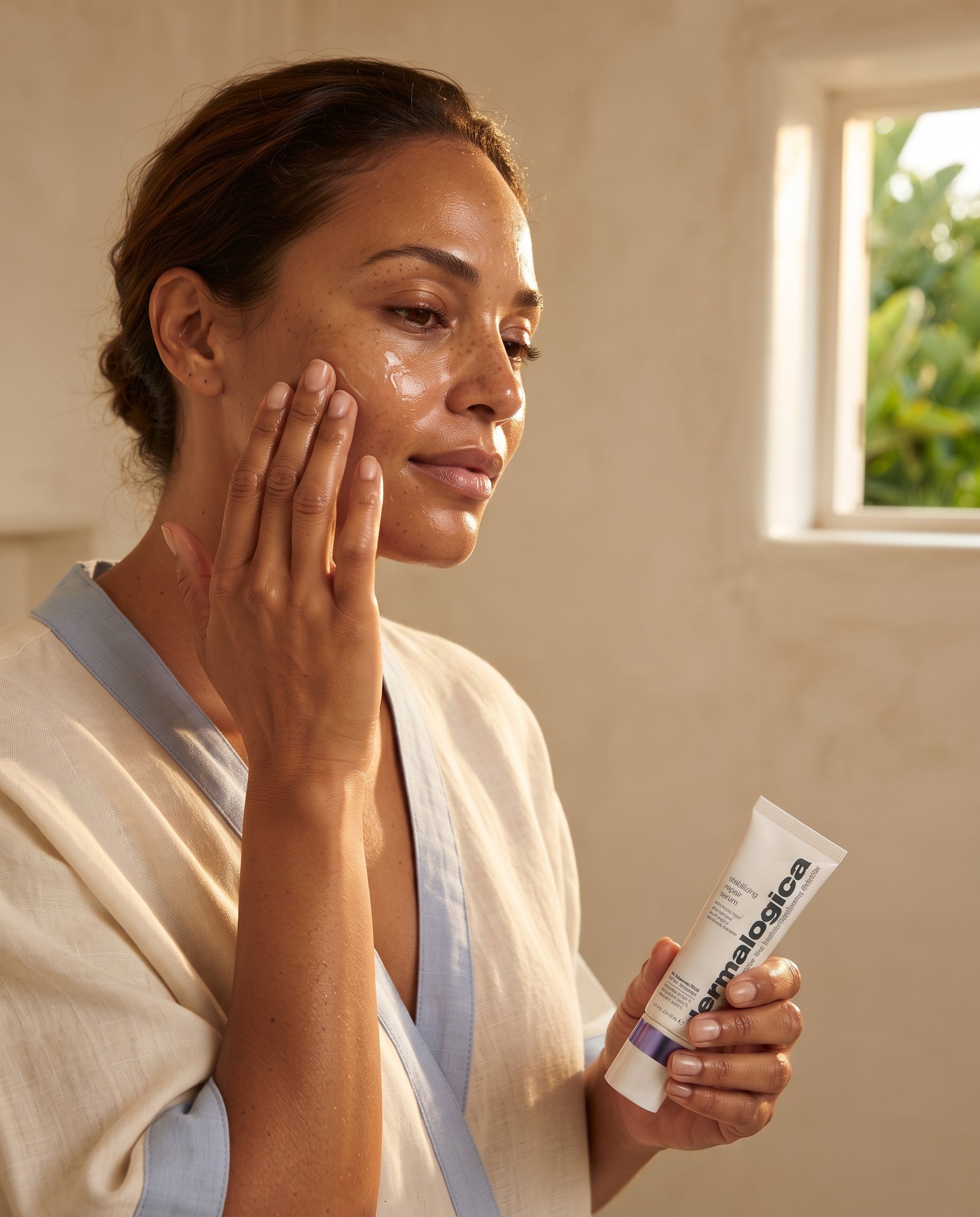
A buffer step is something you apply before your active, to help your skin feel more settled first. Dermalogica's new Stabilizing Repair Serum (50ml, for face and body) was built with this in mind. It contains colloidal oatmeal, a biomimetic lipid complex (skin-replenishing lipids, phytosterols and ceramide-like compounds that help seal in moisture), and soothing botanical extracts.
It is designed to visibly calm redness and dryness, and to ease the feeling of itch, sting and tightness. It also helps skin build a hydration reservoir, giving moisture somewhere to sit rather than evaporating straight off the surface.
This serum is not an anti-ageing product. It builds no collagen, and it does not replace retinol or any other active. Its job is comfort, and helping skin hold onto moisture. So your routine is easier to keep going instead of something you keep starting and stopping.
Think of it as the step before your active, not instead of it. You keep the retinol, vitamin C or exfoliating acid you already own. This serum simply gives your skin a steadier base to work from.
How do I use it with my actives, and on nights off?
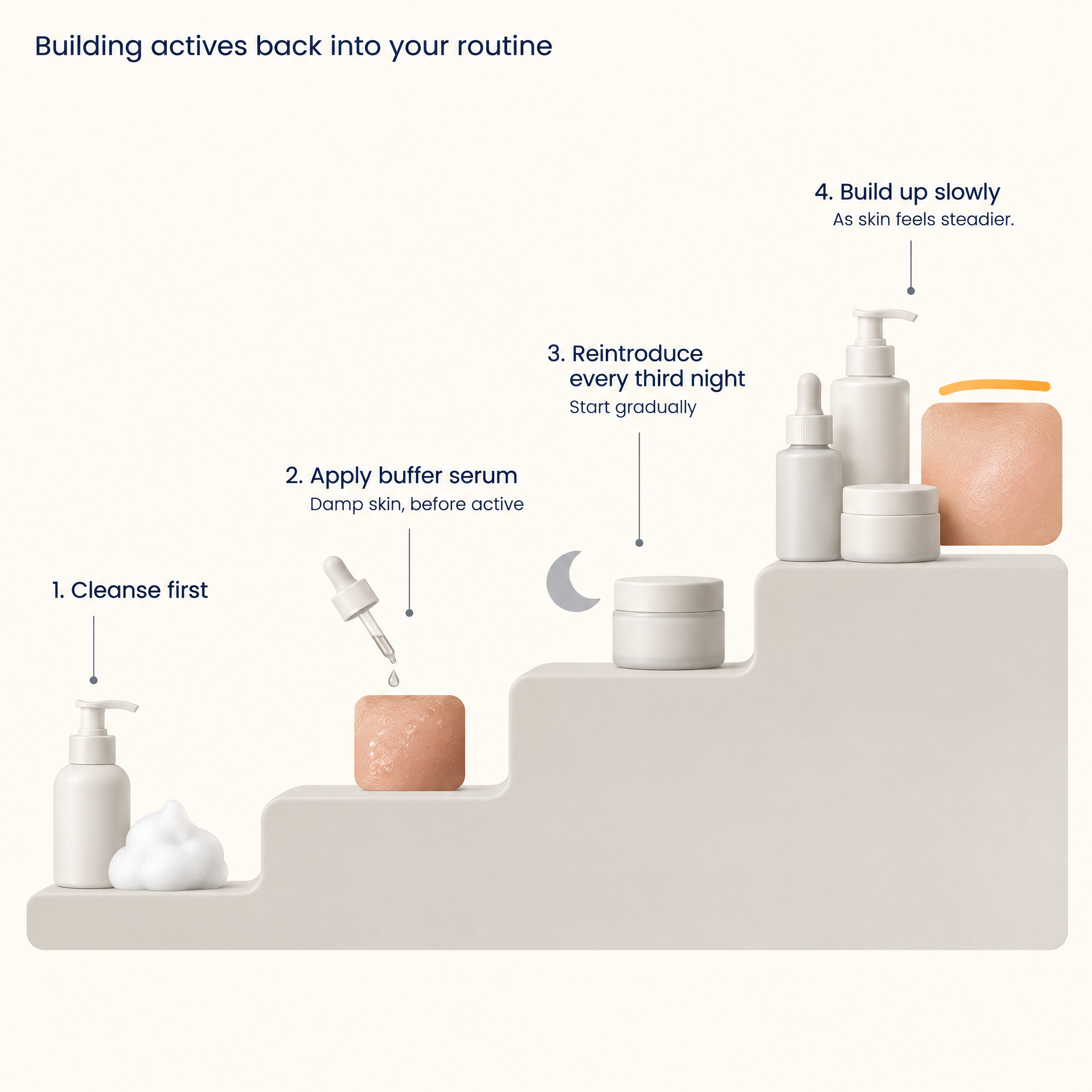
Here is how I would build this in. Cleanse first, then apply the serum to slightly damp skin and give it a minute to settle before your active goes on. This gives your barrier a small head start, rather than asking it to manage the active with nothing underneath.
If your skin has been reactive lately, reintroduce your active gradually. Try it every third night at first, then build up slowly as your skin feels steadier. Avoid adding several new actives at the same time, since this makes it harder to work out what your skin is responding to.
On the nights you skip your active so your skin can settle, the serum still has a job to do. It keeps working on comfort and hydration on its own, so those nights off are not wasted ones.
If you would like an extra layer, a moisturiser such as Stabilizing Repair Cream can sit on top as a buffer. It is not required, though some people like the added comfort, especially on body areas like elbows or shins.
To apply, squeeze a small amount into your palm, rub your hands together to warm it, then press it onto your face and neck, or any body area that needs it. You can use it up to twice daily.
A few things worth knowing: this serum will not clear breakouts or fade pigmentation, and it is not an overnight fix. If your skin is broken or weeping, that's one for a dermatologist or your skin therapist before any new product.
Does SPF matter more when I'm using actives?
Retinol and acids can make your skin more sensitive to the sun, so SPF matters even more while you are using them. A broad-spectrum sunscreen each morning helps protect the new skin cells your active is encouraging to the surface. Our guide on daily SPF explains why this step cannot be skipped, even on cloudy days.
If you are using a prescription retinoid, check with the person who prescribed it before changing your routine, including adding a new buffer step like this serum.
What does the evidence actually show?
Dermalogica ran a consumer perception study on this serum, with 33 subjects applying it twice daily for four weeks. People reported relief from around 30 minutes after application. By day 5, skin was reported as soothed and smoother. By day 28, people reported less reactivity, scabbing and flaking.
I read this as two separate things. The study tells us what people experienced under test conditions. My view is that comfort and steady hydration are often what let people stick with their actives long enough to actually see results from them.
If your retinol or acid routine keeps stopping and starting, that is not a personal failing. And it does not mean the product is wrong for you. More often, it comes down to how ready your skin was on any given night.
A steadier, more comfortable barrier makes actives easier to tolerate, and easier to stick with. Stabilizing Repair Serum is designed to sit in that gap, a buffer step before your active, not a replacement for it.
If you would like help working out where this fits into your own routine, our team can map it out with you. Learn more about personalised skincare advice from our Dermalogica experts.


