


Every August, Psoriasis Awareness Month brings a chronic skin condition into the spotlight. If you don't have psoriasis, it might seem like it has nothing to do with you. But the science behind it, particularly around skin barrier health, is something every single one of us can learn from.
At GLO Skin Body, we believe understanding your skin starts with understanding the basics. So this month, we're using the moment to explain what your skin barrier actually does, what happens when it's under strain, and how to support it gently. Whether your skin is naturally reactive, feeling dry this season, or just something you'd like to understand better, this one's for you.
What Is Psoriasis Awareness Month, and What Is Psoriasis?
Psoriasis Awareness Month runs every August. It's a time to build understanding of a condition that affects millions of people worldwide, yet is still widely misunderstood.
Psoriasis is a chronic autoimmune condition. This means the immune system mistakenly speeds up skin cell growth, causing cells to build up on the surface faster than the body can shed them. The result is often raised, scaly patches that can be itchy, sore, or uncomfortable.
Here's the important part: psoriasis is not caused by poor skincare, and skincare products cannot treat or cure it. It's a medical condition that needs medical care. If you think you might have psoriasis, or you're managing a diagnosis already, your dermatologist or GP is the right person to guide you. Organisations like Psoriasis Australia and the US National Psoriasis Foundation offer trusted, in-depth information and support for anyone living with the condition.
What we can talk about, as skin experts, is the barrier science underneath. Because whether or not you live with psoriasis, your skin barrier affects how comfortable your skin feels every single day.
What Does Your Skin Barrier Actually Do?
Your skin barrier is the outermost layer of your skin, known as the stratum corneum. Think of it as a brick wall. The skin cells are the bricks, and lipids (fats like ceramides, cholesterol, and fatty acids) are the mortar holding everything together.
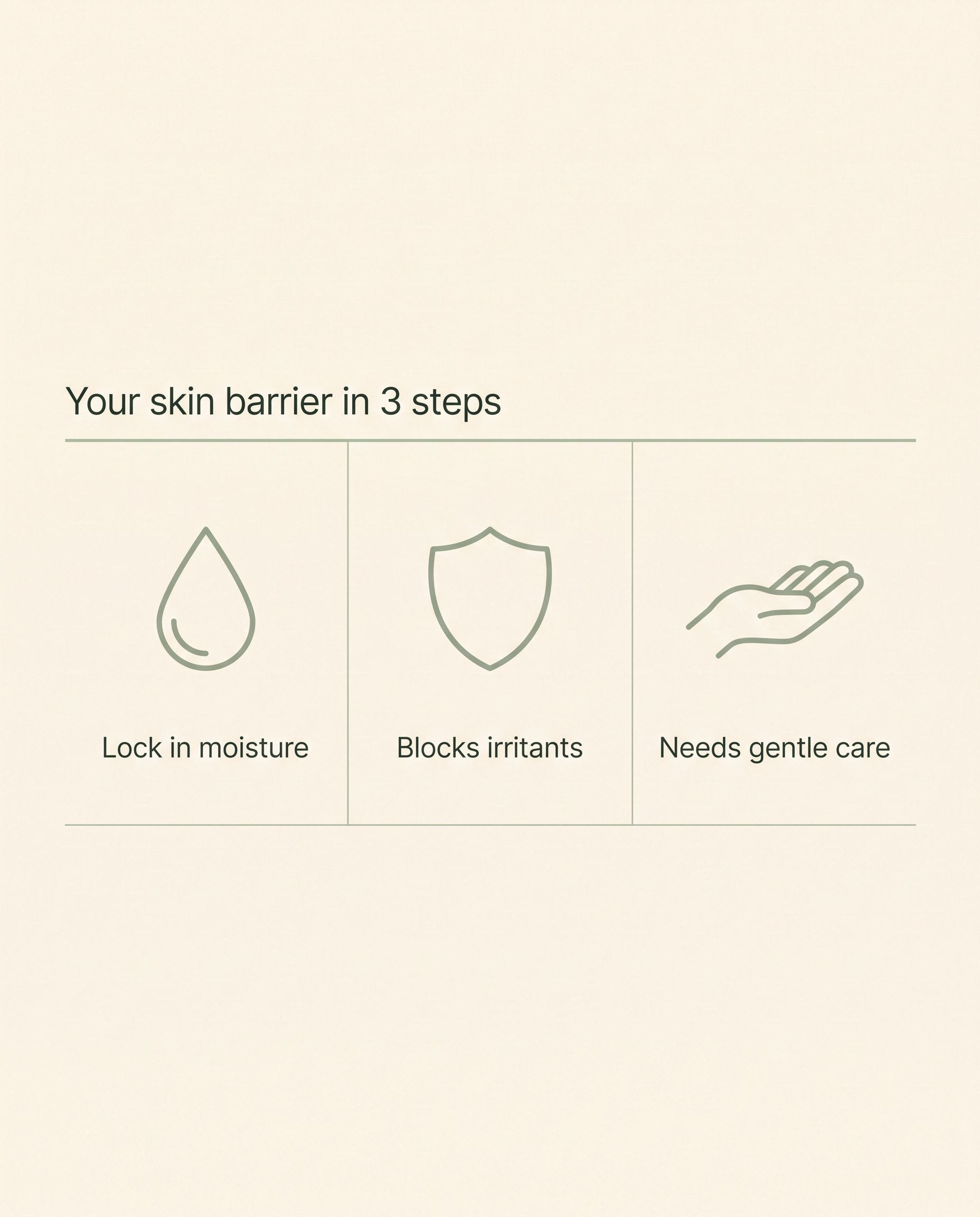
This barrier has two main jobs. First, it holds water inside your skin, keeping it hydrated and comfortable. Second, it keeps irritants, allergens, and bacteria out. When it's working well, you probably don't think about it much. Your skin feels calm, comfortable, and copes well with everyday products and weather.
Our detailed guide on your skin's barrier function goes deeper into this brick-and-mortar structure, if you'd like to understand more about how it's built.
Key Takeaways
- Your skin barrier, called the stratum corneum, holds moisture in and keeps irritants out.
- Psoriasis Awareness Month (August) is a good time to learn how barriers work.
- Psoriasis is a chronic autoimmune condition, not something skincare can treat or cure.
- But the general principles of barrier care, gentle cleansing, fragrance awareness, and lipid support, apply to anyone whose skin feels reactive, tight, or dry.
- Always see a dermatologist or GP for a diagnosis, and for any active ingredients i...
What Changes When the Barrier Is Under Strain?
Skin barriers can come under strain for many reasons: weather changes, harsh cleansing, ageing, or a condition like psoriasis that disrupts normal cell turnover. When this happens, certain patterns tend to show up.
Moisture escapes more easily, a process called transepidermal water loss (TEWL). This can leave skin feeling tight, rough, or dry no matter how much moisturiser is applied. The skin's pH can also shift away from its naturally slightly acidic state, making it harder for it to defend itself.
When the barrier is under strain, products can sting that never used to. Skin may look duller, feel rougher, or react more easily to things it once tolerated well. These are general category facts about compromised barriers, not a diagnosis of what's happening on your own skin. If you're noticing ongoing changes, a professional assessment is always the best next step.
It's worth remembering that oiliness and sensitivity are natural skin characteristics, not flaws. Skin is simply responding to what's happening around it and within it.

What Supports a Healthy Skin Barrier?
Good barrier care is built on a few simple, evidence-based habits. None of them are complicated, and all of them are gentle by design.
Gentle cleansing matters more than people think. Cleansers that are too harsh, or water that's too hot, can strip away the very lipids your barrier needs. A pH-balanced, gentle cleanser used with lukewarm water is kinder to your skin's natural defences.
Fragrance is worth considering carefully, especially for reactive or compromised skin. Fragrance, including natural essential oils, is one of the most common triggers for irritation. This doesn't mean every fragranced product is a problem for every person. But it's a useful thing to be aware of if your skin often feels reactive.
Lipids and humectants work together to support the barrier. Lipids, like ceramides, help rebuild the "mortar" between skin cells. Humectants, like hyaluronic acid and glycerin, draw water into the skin and help it stay there. Formulations like Dermalogica's UltraCalming range are built around this exact idea: calming, barrier-conscious ingredients without unnecessary extras.
If you'd like a broader seasonal approach to barrier-friendly habits, our guide on winter skincare covers how cooler months can affect these same processes.

Where Do Active Ingredients Fit In?
Actives like retinoids, exfoliating acids, and vitamin C serums can be wonderful tools for many skin goals. But they're not always right for every stage of skin health.
When a barrier is under strain, adding strong actives can sometimes make things feel worse before they feel better. This is why many skin therapists recommend focusing on gentle, barrier-supportive care first, and holding off on actives until skin feels more settled.
This is especially true for anyone managing psoriasis. Retinoids and other active ingredients should always be discussed with a dermatologist before use, as they can interact with psoriasis treatment plans or trigger flare-ups in some people. This isn't a decision to make from a product label alone.
For anyone simply building a routine and wondering where to start, our piece on exfoliation basics is a useful place to understand how and when actives typically fit into a routine.
And whatever your skin type, a patch test before introducing anything new is always a smart, simple step. Apply a small amount to your inner arm, wait 24 to 48 hours, and check for any reaction before using it on your face.
When Should You See a Professional?
Skincare has real limits, and knowing them is part of genuine expertise, not a weakness in it. If you notice persistent redness, scaling, itching, or discomfort that doesn't settle with gentle care, it's time to see a GP or dermatologist. This is especially true if you suspect psoriasis, eczema, or another skin condition that needs a proper diagnosis.
If you're already managing psoriasis, working alongside your dermatologist for both medical treatment and any skincare choices gives you the most complete picture. Skincare can sit alongside medical care, gently supporting comfort day to day, but it was never designed to replace it.
For general sensitivity and reactivity that isn't linked to a diagnosed condition, our guide on the UltraCalming range explains how barrier-focused formulations are built for skin that needs a calmer, simpler approach.

Psoriasis Awareness Month is a reminder that skin health is more than surface deep. Whether or not psoriasis is part of your story, understanding how your skin barrier works can help you make gentler, more informed choices every day.
If your skin often feels reactive, tight, or unpredictable, start simple. Gentle cleansing, fragrance awareness, and barrier-supportive ingredients are a good foundation for most people. And if something feels ongoing or uncertain, a dermatologist or GP is always the right person to ask. We're here to help you understand your skin, one honest step at a time.


